Revolutionizing EEG Analysis with Adaptive AI
At a glance, In a significant stride for neuroscience and artificial intelligence, Zyphra has released ZUNA1.1, an advanced Electroencephalography (EEG) foundation model. Available under the permissive Apache 2.0 license, this model marks a substantial evolution from its predecessor, ZUNA1, by introducing unprecedented flexibility in handling the complex and often ‘messy’ nature of real-world EEG recordings.
Table of Contents
- Revolutionizing EEG Analysis with Adaptive AI
- What Makes ZUNA1.1 a Game-Changer?
- Key Enhancements Over ZUNA1
- Performance and Practical Applications
- Accessibility for Researchers
- Expert Perspective
- Frequently Asked Questions
- The Architecture Behind the Flexibility
- Why does EEG Foundation Model matter right now?
- What broader change could EEG Foundation Model signal?
- What should the market watch next around EEG Foundation Model?
Meanwhile, ZUNA1.1 is designed to reconstruct, denoise, and upsample EEG data across a multitude of channel layouts, making it a powerful tool for researchers and developers. Its core innovation lies not just in raw accuracy improvements, but in its remarkable adaptability to varying session lengths, noisy channels, and diverse electrode montages.
What Makes ZUNA1.1 a Game-Changer?
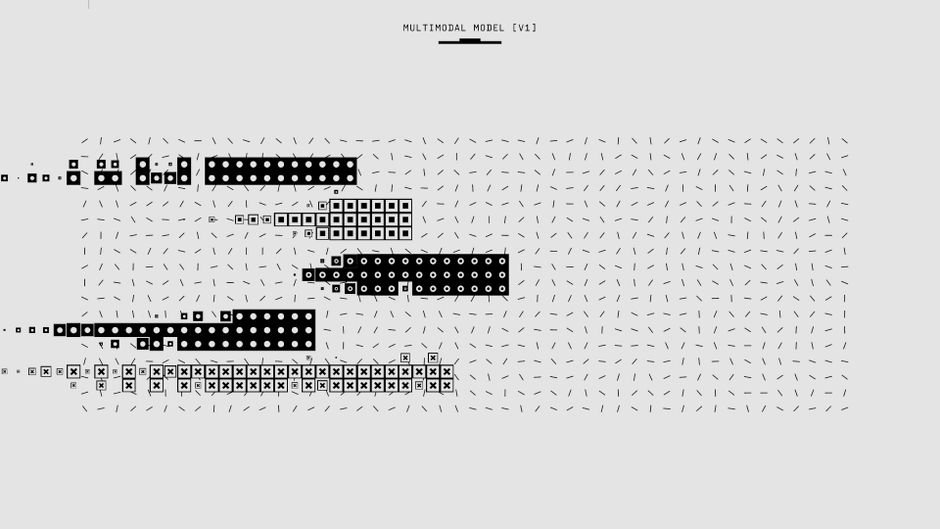
At its heart, ZUNA1.1 functions as a 380-million-parameter masked diffusion autoencoder specifically tailored for scalp-EEG signals. Given a subset of channels, the model excels at denoising existing EEG segments, reconstructing missing data, and even predicting novel channel signals based on their physical coordinates on the scalp.
In practical terms, Unlike ZUNA1, which was constrained to fixed five-second segments, ZUNA1.1 embraces the variability of real-world data by accepting inputs ranging from 0.5 to 30 seconds. This adaptability is crucial for handling the diverse lengths of clinical and research EEG sessions, which can vary significantly.
The Architecture Behind the Flexibility
The secret to ZUNA1.1’s versatility lies in its sophisticated tokenization and positional encoding. Built as a transformer encoder–decoder diffusion autoencoder, it processes each channel by slicing it into 0.125-second segments (equivalent to 32 samples at 256 Hz). Each segment then becomes a continuous-valued token.
For example, A key innovation is the 4D rotary positional encoding applied to each token. This encoding captures the electrode’s 3D scalp coordinate along with its coarse-time index.
By understanding position rather than relying on a fixed array index, ZUNA1.1 achieves remarkable channel-agnosticism. This means it can accept virtually any electrode layout and even generate signals at unrecorded positions, enabling arbitrary channel upsampling by location.
Key Enhancements Over ZUNA1
While the core architecture remains similar to ZUNA1, ZUNA1.1’s advancements stem primarily from significant improvements in its training methodology:
- Variable-Length Inputs: ZUNA1.1 was trained using segments of varying lengths (0.5 to 30 seconds), drawn from different bins, with a focus on the common 1.5–10 second range. This enables a single model to process both short snippets and longer stretches without reconfiguration.
- Richer Reconstruction Tasks: The model now trains on four distinct dropout patterns, compared to ZUNA1’s single pattern. These include whole-channel dropout, removal of short time stretches across all channels, clustered gaps in space and time, and scattered missing individual values. This richer training makes it robust against diverse data imperfections.
- Quality-Aware Preprocessing and Expanded Corpus: ZUNA1.1 employs a more granular, per-channel, per-second quality scoring system, which preserves more usable signal. This refined approach expanded the training corpus from approximately 2 million to 3.5 million channel-hours of public EEG data. Additionally, the model was trained with two filter variants per recording, enhancing its generalization capabilities.
Performance and Practical Applications
That said, The question of whether this added flexibility came at the cost of accuracy has been addressed. On held-out tasks, ZUNA1.1 achieves performance that is equal to or better than ZUNA1 in terms of reconstruction Normalized Mean Squared Error (NMSE). Crucially, both models significantly outperform classical methods like spherical-spline interpolation.
In more realistic region-based tests, where electrodes from an entire brain region are deleted and then reconstructed from the remaining seven, ZUNA1.1 clearly surpasses both ZUNA1 and spherical-spline interpolation, demonstrating its superior capability in challenging scenarios.
This enhanced flexibility opens up several practical use cases:
- Dead Electrode Repair: Easily reconstruct data from a faulty channel using its neighbors.
- Motion Artifact Cleaning: Precisely clean specific time spans on individual channels affected by artifacts.
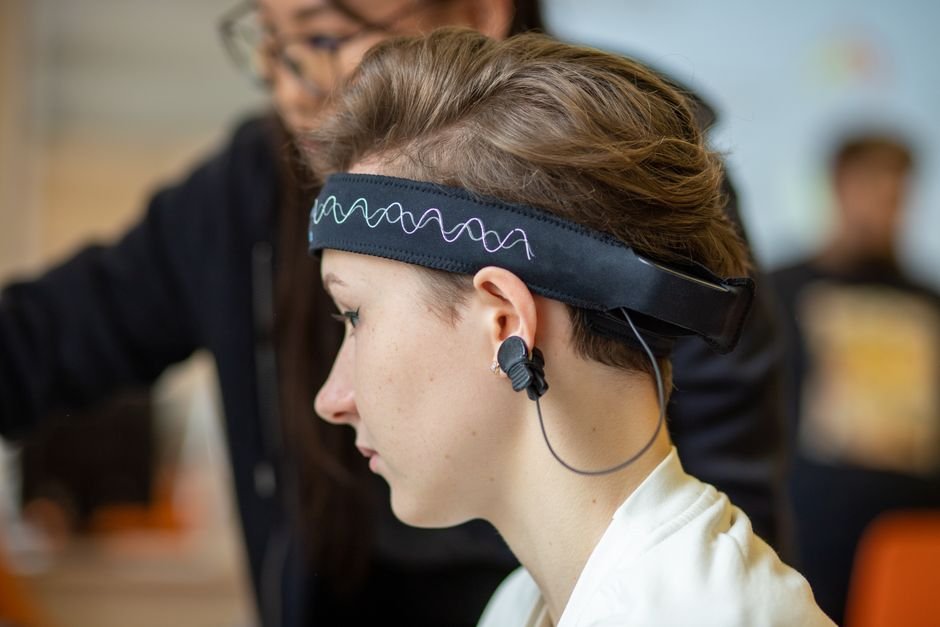
- Headband Upsampling: Generate additional standard electrode positions from sparse four-electrode headband recordings.
- UI-Driven Cleaning: Integrate custom, per-file masks for tailored data repair.
Accessibility for Researchers
ZUNA1.1’s weights are readily available on Hugging Face, and its inference and preprocessing code can be found on GitHub. Installation is straightforward via pip install zuna.
Zyphra also offers a free browser-based EEG Playground, allowing users to interact with the model. Notably ZUNA1.1 is currently intended for research use only.
However, With its robust architecture, flexible input handling, and improved training, ZUNA1.1 represents a significant step forward in making advanced EEG analysis more accessible and effective for real-world applications.
Expert Perspective
From an industry angle, the clearest signal around EEG Foundation Model is how it may influence zuna1. The story reads less like a one-day spike and more like a marker of broader movement.
The next phase will depend on how quickly teams, regulators, or customers react. In practice, that gives EEG Foundation Model room to reshape expectations across channel over the near term.
For readers focused on practical impact, the best next step is to watch what changes around model once attention turns into execution.
Frequently Asked Questions
Why does EEG Foundation Model matter right now?
Revolutionizing EEG Analysis with Adaptive AI At a glance, In a significant stride for neuroscience and artificial intelligence, Zyphra has released ZUNA1.1, an advanced Electroencephalography (EEG) foundation model.
What broader change could EEG Foundation Model signal?
Available under the permissive Apache 2.0 license, this model marks a substantial evolution from its predecessor, ZUNA1, by introducing unprecedented flexibility in handling the complex and often ‘messy’ nature of real-world EEG recordings.
What should the market watch next around EEG Foundation Model?
Meanwhile, ZUNA1.1 is designed to reconstruct, denoise, and upsample EEG data across a multitude of channel layouts, making it a powerful tool for researchers and developers.