Revolutionizing Cybersecurity with AI Orchestration
At a glance, In the rapidly evolving landscape of cyber threats, robust and intelligent defense mechanisms are more critical than ever. Enter Fugu-Cyber, the latest innovation from Sakana AI, launched on July 21, 2026. This isn’t just another standalone AI model; it’s a specialized cybersecurity endpoint within Sakana’s Fugu orchestration family, meticulously tuned for advanced security reasoning. Fugu-Cyber promises to enhance the way organizations identify, prove, and detect vulnerabilities, pushing the boundaries of AI in defensive operations.
Table of Contents
- Revolutionizing Cybersecurity with AI Orchestration
- Fugu-Cyber’s Impressive Benchmark Performance
- Contextualizing Fugu-Cyber’s Edge
- The Orchestration Magic: How Fugu-Cyber Works
- Accessing Fugu-Cyber: Policies and Pricing
- The Future of AI in Cybersecurity
- Expert Perspective
- Frequently Asked Questions
- Diving Deeper into the Benchmarks
- Why does Fugu-Cyber matter right now?
- What broader change could Fugu-Cyber signal?
- What should the market watch next around Fugu-Cyber?
Fugu-Cyber’s Impressive Benchmark Performance
Meanwhile, Sakana AI has released compelling performance metrics for Fugu-Cyber, demonstrating its capabilities across key cybersecurity benchmarks:
- 86.9% success rate on CyberGym
- 72.1% score on CTI-REALM
These figures position Fugu-Cyber’s performance as comparable to, and in some aspects, even exceeding leading cyber-focused frontier models such as OpenAI’s GPT-5.5-Cyber and Anthropic‘s Claude Mythos Preview.
Diving Deeper into the Benchmarks
In practical terms, To truly appreciate Fugu-Cyber’s achievements, it’s essential to understand what these benchmarks measure:
CyberGym: Proving Vulnerabilities in Real-World Code
Developed by UC Berkeley, CyberGym is a rigorous benchmark comprising 1,507 real-world vulnerabilities sourced from 188 OSS-Fuzz projects. The primary task for an AI agent in CyberGym is to receive a vulnerability description and an unpatched codebase, then generate a proof-of-concept (PoC) that crashes the pre-patch build but not the post-patch version. This crucial verification step makes the benchmark incredibly challenging to bypass, ensuring the generated PoCs are genuinely effective.
CTI-REALM: Transforming Threat Intel into Detection
For example, CTI-REALM, an open-source detection-engineering benchmark from Microsoft, focuses on the other end of the security workflow. It involves 37 curated public threat reports from leading security firms like Datadog Security Labs and Palo Alto Networks. An agent must map MITRE ATT&CK techniques, explore telemetry data, iterate on KQL queries, and ultimately emit validated Sigma rules. The scoring covers various environments, including Linux endpoints, Azure Kubernetes Service, and Azure cloud, highlighting its real-world applicability.
Together, these two benchmarks effectively span the critical phases of ‘finding and proving a bug’ and ‘turning intelligence into actionable detection,’ offering a holistic view of an AI’s cybersecurity prowess.
Contextualizing Fugu-Cyber’s Edge
That said, While the percentages are impressive, context is key when evaluating Fugu-Cyber’s standing against its peers.
- On CyberGym: When CyberGym’s initial results were published, top agent-model pairings achieved around 20%. Anthropic’s Claude Mythos Preview, under Project Glasswing, reported 83.1% in April 2026, and OpenAI’s updated GPT-5.5-Cyber reached 85.6% (compared to GPT-5.5’s 81.8%). Fugu-Cyber’s 86.9% represents a notable, albeit small, advancement beyond the current reported frontier.
- On CTI-REALM: This benchmark tells a different story. Microsoft’s own evaluations placed the top three configurations, all utilizing Claude models, within a score band of 0.624 to 0.685. Fugu-Cyber’s 72.1% score significantly surpasses this band. It’s important to note, however, that CTI-REALM is scored as a trajectory reward between 0 and 1, not a simple pass/fail rate, although Sakana refers to it as a success rate.
The Orchestration Magic: How Fugu-Cyber Works
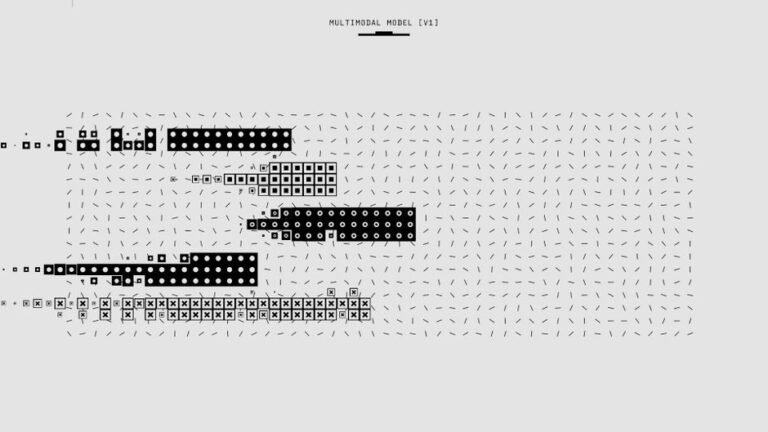
Fugu-Cyber’s power stems from its sophisticated orchestration architecture. The core Fugu orchestrator is itself a language model, trained to interpret a given query and dynamically construct an agentic scaffold. It then intelligently delegates sub-tasks to a pool of specialized models, maximizing efficiency and accuracy.
Interestingly, This advanced approach is detailed in the Fugu technical report and two ICLR 2026 papers: TRINITY and The Conductor. TRINITY assigns distinct Thinker, Worker, and Verifier roles across multiple LLMs, while The Conductor employs reinforcement learning to master natural-language coordination strategies.
For cybersecurity tasks, the Sakana research team emphasizes the critical role of the verifier. Any potential vulnerability identified by one agent is rigorously validated by security-specialized sub-agents before any patch is proposed. While the internal routing mechanisms remain proprietary, this multi-agent verification process is central to Fugu-Cyber’s reliability.
Accessing Fugu-Cyber: Policies and Pricing
Access to Fugu-Cyber is carefully managed and gated across several dimensions:
- Application Process: Users must submit an application form detailing their intended use case and verified contact information, which Sakana’s team reviews manually.
- Acceptable Usage Policy (AUP): The model operates under an updated AUP that strictly prohibits offensive misuse, ensuring its application is limited to defensive cybersecurity operations.
- Subscription Tiers: Billing is restricted to Sakana’s Token Plan. The existing $20, $100, and $200 subscription tiers cover Fugu and Fugu-Ultra, with Fugu-Cyber being an addition.
- Geographical Restrictions: The Fugu API is currently unavailable in the EU or EEA as Sakana works towards GDPR compliance.
Pricing for Fugu-Cyber is fixed at $6 per million input tokens, $36 for output tokens, and $0.60 for cached input. These rates double when context lengths exceed 272K tokens. Notably, Fugu-Cyber commands a flat 20% premium over Fugu-Ultra rates, reflecting its specialized capabilities. Given that long codebase analyses can easily surpass the 272K token threshold, the doubled tier is a common scenario for intensive use cases.
The Future of AI in Cybersecurity
Meanwhile, Fugu-Cyber represents a significant leap forward in applying AI to complex cybersecurity challenges. By leveraging an intelligent orchestration framework and specialized models, Sakana AI is providing powerful tools for vulnerability assessment and threat detection.
Sakana AI’s core belief is that a capable API, when combined with human security expertise, ultimately delivers a superior defense strategy than relying on an API alone. This integrated approach highlights the ongoing synergy between advanced AI and the invaluable insights of human cybersecurity professionals.
Expert Perspective
From an industry angle, the clearest signal around Fugu-Cyber is how it may influence cyber. The story reads less like a one-day spike and more like a marker of broader movement.
The next phase will depend on how quickly teams, regulators, or customers react. In practice, that gives Fugu-Cyber room to reshape expectations across fugu over the near term.
For readers focused on practical impact, the best next step is to watch what changes around cybersecurity once attention turns into execution.
Frequently Asked Questions
Why does Fugu-Cyber matter right now?
Revolutionizing Cybersecurity with AI OrchestrationAt a glance, In the rapidly evolving landscape of cyber threats, robust and intelligent defense mechanisms are more critical than ever.
What broader change could Fugu-Cyber signal?
Enter Fugu-Cyber, the latest innovation from Sakana AI, launched on July 21, 2026.
What should the market watch next around Fugu-Cyber?
This isn’t just another standalone AI model; it’s a specialized cybersecurity endpoint within Sakana’s Fugu orchestration family, meticulously tuned for advanced security reasoning.