Pioneering Robotics and AI: Daniela Rus Honored with Germany’s Top High-Tech Prize
At a glance, Dr. Daniela Rus, a leading figure in the world of computer science and the esteemed director of MIT’s Computer Science and Artificial Intelligence Laboratory (CSAIL), has been recognized with Germany’s most prestigious technology award – the 2026 High-Tech Prize of the Bavarian Minister-President. This significant honor celebrates her three decades of pioneering work in robotics, artificial intelligence, and autonomous systems, pushing the boundaries of what machines can achieve in the real world.
Table of Contents
- Pioneering Robotics and AI: Daniela Rus Honored with Germany’s Top High-Tech Prize
- Expert Perspective
- Frequently Asked Questions
- Acknowledging Groundbreaking Contributions
- Four Pillars of Innovation Driving Real-World AI
- Bridging the Gap Between Lab and Life
- Practical Solutions to Complex Problems
- The Revolution of Liquid Neural Networks
- A Vision for Human-Robot Collaboration
- A Legacy of Recognition
- Why does Daniela Rus robotics AI matter right now?
- What broader change could Daniela Rus robotics AI signal?
- What should the market watch next around Daniela Rus robotics AI?
Acknowledging Groundbreaking Contributions
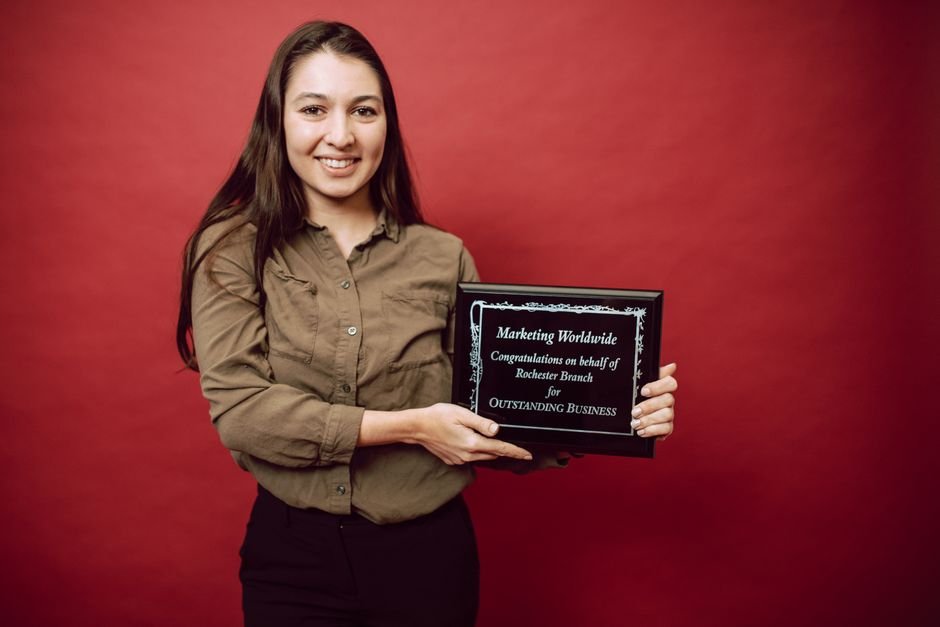
Meanwhile, The Bavarian Minister-President’s High-Tech Prize, jointly presented by the Bavarian State Government and the Bavarian Academy of Sciences and Humanities, stands as Germany‘s most highly endowed award in technology and engineering. Dr. Rus accepted this esteemed accolade on July 23rd at the historic Herkulessaal of the Munich Residence, marking a pivotal moment for her visionary research and its global impact.
Four Pillars of Innovation Driving Real-World AI
The selection committee specifically highlighted four key areas that define Dr. Rus’s profound impact on the field, demonstrating her commitment to building machines that thrive outside controlled lab environments:
- Self-organizing robot collectives: Developing groups of robots that can collaborate and adapt autonomously.
- Soft robotics: Creating compliant machines that interact safely and flexibly with their environment, offering a new paradigm for human-robot interaction.
- Autonomous mobility: Advancing systems that enable robots to navigate and operate independently in complex scenarios.
- Brain-inspired artificial intelligence: Designing AI that mimics biological neural networks for enhanced efficiency and adaptability, leading to more robust intelligent systems.
In practical terms, These strands collectively represent a sustained effort to engineer robust machines capable of functioning reliably outside controlled laboratory settings, adapting to unpredictable, real-world conditions.
Bridging the Gap Between Lab and Life
In an era where physical AI is increasingly vital to industry and policy, Dr. Rus’s research extends far beyond typical applications like factory floors or household chores. Her team develops algorithms and systems that integrate autonomous robots into diverse sectors, including:
- Transportation
- Agriculture
- Medicine
- Home assistance
- Environmental monitoring
For example, Her pioneering work in soft robotics, in particular, emphasizes creating machines that are inherently safer and more adaptable, contrasting with their rigid counterparts and opening new possibilities for human-robot collaboration.
Practical Solutions to Complex Problems
At CSAIL’s Distributed Robotics Laboratory, Dr. Rus’s principles have led to remarkable innovations addressing persistent challenges. Her group’s notable achievements include:
- An ingestible origami robot designed to safely retrieve swallowed button batteries from a child’s digestive tract, a critical medical application.
- A fleet of small autonomous boats that can self-assemble into flexible bridges and platforms, effectively transforming urban waterways into reconfigurable infrastructure on demand.
The Revolution of Liquid Neural Networks
That said, A significant breakthrough from Dr. Rus and her collaborators is the invention of liquid neural networks. Inspired by the incredibly compact nervous system of a millimeter-long worm, these networks offer unprecedented efficiency. They can, for instance, steer a vehicle through unfamiliar environments using as few as 19 control neurons – a level of efficiency unattainable by conventional AI architectures. This groundbreaking research led Dr. Rus, alongside former CSAIL affiliates Ramin Hasani, Alexander Amini, and Mathias Lechner, to establish Liquid AI out of MIT CSAIL, focusing on building models optimized from the outset for the specific hardware constraints of the devices they operate on.
A Vision for Human-Robot Collaboration
Dr. Rus firmly believes in the power of synergy between humans and machines. She states,
“AI gives machines the ability to do work that humans don’t want to do. It’s not a battle between humans and machines. Both form a system that solves problems that neither humans nor machines can solve alone.”
Her emphasis lies in equipping robots with the intelligence to reason and adapt in dynamic environments through transparent, explainable algorithms, fostering a future where humans and robots work seamlessly together.
A Legacy of Recognition
Interestingly, The Bavarian Minister-President’s High-Tech Prize adds to an already impressive list of accolades for Dr. Rus. Her previous honors include the 2025 IEEE Edison Medal and the 2024 John Scott Award. She was also a 2002 MacArthur Fellow and holds memberships in prestigious bodies such as the French National Academy of Medicine, the National Academy of Engineering, and the American Academy of Arts and Sciences. Her fellowships include the Association for Computing Machinery, the Institute of Electrical and Electronics Engineers, and the Association for the Advancement of Artificial Intelligence. Professor Lorenzo Masia of the Technical University of Munich underscored her impact, noting,
“Daniela Rus is a pioneer in soft robotics and physical AI. The prize will help to bring this science to the forefront.”
Expert Perspective
From an industry angle, the clearest signal around Daniela Rus robotics AI is how it may influence machines. The story reads less like a one-day spike and more like a marker of broader movement.
The next phase will depend on how quickly teams, regulators, or customers react. In practice, that gives Daniela Rus robotics AI room to reshape expectations across robotics over the near term.
For readers focused on practical impact, the best next step is to watch what changes around bavarian once attention turns into execution.
Frequently Asked Questions
Why does Daniela Rus robotics AI matter right now?
Pioneering Robotics and AI: Daniela Rus Honored with Germany’s Top High-Tech PrizeAt a glance, Dr.
What broader change could Daniela Rus robotics AI signal?
Daniela Rus, a leading figure in the world of computer science and the esteemed director of MIT’s Computer Science and Artificial Intelligence Laboratory (CSAIL), has been recognized with Germany’s most prestigious technology award – the 2026 High-Tech Prize of the Bavarian Minister-President.
What should the market watch next around Daniela Rus robotics AI?
This significant honor celebrates her three decades of pioneering work in robotics, artificial intelligence, and autonomous systems, pushing the boundaries of what machines can achieve in the real world.Acknowledging Groundbreaking ContributionsMeanwhile, The Bavarian Minister-President’s High-Tech Prize, jointly presented by the Bavarian State Government and the Bavarian Academy of Sciences and Humanities, stands as Germany’s most highly endowed award in technology and engineering.
Source: https://news.mit.edu/2026/daniela-rus-receives-bavarian-minister-presidents-high-tech-prize-0730