Revolutionizing AI with Multimodal Understanding
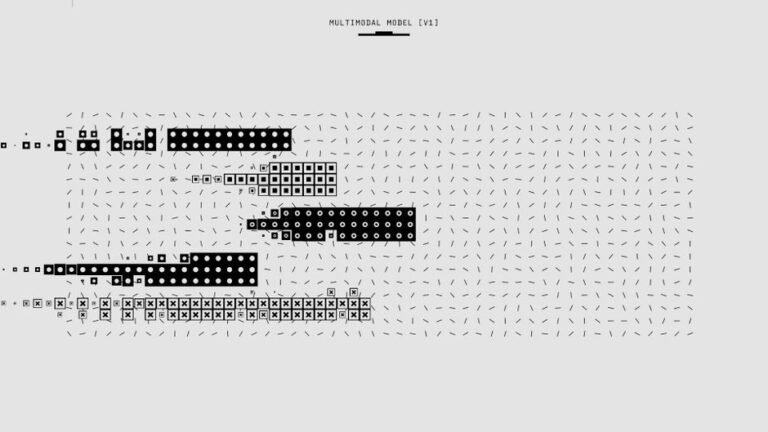
At a glance, Black Forest Labs (BFL) has announced the release of FLUX 3, a groundbreaking multimodal foundation model poised to redefine how AI interacts with and understands the world. Unlike previous models that often specialize in a single data type, FLUX 3 is engineered to learn from images, videos, and audio simultaneously within a single, cohesive architecture. This innovative approach promises a more comprehensive and nuanced grasp of reality, extending its capabilities to include complex robot action prediction from the same core intelligence.
Table of Contents
- Revolutionizing AI with Multimodal Understanding
- The Philosophy Behind Unification: A Holistic Worldview
- Self-Flow: The Innovative Core Technology
- Unlocking Creative & Functional Applications with FLUX 3 Video
- Setting New Benchmarks: Performance and Human Preference
- Beyond Vision: FLUX 3’s Role in Robotics with FLUX-mimic
- Accessing the Future: Deployment and Availability
- Expert Perspective
- Frequently Asked Questions
- Conclusion
- Key Performance Metrics for FLUX-mimic:
- Why does FLUX 3 multimodal AI matter right now?
- What broader change could FLUX 3 multimodal AI signal?
- What should the market watch next around FLUX 3 multimodal AI?
Meanwhile, This launch marks a significant leap forward, as FLUX 3 is the first model in its series to deliver video, audio, and action prediction using a unified set of weights. This integration is crucial for creating AI systems that can perceive and act in the physical world with unprecedented coherence.
The Philosophy Behind Unification: A Holistic Worldview
BFL’s research team operates on a fundamental principle: no single sensory modality provides a complete description of our intricate world. Images offer a snapshot of spatial structure; video layers in the dimension of time, revealing physical dynamics; and audio uncovers the subtle causal relationships between events and sounds. Each of these is considered a ‘lossy projection’ of the same underlying reality.
In practical terms, By training FLUX 3 on all these modalities concurrently, BFL has created a system where these different data streams mutually constrain each other. This means the AI learns that a particular sound must correspond to a specific impact, and observed motion must adhere to physical properties like mass. This principle forms the bedrock of FLUX 3’s design, enabling a more robust and realistic understanding of its environment.
Self-Flow: The Innovative Core Technology
At the heart of FLUX 3 lies ‘Self-Flow,’ BFL’s proprietary method designed to seamlessly align multimodal generation and understanding within a single architectural framework. Self-Flow ingeniously combines a flow matching objective with a self-supervised feature reconstruction objective.
For example, While the Self-Flow method was initially introduced in March 2026, the novelty of FLUX 3 lies in the sheer scale of its application. BFL has significantly scaled up the computational resources and data used with this approach to train FLUX 3 across video, images, and audio simultaneously. This immense scaling is what truly unlocks the model’s advanced capabilities, far beyond its initial ImageNet 256×256 research model counterpart.
Unlocking Creative & Functional Applications with FLUX 3 Video
FLUX 3 Video showcases impressive capabilities, able to generate high-quality video clips up to 20 seconds long, complete with native audio, all in a single generation. The model supports a wide array of creative modes:
- Text-to-Video: Creating visuals from written prompts.
- Image-to-Video: Animating static images.
- Video-to-Video: Transforming existing video content based on a reference clip.
- Keyframe-to-Video: Enabling controlled transitions between specified keyframes.
- Generative Video-Audio Continuation: Extending existing video and audio seamlessly.
That said, Beyond these core functions, FLUX 3 also excels in multilingual dialogue generation, agentic chaining of clips into multi-shot sequences, and strong typography generation with animated designs. BFL specifically highlights the model’s exceptional strength in rendering realistic human facial expressions and accurately associating sounds with physical events.
Setting New Benchmarks: Performance and Human Preference
Preliminary human preference results published by the BFL team underscore FLUX 3’s superior performance in video generation. In a setup involving 10-second text-to-video clips at 720p with accompanying audio, FLUX 3 demonstrated significant leads over established competitors:
- Preferred over Luma Ray 3.2 in 93% of comparisons.
- Preferred over Runway Gen-4.5 in 77% of comparisons.
- Preferred over Grok Imagine Video in up to 69% of comparisons.
- Outperformed Kling v3 Pro (60%), Happy Horse v1 (59%), and Happy Horse 1.1 (57%).
- Showed competitive results against Seedance 2.0 and Gemini Omni Flash at 52%, indicating a near coin-flip scenario.
Beyond Vision: FLUX 3’s Role in Robotics with FLUX-mimic
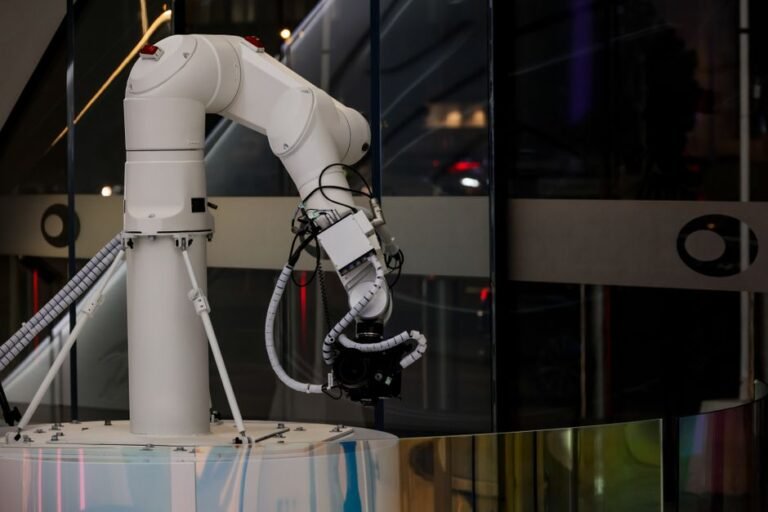
Interestingly, One of FLUX 3’s most exciting extensions is its application in robotics, particularly through FLUX-mimic, which leverages the model’s action prediction capabilities. BFL emphasizes that video understanding, though computationally intensive (consuming over 95% of total training compute), forces the model to learn fundamental physical concepts like contact, motion, weight, and causality. Audio and actions, in contrast, are low-dimensional signals that attach efficiently to this already-learned world model.
Key Performance Metrics for FLUX-mimic:
- Backbone Latency: Less than 80 milliseconds (ms) on a single NVIDIA RTX 5090 for input to world representation.
- Full System Reaction Time: A rapid 101 ms for a self-contained robot system.
- Inference Optimization: The action decoder reads latent features directly, eliminating the need for full video rollout during inference, thus saving compute.
- Autonomous Success Rate: In soft-body kitting tasks, a FLUX-mimic preview (without task-specific fine-tuning) achieved a remarkable 95% success rate, significantly outperforming a heavily post-trained flow matching baseline (70%) and an adapted pi0.5 model (55%).
This integration of a powerful multimodal foundation model into robotics is already seeing real-world impact, with Audi reportedly testing and deploying the FLUX-mimic system on its production lines.
Accessing the Future: Deployment and Availability
However, Black Forest Labs has outlined a phased rollout for FLUX 3, beginning with early access for key capabilities:
- FLUX 3 Video: Currently available through early access via API and private weights.
- FLUX-mimic / FLUX 3 Action: Also in early access, extended to selected research and commercial partners.
- FLUX 3 Image: Expected to follow within weeks, accessible via API and private weights.
- FLUX 3 Dev: An open-weight multimodal backbone is planned for a later release, promising wider accessibility for developers and researchers.
As of now, pricing details for any of the FLUX 3 tiers have not been published.
Expert Perspective
From an industry angle, the clearest signal around FLUX 3 multimodal AI is how it may influence flux. The story reads less like a one-day spike and more like a marker of broader movement.
The next phase will depend on how quickly teams, regulators, or customers react. In practice, that gives FLUX 3 multimodal AI room to reshape expectations across video over the near term.
For readers focused on practical impact, the best next step is to watch what changes around model once attention turns into execution.
Frequently Asked Questions
Why does FLUX 3 multimodal AI matter right now?
Revolutionizing AI with Multimodal Understanding At a glance, Black Forest Labs (BFL) has announced the release of FLUX 3, a groundbreaking multimodal foundation model poised to redefine how AI interacts with and understands the world.
What broader change could FLUX 3 multimodal AI signal?
Unlike previous models that often specialize in a single data type, FLUX 3 is engineered to learn from images, videos, and audio simultaneously within a single, cohesive architecture.
What should the market watch next around FLUX 3 multimodal AI?
This innovative approach promises a more comprehensive and nuanced grasp of reality, extending its capabilities to include complex robot action prediction from the same core intelligence.
Conclusion
What matters next is how the immediate response turns into lasting change. Meanwhile, FLUX 3 represents a monumental achievement in multimodal AI, demonstrating Black Forest Labs’ commitment to building systems that truly understand the complexity of the real world. By unifying image, video, audio, and robot action prediction into a single, powerful architecture, FLUX 3 opens new frontiers for creative applications, intelligent automation, and a more coherent human-AI interaction. Its impressive performance benchmarks and immediate real-world applications signal a transformative era for artificial intelligence.