Introduction: Outsmarting Adversaries with Unpredictability
The central development is this: The efficiency of military logistics is the bedrock of any successful operation, ensuring vital supplies reach personnel on the frontline. However, in an era where adversaries harness advanced artificial intelligence and predictive analytics, traditional, static supply chains become a critical vulnerability. Recognizing this evolving threat, the U.S.
Table of Contents
- Introduction: Outsmarting Adversaries with Unpredictability
- The Vulnerability of Predictable Logistics
- The Power of Randomized AI in Action
- Overcoming Technical Hurdles: From Factory to Foxhole
- The Future of Secure Military Logistics
- Expert Perspective
- Frequently Asked Questions
- Autonomous Network Healing for Enhanced Resilience
- Leveraging a Suite of Advanced Technologies
- Why does randomized AI military logistics matter right now?
- What broader change could randomized AI military logistics signal?
- What should the market watch next around randomized AI military logistics?
Transportation Command (TRANSCOM) is pioneering a revolutionary approach: randomized AI logistics. This innovative strategy is designed to inject controlled unpredictability into global distribution networks, effectively outsmarting enemy tracking and safeguarding critical cargo.
The Vulnerability of Predictable Logistics
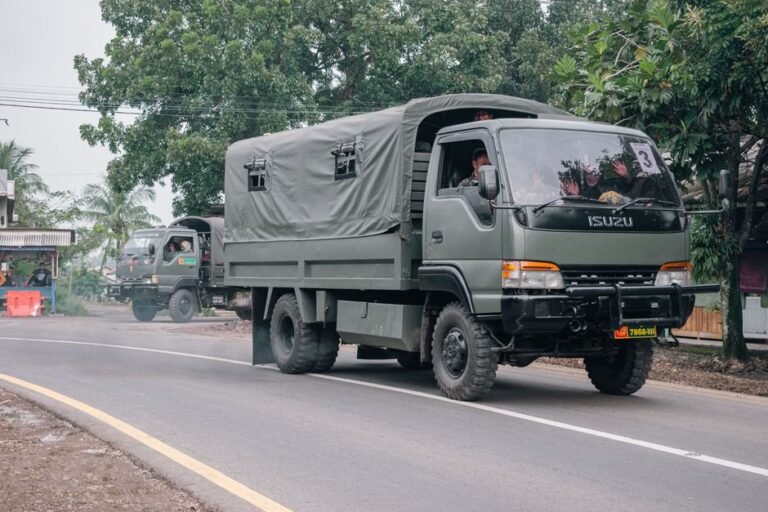
Meanwhile, Historically, commercial freight software prioritizes efficiency through static scheduling, consistent delivery windows, and just-in-time routing. While effective for civilian operations, these fixed patterns are a dangerous liability in a contested military environment. They create predictable pathways that hostile machine learning systems can exploit to anticipate movements and plan disruptions.
“The adversary can, and will, contest our logistics at any point within the chain, both within the military, the government, and outside. And this is where artificial intelligence in our adversaries can act as a barrier.
It multiplies disruptions,” explained TRANSCOM Head Gen. Randall Reed.
In practical terms, Adversaries actively seek to exploit these patterns, attempting to steer logisticians toward what Gen. Reed describes as “catastrophic decisions based on hallucinated intelligence.” TRANSCOM’s response is to retrain personnel and deploy systems capable of executing “sustainable, randomised push logistics,” countering digital interference with dynamic adaptability.
The Power of Randomized AI in Action
TRANSCOM’s solution lies in deploying adaptive algorithms that introduce controlled unpredictability into transport routes. This allows logistics units to dynamically adjust delivery paths, making it far more difficult for hostile systems to track and target military transports. By doing so, TRANSCOM can ensure that critical supplies continue to move across diverse networks—civilian, governmental, and defense—without exposing them to undue risk.
Autonomous Network Healing for Enhanced Resilience
For example, Beyond simple route randomization, these advanced logistics algorithms dynamically adjust delivery paths to protect frontline transports. Instead of relying on rigid supply schedules that enemy reconnaissance can easily map, automated systems intelligently balance transport frequency and destination nodes. This autonomy also significantly mitigates cognitive strain for human dispatchers, especially when operating under degraded network conditions or constant threat.
“Under constant ambush and communications degradation, AI allows us to randomise routes, use autonomy to reduce cognitive overload, and predict operational friction before it happens,” Gen. Reed elaborated.
That said, Algorithmic network healing is a continuous process, recalculating delivery paths whenever physical disruptions or communication outages occur. This adaptive capability works in tandem with predictive demand engines that anticipate supply deficits even before field units submit formal requisitions, ensuring proactive support.
Leveraging a Suite of Advanced Technologies
TRANSCOM’s secure logistics framework integrates several cutting-edge technologies:
- Internet of Things (IoT) Sensors: These monitor transit conditions for physical shipments, providing real-time data.
- Digital Twins: Virtual replicas simulate distribution corridors in software, allowing for testing and optimization in a safe environment.
- Blockchain: Cryptographic distributed ledgers protect cargo data from unauthorized manipulation, ensuring data integrity and security.
Overcoming Technical Hurdles: From Factory to Foxhole
Interestingly, Scaling these autonomous distribution tools across global production environments presents significant technical challenges. Field deployments require substantial computational power, distributed from domestic hubs to remote units. Furthermore, technical teams must overcome training constraints due to data scarcity and the limitations of flawed synthetic data pools.
“We do, however, still face challenges: data scarcity, flawed synthetic data, and the need for massive computing power stretching from factory to foxhole,” Gen. Reed acknowledged.
However, To address these challenges, engineers are actively building a secure, authoritative data layer. This validated data architecture aims to supply clean, verified inputs directly to predictive models.
By filtering corrupted entries and protecting automated decision pipelines from manipulation, this authoritative data layer enables reliable autonomous operations, even during live combat. Establishing this robust technical baseline ensures that distribution networks can maintain steady deliveries of essential supplies—from munitions and energy storage to field medical kits and dry rations—under even the most hostile conditions.
The Future of Secure Military Logistics
TRANSCOM’s deployment of randomized AI marks a pivotal shift in military logistics. By embracing unpredictability and leveraging advanced technologies, the U.S.
military is building a more resilient, secure, and intelligent supply chain capable of outmaneuvering sophisticated adversaries. This proactive defense strategy not only secures critical cargo but also enhances operational effectiveness and ensures the strategic advantage necessary for success in modern warfare.
Expert Perspective
From an industry angle, the clearest signal around randomized AI military logistics is how it may influence data. The story reads less like a one-day spike and more like a marker of broader movement.
The next phase will depend on how quickly teams, regulators, or customers react. In practice, that gives randomized AI military logistics room to reshape expectations across logistics over the near term.
For readers focused on practical impact, the best next step is to watch what changes around adversaries once attention turns into execution.
Frequently Asked Questions
Why does randomized AI military logistics matter right now?
Introduction: Outsmarting Adversaries with UnpredictabilityThe central development is this: The efficiency of military logistics is the bedrock of any successful operation, ensuring vital supplies reach personnel on the frontline.
What broader change could randomized AI military logistics signal?
However, in an era where adversaries harness advanced artificial intelligence and predictive analytics, traditional, static supply chains become a critical vulnerability.
What should the market watch next around randomized AI military logistics?
Recognizing this evolving threat, the U.S.Transportation Command (TRANSCOM) is pioneering a revolutionary approach: randomized AI logistics.