Introduction: Unlocking Intelligent AI Interactions
For readers tracking the shift, Imagine an intelligent entity that can learn, understand context, and recall past interactions to inform its present actions. This isn’t just science fiction; it’s the core promise of sophisticated AI agents, and at the heart of their capabilities lies a crucial component: AI agent memory. Far from a simple, monolithic database or an ever-expanding prompt, AI memory is a complex, multi-faceted system designed to retain and retrieve information precisely when needed.
Table of Contents
- Introduction: Unlocking Intelligent AI Interactions
- What is AI Agent Memory?
- Drawing Parallels: AI Memory and the Human Brain
- Why is Advanced AI Memory Indispensable?
- Conclusion: The Future of Intelligent AI
- Expert Perspective
- Frequently Asked Questions
- Short-Term Memory: The AI’s Active Workspace
- Long-Term Memory: The AI’s Enduring Knowledge Base
- Episodic Memory: Recalling Specific Experiences
- Semantic Memory: Understanding Facts and Concepts
- Why is AI Agent Memory important?
- What impact could AI Agent Memory have?
- What should readers watch next with AI Agent Memory?
- How does this relate to memory?
What is AI Agent Memory?
Meanwhile, At its core, AI agent memory is a sophisticated architectural design that allows artificial intelligence systems to store, organize, and access various types of information. This isn’t about an AI simply logging every piece of data it encounters. Instead, it’s about creating a structured system that enables an AI to maintain a working context, recall specific past events, understand factual knowledge, and remember learned procedures. The ultimate goal is to ensure the AI can retrieve the right information at the right time, making its interactions more coherent, efficient, and intelligent.
Drawing Parallels: AI Memory and the Human Brain
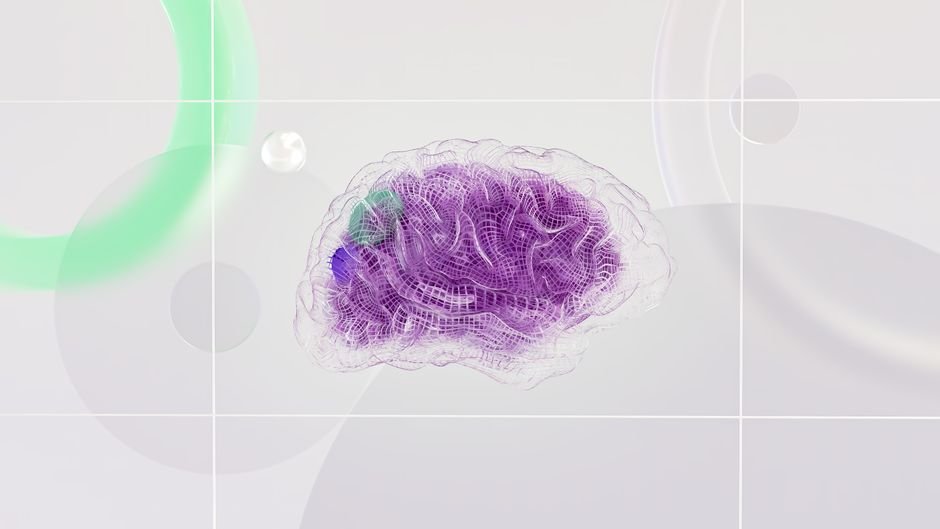
To better grasp the concept of AI agent memory, it’s often helpful to consider its parallels with human cognition. Just as humans possess different types of memory for various functions – from remembering what we just said to recalling childhood events or knowing general facts – AI agents are being engineered with similar distinctions. This layered approach allows AI to process information dynamically and access relevant knowledge efficiently, much like our own minds.
Short-Term Memory: The AI‘s Active Workspace
In practical terms, Think of an AI’s short-term memory, often referred to as its working context, as its temporary scratchpad. This is where the AI holds information it’s actively processing right now. It’s critical for maintaining continuity in a conversation or task. For instance, in a chatbot interaction, short-term memory allows the AI to remember the user’s last few questions or statements, ensuring its responses remain relevant to the immediate flow of dialogue. This memory is typically transient and has a limited capacity, designed for immediate operational needs.
Long-Term Memory: The AI’s Enduring Knowledge Base
Beyond the immediate, AI agents require a way to retain knowledge persistently – this is where long-term memory comes into play. Unlike short-term memory, long-term memory is designed for enduring storage and can be accessed repeatedly over extended periods. It’s not a single entity but often comprises distinct components, each serving a unique purpose in building a comprehensive understanding of the world and past experiences.
Episodic Memory: Recalling Specific Experiences
For example, Episodic memory in an AI agent is akin to remembering specific events or ‘episodes’ from its past interactions. This type of memory stores not just what happened, but also the context – when, where, and how it occurred. For an AI, this could mean recalling a previous user’s specific preferences, the details of a task it completed last week, or the sequence of steps taken in a particular process. It allows the AI to learn from its experiences and adapt its behavior based on past interactions, making it more personalized and context-aware.
Semantic Memory: Understanding Facts and Concepts
Semantic memory equips an AI agent with general knowledge about the world, facts, concepts, and relationships between them. It’s the AI’s internal encyclopedia, providing it with a foundational understanding of language and reality.
For example, an AI with semantic memory ‘knows’ that the Eiffel Tower is in Paris, that gravity pulls objects downwards, or the definition of complex terms. This type of memory is crucial for comprehending new information, reasoning, and generating coherent, factually accurate responses.
Why is Advanced AI Memory Indispensable?
That said, The evolution of sophisticated AI memory systems is not merely an academic exercise; it’s fundamental to building truly intelligent and useful AI agents. Without robust memory, AI systems would operate in a vacuum, unable to learn from past mistakes, understand ongoing conversations, or build meaningful relationships with users. It enables:
- Contextual Understanding: AI can grasp the nuances of complex interactions.
- Personalization: Agents can tailor responses based on individual user history.
- Learning and Adaptation: AI improves over time by recalling past outcomes.
- Coherent Interaction: Conversations flow naturally without constant re-explanation.
In essence, advanced memory transforms AI from a stateless calculator into an intelligent entity capable of continuous learning and informed decision-making.
Conclusion: The Future of Intelligent AI
Interestingly, AI agent memory is a cornerstone of modern artificial intelligence, moving us closer to systems that can genuinely understand, learn, and interact with the world in a meaningful way. By segmenting and structuring information into short-term, episodic, and semantic components, AI agents are gaining the ability to process context, remember experiences, and access factual knowledge with unprecedented sophistication. As these memory architectures continue to evolve, we can expect even more intelligent, adaptable, and human-like interactions from the AI systems of the future.
Expert Perspective
A practical read on AI Agent Memory starts with memory. That is where the earliest effects are likely to show up if this development keeps building.
What happens next will come down to adoption speed, policy response, and execution quality. That combination could make AI Agent Memory a meaningful reference point across past.
For decision-makers, the useful lens is not the headline alone but how agent changes priorities once organizations have to respond.
Frequently Asked Questions
Why is AI Agent Memory important?
Introduction: Unlocking Intelligent AI InteractionsFor readers tracking the shift, Imagine an intelligent entity that can learn, understand context, and recall past interactions to inform its present actions.
What impact could AI Agent Memory have?
This isn’t just science fiction; it’s the core promise of sophisticated AI agents, and at the heart of their capabilities lies a crucial component: AI agent memory.
What should readers watch next with AI Agent Memory?
Far from a simple, monolithic database or an ever-expanding prompt, AI memory is a complex, multi-faceted system designed to retain and retrieve information precisely when needed.What is AI Agent Memory?Meanwhile, At its core, AI agent memory is a sophisticated architectural design that allows artificial intelligence systems to store, organize, and access various types of information.
How does this relate to memory?
It connects because the article frames memory as one of the clearest areas where the topic may be felt in practice.