Bridging the Trust Gap in Autonomous Vehicles
For readers tracking the shift, Imagine riding in a self-driving car that suddenly brakes hard, even though the road ahead appears clear. Your immediate question would be, “Why?” Currently, autonomous vehicles often operate as “black boxes,” making decisions based on complex neural networks without providing human-understandable explanations. This lack of transparency has been a major hurdle for public trust and regulatory acceptance.
Table of Contents
- Bridging the Trust Gap in Autonomous Vehicles
- Introducing the Concept-Wrapper Network (CW-Net)
- Real-World Testing in Las Vegas
- Performance and Future Implications
- Expert Perspective
- Frequently Asked Questions
- Causally Faithful Explanations: A Key Distinction
- Why is Explainable AI Self-Driving Cars important?
- What impact could Explainable AI Self-Driving Cars have?
- What should readers watch next with Explainable AI Self-Driving Cars?
- How does this relate to quot?
Meanwhile, Now, a groundbreaking collaboration between autonomous vehicle leader Motional and researchers from MIT’s Computer Science and Artificial Intelligence Laboratory (CSAIL) is addressing this challenge head-on. They have developed a novel system that allows self-driving cars to explain their actions in real-time, a significant step forward for the future of autonomous technology.
Introducing the Concept-Wrapper Network (CW-Net)
Published in the prestigious journal Nature, their innovative method is called the Concept-Wrapper Network, or CW-Net. The core idea behind CW-Net is to translate the intricate internal calculations of a self-driving system’s neural network into concepts that humans can readily understand.
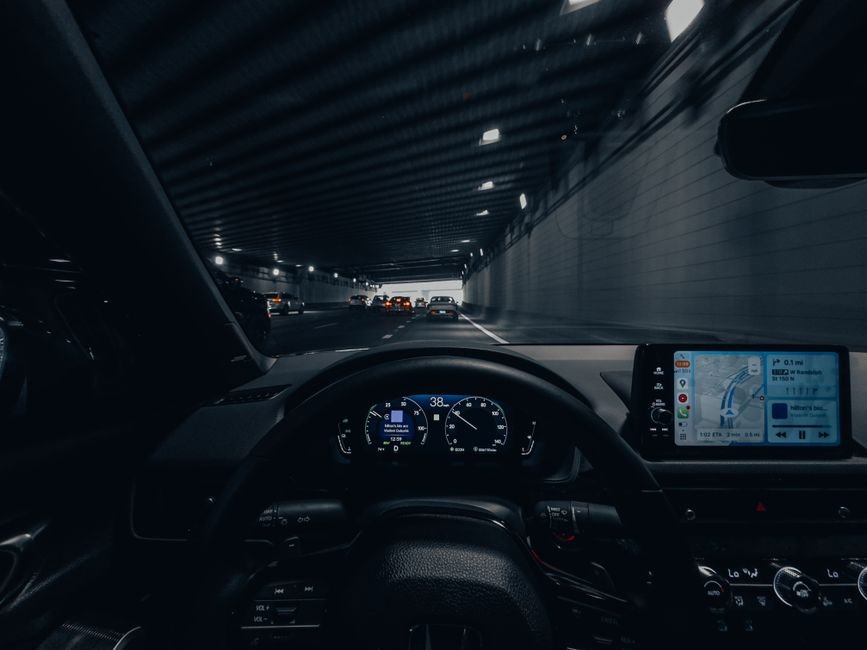
In practical terms, Instead of merely observing a vehicle’s behavior, CW-Net aims to reveal the underlying reasoning. For instance, if a car brakes, CW-Net wouldn’t just state that it stopped; it would explain the decision with a concept like “Approaching Stopped Vehicle” or “Close to Cyclist.” These explanations could be displayed on a dashboard, offering unprecedented insight into the vehicle’s decision-making process as it happens.
Causally Faithful Explanations: A Key Distinction
What sets CW-Net apart is its commitment to “causally faithful” explanations. Unlike systems that generate plausible post-hoc rationalizations, CW-Net’s explanations are intrinsic to the decision-making.
The vehicle’s final actions are directly based on these human-interpretable concepts. This means a braking event isn’t merely guessed at; it’s directly traceable to a specific, identifiable concept that triggered it.
For example, As Laura Major, CEO of Motional and a key contributor to the research, emphasizes, “The general end-to-end only approach can get to a really good 80-90 percent – maybe even 95 percent – solution, but that’s not good enough to remove a driver or to earn the trust of cities, communities, and customers.” This highlights the critical need for interpretability beyond raw performance metrics.
Real-World Testing in Las Vegas
While much explainable AI research remains confined to simulations, the Motional and MIT team took CW-Net to the streets. They deployed the system on an autonomous vehicle with an experienced safety operator, collecting valuable data on both private test tracks and public roads around Las Vegas.
The testing revealed CW-Net’s practical value through two notable incidents:
- The Phantom Cone: An autonomous vehicle repeatedly stopped near a traffic cone. The operator initially assumed the cone was the cause. However, CW-Net’s display revealed the experimental planning system was “hallucinating” a stopped vehicle ahead, a pattern linked to its training data. This precise explanation allowed researchers to quickly diagnose and resolve the issue.
- The Unexplained Cyclist Stop: In another instance, the vehicle detected and stopped for a cyclist as expected. Yet, CW-Net showed that the experimental planning system wasn’t actually basing its decision on the cyclist’s presence. Instead, the stop was triggered by a safety backup system. This insight prompted the safety driver to exercise more caution and allowed engineers to understand a critical limitation in the primary planner.
Performance and Future Implications
Adding layers of explainability often comes with concerns about performance trade-offs. However, Motional’s benchmarking of CW-Net against leading autonomous driving algorithms showed a minimal difference in driving capability – less than one percent. This demonstrates that interpretability doesn’t necessarily mean sacrificing efficiency.
Interestingly, The practical incidents in Las Vegas underscore why this trade-off is crucial. A safety driver equipped with CW-Net’s insights can differentiate between an intended behavior and a system fault, leading to faster diagnoses, more precise reporting, and ultimately, safer operations.
Motional anticipates that tools like CW-Net will evolve from research projects into baseline requirements as autonomous technology expands into new markets. Regulators are increasingly demanding transparency in AI decision-making. Beyond self-driving cars, this explainable AI approach holds promise for other safety-critical domains, including autonomous drones and robotic surgery, where understanding a system’s capabilities and limitations is paramount.
Expert Perspective
A practical read on Explainable AI Self-Driving Cars starts with quot. That is where the earliest effects are likely to show up if this development keeps building.
What happens next will come down to adoption speed, policy response, and execution quality. That combination could make Explainable AI Self-Driving Cars a meaningful reference point across autonomous.
For decision-makers, the useful lens is not the headline alone but how vehicle changes priorities once organizations have to respond.
Frequently Asked Questions
Why is Explainable AI Self-Driving Cars important?
Bridging the Trust Gap in Autonomous Vehicles For readers tracking the shift, Imagine riding in a self-driving car that suddenly brakes hard, even though the road ahead appears clear.
What impact could Explainable AI Self-Driving Cars have?
Your immediate question would be, “Why?” Currently, autonomous vehicles often operate as “black boxes,” making decisions based on complex neural networks without providing human-understandable explanations.
What should readers watch next with Explainable AI Self-Driving Cars?
This lack of transparency has been a major hurdle for public trust and regulatory acceptance.
How does this relate to quot?
It connects because the article frames quot as one of the clearest areas where the topic may be felt in practice.