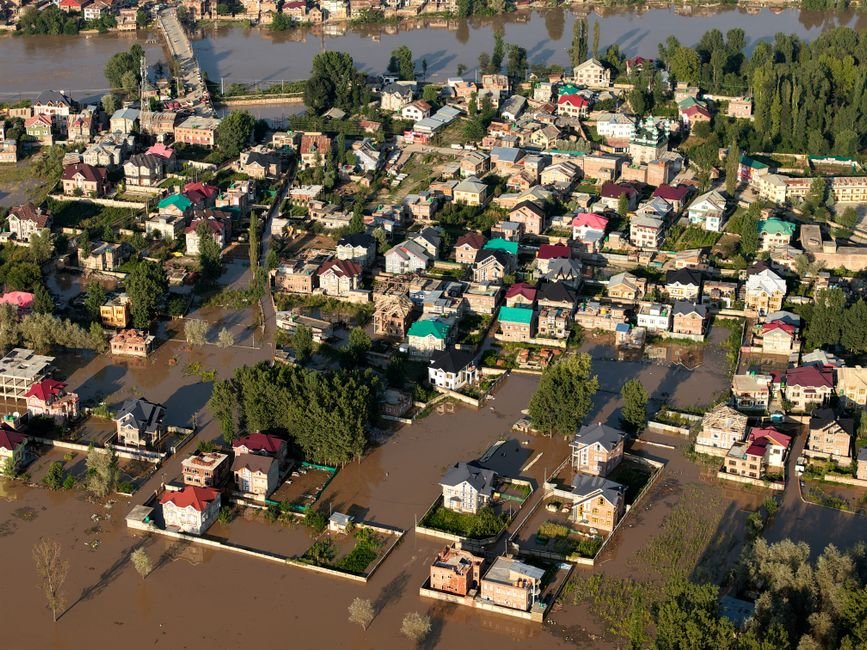
The Unseen Threat: Why Flood Prediction Matters
For readers tracking the shift, Flooding remains one of the most destructive natural disasters worldwide, causing immense loss of life, displacement, and economic hardship annually. From torrential downpours to overflowing rivers, the unpredictable nature of these events makes early warning systems absolutely critical for communities. But what if technology could offer a powerful new defense?
Table of Contents
- The Unseen Threat: Why Flood Prediction Matters
- AI at the Forefront: A Smarter Approach to Flood Forecasting
- Introducing Flood Hub: Your Early Warning System
- Groundsource: Powering Predictions from the Ground Up
- The Impact: Saving Lives and Building Resilience
- Expert Perspective
- Frequently Asked Questions
- Why is AI flood prediction important?
- What impact could AI flood prediction have?
- What should readers watch next with AI flood prediction?
- How does this relate to flood?
Meanwhile, Enter the world of Artificial Intelligence. Researchers at Google are at the forefront, leveraging advanced AI to transform how we predict floods, offering a beacon of hope for vulnerable populations across the globe.
AI at the Forefront: A Smarter Approach to Flood Forecasting
Traditional flood prediction methods often rely on hydrological models and historical data. While effective to a degree, they can be limited in their ability to process vast, real-time information or adapt to rapidly changing environmental conditions. This is where AI excels.
In practical terms, Google‘s researchers are deploying sophisticated AI algorithms that can analyze an incredible array of data points. This includes:
- Real-time weather patterns: Satellite imagery, radar data, and precipitation forecasts.
- Topographical information: Detailed elevation maps and river basin structures.
- Historical flood data: Learning from past events to identify patterns and risk factors.
- Sensor networks: Data from river gauges and other environmental sensors.
By processing these complex datasets at speed, AI can build more accurate and timely flood models, predicting where and when floods are likely to occur with unprecedented precision.
Introducing Flood Hub: Your Early Warning System
For example, A key initiative stemming from this research is Flood Hub, a public-facing platform designed to deliver critical flood forecasts directly to those who need them most. Imagine receiving an alert days before a major flood event, giving you crucial time to prepare, evacuate, and safeguard your family and belongings.
Flood Hub aims to provide clear, actionable information, often down to a hyper-local level. This empowers individuals, emergency services, and local authorities to make informed decisions, significantly reducing the potential impact of impending floods. You can learn more about Google’s efforts in AI flood prediction.
Groundsource: Powering Predictions from the Ground Up
That said, Behind the scenes, tools like Groundsource likely play a vital role in collecting, processing, and refining the raw data that feeds Flood Hub’s powerful AI models. While specific details about Groundsource might be proprietary, its essence lies in providing the foundational data layers necessary for accurate prediction.
It’s plausible that Groundsource involves:
- Data aggregation: Bringing together diverse data streams from multiple sources.
- Data cleaning and validation: Ensuring the quality and reliability of information.
- Feature engineering: Transforming raw data into features that AI models can effectively learn from.
Interestingly, This robust data infrastructure is what allows the AI to learn, adapt, and provide its life-saving forecasts.
The Impact: Saving Lives and Building Resilience
The application of AI in flood prediction isn’t just a technological marvel; it’s a humanitarian imperative. By providing earlier and more precise warnings, Google’s research initiatives are directly contributing to:
- Reduced fatalities: Giving people time to move to safety.
- Minimised property damage: Enabling precautions to protect homes and businesses.
- Improved disaster response: Allowing emergency services to pre-position resources.
- Enhanced community resilience: Helping communities better prepare and recover from flood events.
However, As climate patterns become more erratic, the need for advanced predictive tools will only grow. Google’s ongoing commitment to leveraging AI for public good, as demonstrated through Flood Hub and the underlying research, represents a significant step forward in our global fight against natural disasters. It’s a testament to how innovation can truly make a difference in people’s lives.
Expert Perspective
A practical read on AI flood prediction starts with flood. That is where the earliest effects are likely to show up if this development keeps building.
What happens next will come down to adoption speed, policy response, and execution quality. That combination could make AI flood prediction a meaningful reference point across data.
For decision-makers, the useful lens is not the headline alone but how prediction changes priorities once organizations have to respond.
Frequently Asked Questions
Why is AI flood prediction important?
The Unseen Threat: Why Flood Prediction MattersFor readers tracking the shift, Flooding remains one of the most destructive natural disasters worldwide, causing immense loss of life, displacement, and economic hardship annually.
What impact could AI flood prediction have?
From torrential downpours to overflowing rivers, the unpredictable nature of these events makes early warning systems absolutely critical for communities.
What should readers watch next with AI flood prediction?
But what if technology could offer a powerful new defense?Meanwhile, Enter the world of Artificial Intelligence.
How does this relate to flood?
It connects because the article frames flood as one of the clearest areas where the topic may be felt in practice.
Source: https://blog.google/innovation-and-ai/technology/research/flood-prediction-ai/