Revolutionizing Pharma: BMS Invests in Cutting-Edge AI Supercomputing
The bigger takeaway is simple: The pharmaceutical industry is undergoing a profound transformation driven by artificial intelligence. Leading this charge, Bristol Myers Squibb (BMS) has announced a significant investment in cutting-edge AI infrastructure, acquiring an Nvidia DGX SuperPOD system built on the revolutionary Vera Rubin architecture. This strategic move positions BMS at the forefront of AI-powered drug discovery, promising to accelerate the development of life-saving medicines and enhance research capabilities globally.
Table of Contents
- Revolutionizing Pharma: BMS Invests in Cutting-Edge AI Supercomputing
- A New Era of Computational Power
- Revolutionizing Drug Discovery with AI Insights
- Accelerating Development and Expanding Access
- A Connected, Efficient, and Future-Ready Ecosystem
- Expert Perspective
- Frequently Asked Questions
- Why is AI Drug Discovery important?
- What impact could AI Drug Discovery have?
- What should readers watch next with AI Drug Discovery?
- How does this relate to research?
A New Era of Computational Power
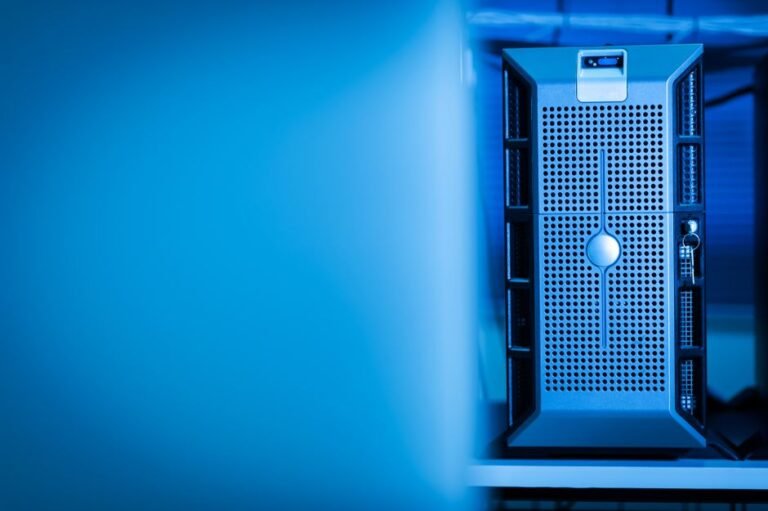
Meanwhile, BMS’s acquisition marks a significant leap, making it the first life sciences organization to deploy a DGX SuperPOD powered by Nvidia‘s Vera Rubin architecture. This state-of-the-art cluster will feature eight DGX Vera Rubin NVL72 systems, integrating Nvidia’s Vera central processing units (CPUs) with its powerful Rubin graphics processing units (GPUs).
This substantial upgrade significantly expands BMS’s existing Nvidia infrastructure, which includes an older SuperPOD that has served the company for approximately three years. The new system is designed to handle increasingly complex AI models and demanding prediction workloads across BMS’s diverse research programs, from compounds and proteins to vast scientific datasets.
Revolutionizing Drug Discovery with AI Insights
AI is no longer a peripheral tool at BMS; it’s central to their research strategy. The company leverages AI to inform the design of nearly all its small-molecule programs and a majority of its large-molecule initiatives. Key applications include:
- Target Identification: AI-driven insights have already reduced manual research time by several weeks.
- Lead Optimization: Refining potential drug candidates to enhance their efficacy and safety profiles.
- Large-Molecule Predictions: Handling complex data sets for biologics and other large-molecule therapies.
- Internal Model Development: Building proprietary AI models tailored to specific research challenges.
In practical terms, A cornerstone of BMS’s approach is “Predict First,” a method that utilizes model-generated predictions to pre-screen molecules. This allows researchers to exclude candidates that don’t meet desired properties before costly and time-consuming laboratory synthesis and testing.
As Dr. Robert Plenge, BMS’s chief research officer, noted, this shift enables scientists to evaluate “dozens” of potential drug candidates in early development stages, a significant increase from previous capabilities.
Accelerating Development and Expanding Access
The enhanced computing power is set to dramatically shorten drug development timelines. BMS has already seen a 20-30% reduction in the time required to identify and produce candidates for clinical trials, with aspirations to reach a 50% reduction in the coming years. An experimental sickle cell disease treatment is a testament to this, likely undiscoverable without the company’s advanced AI tools.
For example, Furthermore, the new SuperPOD will democratize access to these powerful AI capabilities across BMS’s global research organization. Erin Davis, VP of research business insights and technology, highlighted that the existing infrastructure was at capacity, leading to waiting periods.
The Vera Rubin system aims to eliminate these bottlenecks, making advanced computational resources available to a wider array of scientists, not just a specialized few. This expanded accessibility is crucial for fostering innovation and collaboration.
A Connected, Efficient, and Future-Ready Ecosystem
The new Vera Rubin SuperPOD will integrate seamlessly with BMS’s existing infrastructure, creating a unified computing environment accessible from research sites worldwide. This shared ecosystem, managed by Nvidia Mission Control, will facilitate the seamless flow of data and model outputs between teams, ensuring that learnings from one program can inform others globally.
That said, Beyond internal integration, the system will also provide researchers access to Nvidia’s BioNeMo Agent Toolkit, offering a suite of tools for protein-structure prediction, molecular generation, docking, and genomics. This further empowers scientists with state-of-the-art capabilities.
Crucially, this technological leap also comes with a significant focus on sustainability. Greg Meyers, BMS’s chief digital and technology officer, emphasized the new system’s energy efficiency, delivering up to 10 times the performance per megawatt compared to the infrastructure it replaces.
This efficiency is vital as computing demands escalate and energy costs rise. While financial terms and specific deployment dates remain undisclosed, BMS’s investment underscores a clear commitment to leveraging AI for a faster, more effective, and interconnected future in pharmaceutical research.
Expert Perspective
A practical read on AI Drug Discovery starts with research. That is where the earliest effects are likely to show up if this development keeps building.
What happens next will come down to adoption speed, policy response, and execution quality. That combination could make AI Drug Discovery a meaningful reference point across nvidia.
For decision-makers, the useful lens is not the headline alone but how vera changes priorities once organizations have to respond.
Frequently Asked Questions
Why is AI Drug Discovery important?
Revolutionizing Pharma: BMS Invests in Cutting-Edge AI SupercomputingThe bigger takeaway is simple: The pharmaceutical industry is undergoing a profound transformation driven by artificial intelligence.
What impact could AI Drug Discovery have?
Leading this charge, Bristol Myers Squibb (BMS) has announced a significant investment in cutting-edge AI infrastructure, acquiring an Nvidia DGX SuperPOD system built on the revolutionary Vera Rubin architecture.
What should readers watch next with AI Drug Discovery?
This strategic move positions BMS at the forefront of AI-powered drug discovery, promising to accelerate the development of life-saving medicines and enhance research capabilities globally.A New Era of Computational PowerMeanwhile, BMS’s acquisition marks a significant leap, making it the first life sciences organization to deploy a DGX SuperPOD powered by Nvidia’s Vera Rubin architecture.
How does this relate to research?
It connects because the article frames research as one of the clearest areas where the topic may be felt in practice.