Introducing Kimi K3: A New Frontier in Open-Weight AI
At a glance, In a significant development for the global artificial intelligence landscape, Moonshot AI has unveiled its Kimi K3 open-weight model, launched on July 16th. Boasting an astounding 2.8 trillion parameters, Kimi K3 immediately positions itself in the industry’s “3T class,” making it the largest open-weight model released to date. While its sheer scale has garnered immense attention, the true innovation lies not just in its size, but in a deliberate and strategic shift: a profound bet on memory optimization over raw computational power.
Table of Contents
- Introducing Kimi K3: A New Frontier in Open-Weight AI
- The Strategic Shift: Memory Over Compute
- Key Technical Innovations Driving Kimi K3
- Deployment Challenges and Enterprise Considerations
- Performance Claims and Independent Verification
- The Future of AI Innovation Under Constraint
- Expert Perspective
- Frequently Asked Questions
- Mixture-of-Experts (MoE) Architecture
- 4-Bit Quantization-Aware Training
- Kimi Delta Attention for Extended Contexts
- Hardware Requirements
- Software Readiness
- Pricing Structure
- Why does Kimi K3 open-weight model matter right now?
- What broader change could Kimi K3 open-weight model signal?
- What should the market watch next around Kimi K3 open-weight model?
Meanwhile, This strategic pivot is particularly noteworthy given the prevailing challenges faced by Chinese AI labs, including stringent US export controls on advanced computing chips. Kimi K3’s architecture suggests a clever workaround, relocating the constraint from compute to memory at nearly every layer of its design. This approach offers valuable insights into how AI development can continue to push boundaries under resource limitations.
The Strategic Shift: Memory Over Compute
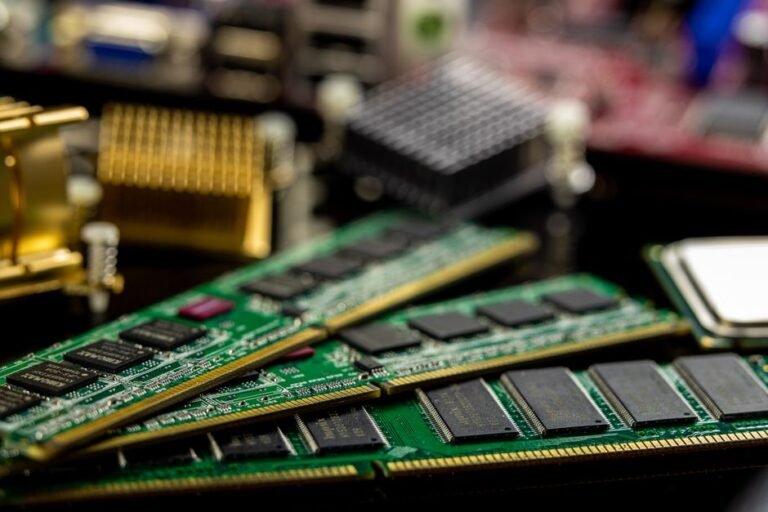
To understand Kimi K3’s ingenuity, it’s crucial to differentiate between two primary costs of running large language models: compute and memory. Compute refers to the processing power required for calculations to generate each word, while memory refers to the amount of the model that must be held instantly accessible during operation. Facing tight restrictions on high-end compute, Moonshot AI engineered K3 to be highly efficient with processing cycles, even if it means a larger memory footprint.
In practical terms, This design choice reflects a pragmatic response to geopolitical realities. While advanced training-grade compute is scarce, memory can often be aggregated across a multitude of less powerful, individually unremarkable chips. This “pooling” strategy is a key enabler for K3’s ambitious scale.
Key Technical Innovations Driving Kimi K3
Moonshot AI employs several sophisticated techniques to achieve its memory-first design:
Mixture-of-Experts (MoE) Architecture
- Instead of activating the entire 2.8 trillion parameters for every word generated, K3 utilizes a Mixture-of-Experts (MoE) approach.
- The model is segmented into 896 specialized sections, with only 16 of them (approximately 1.8% of the total) called upon at any given time.
- This dramatically reduces the computational load per word, making generation more efficient. However, it’s important to note that all 2.8 trillion parameters still need to be loaded into memory, ready for instant access.
4-Bit Quantization-Aware Training
- To tackle the substantial memory bill of holding all parameters, Kimi K3 was trained using 4-bit precision per parameter, a significant reduction from the typical 16 bits.
- This method, applied from the fine-tuning stage onward, results in substantial memory savings. Independent analysis estimates the model’s size at roughly 1.4TB in this format, a considerable decrease from the 5.6TB it would require at full precision.
- Moonshot AI states this choice was made for “broad hardware compatibility,” hinting at its ability to run on a wider range of hardware, potentially beyond Nvidia‘s top-tier GPUs.
Kimi Delta Attention for Extended Contexts
- Large models working with very long documents accumulate a vast “running store” of everything they’ve processed. At K3’s impressive 1 million token context limit (equivalent to thousands of pages), this context store can become the largest memory consumer, even surpassing the model itself.
- Kimi Delta Attention is designed to address this specific memory cost, enabling efficient processing of extremely long inputs without excessive memory overhead. Moonshot AI has even contributed caching code to the open-source vLLM project, highlighting its commitment to making K3 cost-competitive.
Deployment Challenges and Enterprise Considerations
For example, While Kimi K3’s open-weight release on July 27th offers unprecedented access, its practical deployment presents real-world challenges for enterprises, particularly in regions like Southeast Asia where data sovereignty and local language coverage are key drivers for adopting open models.
Hardware Requirements
Moonshot AI recommends serving K3 across 64 or more accelerators, wired together closely enough to function as a single memory pool. With the model weights alone at 1.4TB (before accounting for memory needed for long document contexts), this is not a server-room solution but a significant data-center commitment. For most businesses, this translates into renting dedicated cloud capacity rather than owning the infrastructure, which, while maintaining data sovereignty and contractual control, diminishes the independence that often attracts enterprises to open-weight models in the first place.
Software Readiness
That said, K3’s unique architectural innovations, such as Mixture-of-Experts and Kimi Delta Attention, are new enough that standard open-source tools for running models may not yet fully support them. Moonshot AI is actively collaborating with inference partners and open-source maintainers to align technical details, suggesting that the “launch date” and “usable date” for self-hosted deployments may differ.
Pricing Structure
Kimi K3’s pricing reflects its advanced capabilities: $3 per million input tokens, dropping to $0.30 for recently seen input, and $15 per million output tokens. While competitive against some high-end models, it marks a departure from the “budget tier” occupied by some predecessors. Companies should budget based on the cost of a completed task, as K3 currently operates with maximum reasoning effort as the default setting.
Performance Claims and Independent Verification
Interestingly, Kimi K3 has already shown impressive results, notably placing first in Arena’s Frontend Code evaluation with 1,679 points, surpassing models like Fable 5 in blind developer testing. However, Moonshot AI itself offers a balanced perspective, acknowledging that K3’s overall performance still trails leading models such as Claude Fable 5 and GPT 5.6 Sol.
The company also lists several limitations, including potential generation instability with certain historical thinking content, unexpected decisions in ambiguous user intent, and a noticeable user experience gap compared to top competitors. Crucially, many performance claims remain first-party until the weights are publicly available for independent verification.
However, “K3 shows large-scale pre-training combined with architectural work can still deliver step-change gains for flagship Chinese models despite compute constraints.” – Bank of America analysts led by Alex Liu
The Future of AI Innovation Under Constraint
Kimi K3 stands as a testament to the power of architectural innovation in the face of resource limitations. Its memory-first strategy provides a blueprint for how AI development can continue to advance, even when access to cutting-edge compute is restricted. As open-weight models continue to gain market share, accounting for a growing percentage of tokens processed by production gateways, Kimi K3’s release on July 27th will be a pivotal moment, revealing how much of this new giant truly belongs in the accessible, open-source column.
Expert Perspective
From an industry angle, the clearest signal around Kimi K3 open-weight model is how it may influence memory. The story reads less like a one-day spike and more like a marker of broader movement.
The next phase will depend on how quickly teams, regulators, or customers react. In practice, that gives Kimi K3 open-weight model room to reshape expectations across kimi over the near term.
For readers focused on practical impact, the best next step is to watch what changes around open once attention turns into execution.
Frequently Asked Questions
Why does Kimi K3 open-weight model matter right now?
Introducing Kimi K3: A New Frontier in Open-Weight AI At a glance, In a significant development for the global artificial intelligence landscape, Moonshot AI has unveiled its Kimi K3 open-weight model, launched on July 16th.
What broader change could Kimi K3 open-weight model signal?
Boasting an astounding 2.8 trillion parameters, Kimi K3 immediately positions itself in the industry’s “3T class,” making it the largest open-weight model released to date.
What should the market watch next around Kimi K3 open-weight model?
While its sheer scale has garnered immense attention, the true innovation lies not just in its size, but in a deliberate and strategic shift: a profound bet on memory optimization over raw computational power.
Source: https://www.artificialintelligence-news.com/news/kimi-k3-open-weight-model-memory-compute-china/