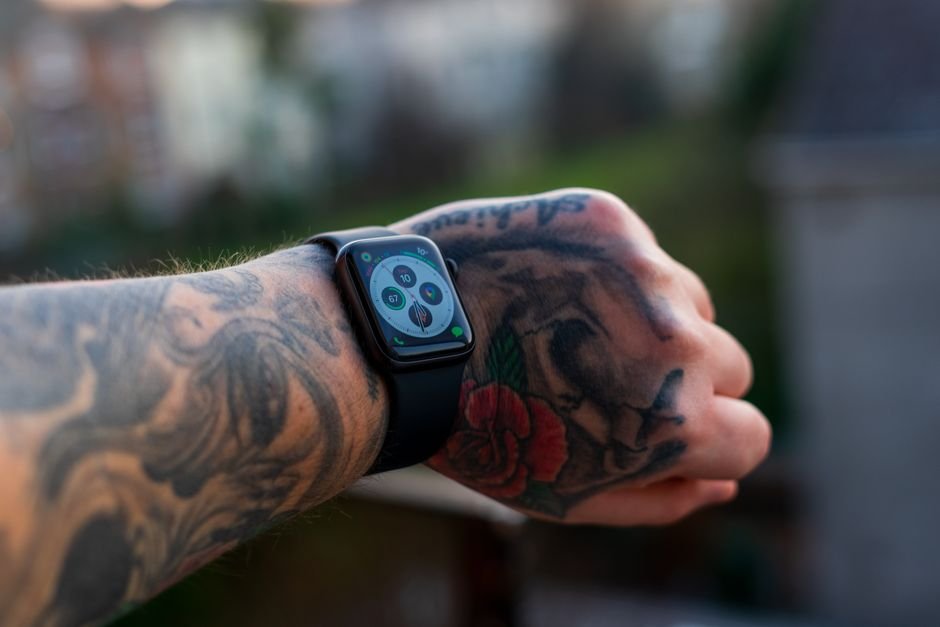
Do Tattoos Affect Your Fitness Tracker’s Accuracy?
The bigger takeaway is simple: Fitness trackers have become an indispensable tool for many, helping us monitor everything from heart rate to sleep patterns. But for individuals with tattoos, a common question arises: do these vibrant skin artworks interfere with the device’s ability to collect data accurately? The short answer, as many have discovered, is often ‘yes,’ but the situation is more nuanced than a simple yes or no.
Table of Contents
- Do Tattoos Affect Your Fitness Tracker’s Accuracy?
- Expert Perspective
- Frequently Asked Questions
- How Your Fitness Tracker Measures Heart Rate
- The Tattoo Conundrum: When Ink Meets Light
- Finding a Solution: Tips for Tattooed Tracker Users
- Alternative Tracking Methods
- The Takeaway
- Why does tattoos fitness trackers matter right now?
- What broader change could tattoos fitness trackers signal?
- What should the market watch next around tattoos fitness trackers?
Meanwhile, Understanding why this compatibility issue exists requires a quick look at how most modern fitness trackers actually work.
How Your Fitness Tracker Measures Heart Rate
The majority of wrist-worn fitness trackers rely on a technology called photoplethysmography (PPG). This method uses green LED lights and a photosensitive sensor on the back of the device, which sits directly against your skin. Here’s the simplified process:
- Light Emission: The LEDs shine green light into your skin.
- Blood Flow Detection: Blood absorbs green light, and as your heart beats, the volume of blood in your capillaries changes.
- Signal Reading: The sensor detects these changes in absorbed and reflected light.
- Heart Rate Calculation: An algorithm translates these light variations into your heart rate.
It’s a clever system that works remarkably well on clear skin.
The Tattoo Conundrum: When Ink Meets Light
The elegant simplicity of PPG technology faces a significant challenge when it encounters tattoo ink. Here’s why:
- Light Absorption: Dark tattoo inks, particularly black, blue, and purple, are very good at absorbing light. When the green light from your tracker hits a densely tattooed area, much of that light is absorbed by the ink rather than penetrating the skin to detect blood flow.
- Light Scattering: The ink can also scatter the light in unpredictable ways, making it difficult for the sensor to get a clear, consistent reading of your pulse.
- Reduced Signal: The net effect is a significantly weaker or distorted signal reaching the sensor, leading to inaccurate heart rate readings, erratic data, or sometimes no readings at all.
For example, Notably not all tattoos cause issues. Lighter inks, less dense designs, or older, faded tattoos might have less impact. However, heavily inked areas are most prone to problems.
Finding a Solution: Tips for Tattooed Tracker Users
If your fitness tracker is struggling to get accurate readings over a tattoo, don’t despair! There are several strategies you can try:
- Experiment with Placement: The most common solution is to wear your tracker on an area of skin that isn’t tattooed. Many users find success on the inside of the wrist, an ankle, or even a bicep if the device allows for it.
- Try the Other Wrist: If one wrist is heavily tattooed, the other might have less ink or a different tattoo style that interferes less.
- Adjust Tightness: Ensure your tracker is snug but not uncomfortably tight. Too loose, and it can move, breaking contact; too tight, and it might impede blood flow.
- Clean the Sensor: Always keep the sensor clean from sweat, dirt, and oils, as these can also interfere with readings.
- Consult User Communities: Online forums and user groups often share experiences with specific tracker models and tattoo types. You might find others with similar tattoos who have found a workaround.
Alternative Tracking Methods
That said, For those who find wrist-worn trackers consistently unreliable due to tattoos, alternative heart rate monitoring solutions exist:
- Chest Straps: These are widely considered the gold standard for accuracy. ECG (electrocardiogram) based chest straps measure electrical signals from your heart directly and are completely unaffected by tattoos. They often pair seamlessly with many fitness apps and devices.
- Armband Monitors: Some optical heart rate monitors are designed to be worn higher on the arm (bicep or forearm), which might offer a clearer patch of skin for readings.
The Takeaway
While tattoos can indeed pose a challenge for the optical heart rate sensors found in most fitness trackers, it doesn’t mean you have to choose between your body art and your health data. By understanding how these devices work and trying different placements or alternative monitoring methods, you can often find a way to make your technology work for you. It’s about finding the right fit for your unique body.
Expert Perspective
From an industry angle, the clearest signal around tattoos fitness trackers is how it may influence light. The story reads less like a one-day spike and more like a marker of broader movement.
The next phase will depend on how quickly teams, regulators, or customers react. In practice, that gives tattoos fitness trackers room to reshape expectations across heart over the near term.
For readers focused on practical impact, the best next step is to watch what changes around tattoos once attention turns into execution.
Frequently Asked Questions
Why does tattoos fitness trackers matter right now?
Do Tattoos Affect Your Fitness Tracker’s Accuracy?The bigger takeaway is simple: Fitness trackers have become an indispensable tool for many, helping us monitor everything from heart rate to sleep patterns.
What broader change could tattoos fitness trackers signal?
But for individuals with tattoos, a common question arises: do these vibrant skin artworks interfere with the device’s ability to collect data accurately?
What should the market watch next around tattoos fitness trackers?
The short answer, as many have discovered, is often ‘yes,’ but the situation is more nuanced than a simple yes or no.Meanwhile, Understanding why this compatibility issue exists requires a quick look at how most modern fitness trackers actually work.How Your Fitness Tracker Measures Heart RateThe majority of wrist-worn fitness trackers rely on a technology called photoplethysmography (PPG).
Source: https://www.engadget.com/2197736/do-fitness-trackers-work-with-tattoos/