The New Frontier of Retail: Hyper-Personalization with AI
The central development is this: In today’s competitive retail landscape, generic customer experiences are a relic of the past. Modern consumers expect digital interactions that are not just convenient, but intuitively tailored to their individual needs and preferences. This shift is driving retailers to re-evaluate their strategies, moving beyond static layouts and broad demographic segmentation towards dynamic, AI-powered systems capable of delivering real-time personalization and profound customer insights.
Table of Contents
- The New Frontier of Retail: Hyper-Personalization with AI
- The Future of Retail is Intelligent
- Expert Perspective
- Frequently Asked Questions
- Dynamic UI and Real-Time Personalization: A Game Changer
- Unlocking Deeper Customer Insights with Multi-Modal AI
- Revolutionizing Campaign Testing with Synthetic Users
- Automating the Physical Retail Space with Edge AI
- Seamless Integration: The Model Context Protocol
- Why is retail AI personalization important?
- What impact could retail AI personalization have?
- What should readers watch next with retail AI personalization?
- How does this relate to customer?
Meanwhile, Optimizing AI infrastructure is no longer an option but a necessity for successful deployment of these advanced systems. Leaders are replacing traditional, rigid customer interaction models with sophisticated data pipelines that can adapt the user environment dynamically, even during a live session. The era of one-size-fits-all is over; the future is deeply personal.
Dynamic UI and Real-Time Personalization: A Game Changer
Traditional static interfaces and broad segmentation rules simply cannot meet the demands of modern conversion targets. Studies consistently show that generic categorizations fail to generate sufficient engagement compared to individualized, session-based interface modifications.
In practical terms, This is where Generative User Interfaces (UIs) powered by predictive AI models step in. These advanced systems build unique layouts, native copy, and interactive components at the precise moment a page loads. By analyzing active clickstreams, historical purchase records, and inferred intent parameters, the application environment constructs a visual experience unique to each user session.
A McKinsey study highlights the urgency, revealing that over three-quarters (76%) of consumers feel frustrated when digital experiences don’t adapt to their specific needs. Conversely, companies that embrace real-time tailored layouts report significant revenue gains, including a 35% increase in purchase frequency and a 21% uplift in average order values.
Unlocking Deeper Customer Insights with Multi-Modal AI
As high-bandwidth digital media proliferates, legacy text-based data ingestion pipelines are becoming obsolete for tracking nuanced consumer sentiment. The modern quest for customer insight demands infrastructure capable of processing video, audio, and unlabelled imagery concurrently.
For example, Consider the sheer volume: video content accounts for a staggering 82% of total internet traffic, with the average consumer dedicating over 60% of their digital media consumption time to streaming video formats. This creates a substantial visibility gap for marketing operations that rely solely on traditional keyword monitoring.
To bridge this gap, multi-modal social listening platforms are emerging. These platforms ingest unstructured video streams to identify corporate iconography, product usage patterns, and spoken sentiment across diverse, unlinked distribution networks. The global market for these specialized multi-modal systems is projected to reach $2.83 billion this fiscal year, underscoring their growing importance.
- Enhanced ROI: Organizations leveraging these advanced ingestion engines gain a significant analytical advantage. 76% of media analysts report verifiable return on investment across visual platforms, compared to under 60% for operations limited to text databases.
- Early Trend Detection: The goal is to identify unbranded mentions and visual trends before they peak on standard search platforms. This critical window provides supply chain teams with the lead time needed to adjust regional inventory and match sudden spikes in online demand.
Revolutionizing Campaign Testing with Synthetic Users
That said, The traditional method of testing new ad copy or localized pricing structures often involved weeks of expensive, slow human focus groups. The introduction of synthetic user simulations fundamentally changes this process.
Virtual personas, built on large language models, are deployed to mirror target consumer behavior. These AI agents integrate targeted demographic, psychometric, and historical behavioral datasets to simulate group decision-making, content feedback, and application navigation patterns. This allows technology teams to deploy synthetic cohorts within virtual sandbox environments, executing thousands of automated interviews, content stress tests, and user experience reviews simultaneously.
Interestingly, To maintain accuracy, these virtual consumers are continuously updated by injecting fresh interview data from real human control groups. This ensures the synthetic population remains aligned with active market realities, allowing product managers to pinpoint structural workflow friction in application designs long before code is deployed to live production servers.
Automating the Physical Retail Space with Edge AI
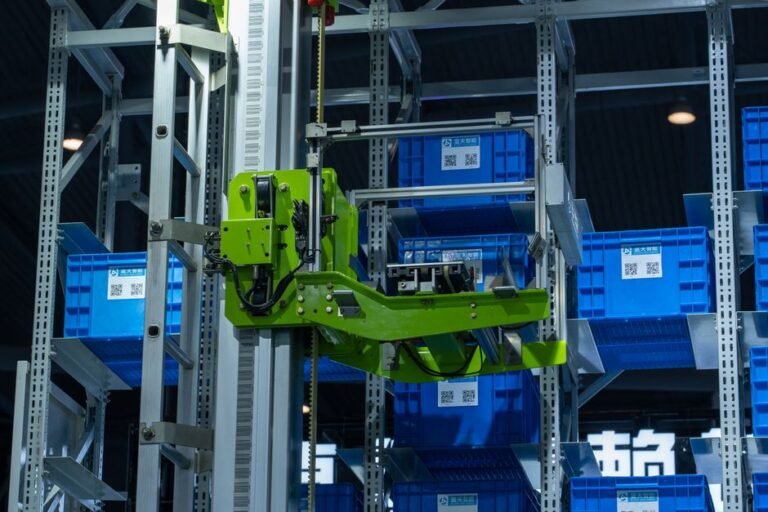
Artificial intelligence isn’t just transforming digital experiences; it’s also revolutionizing the physical retail environment. Computer vision models, trained on physical interactions, spatial layout geometry, and environmental variables, empower edge nodes to orchestrate real-world actions.
McKinsey data forecasts that the market for these physical automation platforms will exceed $370 billion by 2040, driven by verified operational returns in logistical efficiency and retail labor optimization.
However, Physical installations target common storefront friction points, offering innovations like registerless checkout, real-time shelf tracking, and intuitive layout navigation. Behind the scenes, warehouse supply chains benefit immensely from robotic arms trained in software sandboxes. By running millions of trial runs in virtual models before handling actual goods, these machines learn to pick and pack even oddly shaped boxes with precision and fluidity.
Delivering this immediate physical response hinges on installing processing chips directly on the factory or store floor. Edge computing hardware processes incoming sensor feeds locally, drastically cutting latency and mitigating the corporate data vulnerability associated with routing constant raw video streams through centralized cloud servers.
Seamless Integration: The Model Context Protocol
Meanwhile, Transitioning to autonomous enterprise operations requires a standardized approach to how AI models interact with existing retail databases, product catalogs, and customer relationship management (CRM) platforms. This is where the Model Context Protocol (MCP) comes in.
MCP establishes an open communication standard that acts as a universal connection layer between core AI models and external data tools. This open framework eliminates the need for software engineering teams to author custom integration code for every backend tool deployment, streamlining development and reducing complexity.
In practical terms, Operational models deploy modular instruction packages, known as ‘skills,’ to handle discrete commercial workflows, such as checking warehouse stock levels or modifying a customer loyalty tier. Instead of overwhelming the model’s context window with every operational policy at session launch, the application intelligently discovers and loads specific operational folders only when the workflow demands them.
This collaborative standardization effort is governed by the Linux Foundation via the Agentic AI Foundation, with support from major technology providers ensuring long-term cross-platform compatibility. This architecture significantly lowers processing latency and contains token consumption costs during long, multi-step customer service interactions, making AI deployments more efficient and cost-effective.
The Future of Retail is Intelligent
For example, From hyper-personalized digital experiences to automated physical spaces and seamlessly integrated AI systems, the retail industry is undergoing a profound transformation. By embracing these advanced AI capabilities, retailers can not only meet but exceed customer expectations, drive significant revenue growth, and establish a competitive edge in an increasingly dynamic market.
Expert Perspective
A practical read on retail AI personalization starts with customer. That is where the earliest effects are likely to show up if this development keeps building.
What happens next will come down to adoption speed, policy response, and execution quality. That combination could make retail AI personalization a meaningful reference point across digital.
For decision-makers, the useful lens is not the headline alone but how time changes priorities once organizations have to respond.
Frequently Asked Questions
Why is retail AI personalization important?
The New Frontier of Retail: Hyper-Personalization with AIThe central development is this: In today’s competitive retail landscape, generic customer experiences are a relic of the past.
What impact could retail AI personalization have?
Modern consumers expect digital interactions that are not just convenient, but intuitively tailored to their individual needs and preferences.
What should readers watch next with retail AI personalization?
This shift is driving retailers to re-evaluate their strategies, moving beyond static layouts and broad demographic segmentation towards dynamic, AI-powered systems capable of delivering real-time personalization and profound customer insights.Meanwhile, Optimizing AI infrastructure is no longer an option but a necessity for successful deployment of these advanced systems.
How does this relate to customer?
It connects because the article frames customer as one of the clearest areas where the topic may be felt in practice.