
Introduction
The bigger takeaway is simple: The promise of artificial intelligence has long captivated our imaginations, but its rapid ascent into practical, everyday applications is a testament to groundbreaking advancements across multiple fronts. OpenAI, a leader in AI research and deployment, is at the forefront of this transformation.
Table of Contents
- Introduction
- The Four Pillars Driving AI Abundance
- The Compounding Effect: A Virtuous Cycle
- The Future of Abundant Intelligence
- Expert Perspective
- Frequently Asked Questions
- Conclusion
- Specialized Chips: The Brains of the Operation
- Scalable Compute: The Powerhouse Infrastructure
- Advanced Models: The Intelligence Itself
- User-Centric Products: Bringing AI to Life
- Why is abundant intelligence important?
- What impact could abundant intelligence have?
- What should readers watch next with abundant intelligence?
- How does this relate to more?
According to OpenAI CFO Sarah Friar, the path to “abundant intelligence”—AI that is more useful, scalable, and cost-effective—isn’t paved by a single breakthrough, but by a powerful compounding effect across critical technological layers. This article looks at the four key pillars identified by Friar: chips, compute, models, and products, and explores how their synergistic evolution is making sophisticated AI accessible to all.
The Four Pillars Driving AI Abundance
Meanwhile, Friar’s insights highlight a full-stack approach, where innovation in one area fuels progress in another, creating a virtuous cycle of improvement. Let’s examine each component.
Specialized Chips: The Brains of the Operation
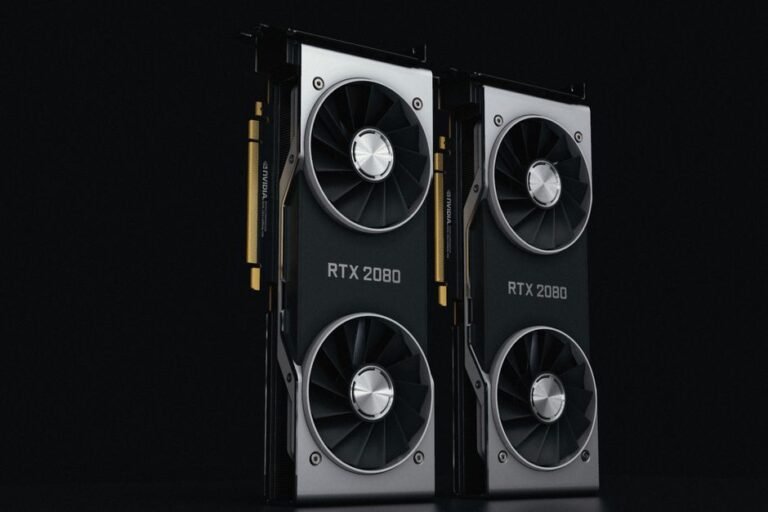
At the very foundation lies specialized hardware. The evolution of chips, particularly Graphics Processing Units (GPUs) and custom AI accelerators, has been pivotal. These powerful processors are designed to handle the massive parallel computations required for training and running complex AI models.
- Speed and Efficiency: Modern AI chips can process vast amounts of data at unprecedented speeds, drastically reducing the time and energy needed for model training.
- Continuous Innovation: The competitive landscape among chip manufacturers drives constant innovation, leading to more powerful, smaller, and energy-efficient designs year after year. This hardware revolution directly translates into more capable and cost-effective AI.
Scalable Compute: The Powerhouse Infrastructure
In practical terms, Beyond individual chips, the ability to orchestrate and manage vast networks of these processors—what we call “compute”—is equally crucial. Cloud computing platforms and massive data centers provide the distributed infrastructure necessary to train and deploy today’s largest AI models.
- Elasticity and Scale: Companies like OpenAI can dynamically scale their compute resources up or down as needed, allowing them to tackle increasingly ambitious AI projects without prohibitive upfront hardware investments.
- Operational Efficiency: Advances in data center design, cooling systems, and network architecture contribute to greater energy efficiency and lower operational costs, making large-scale AI more sustainable and economical.
Advanced Models: The Intelligence Itself
The core intelligence resides within the AI models. We’ve seen an incredible leap in model architecture, particularly with the advent of transformer networks and large language models (LLMs). These models, trained on colossal datasets, exhibit emergent capabilities, understanding context, generating creative text, and even performing complex reasoning.
- Increased Capability: Modern models are not just bigger; they are smarter, more versatile, and capable of handling a wider range of tasks with greater accuracy and nuance.
- Generalization: The ability of these models to generalize across different domains and tasks means they can be applied to diverse problems, from customer service to scientific research, with minimal re-training.
User-Centric Products: Bringing AI to Life
For example, Ultimately, the value of sophisticated AI is realized when it’s integrated into user-friendly products and services. OpenAI’s own offerings, such as ChatGPT, DALL-E, and their powerful APIs, exemplify how cutting-edge research is transformed into accessible tools.
- Accessibility: Products abstract away the underlying complexity of AI, allowing individuals and businesses to leverage its power without needing deep technical expertise.
- Real-World Impact: From enhancing productivity and automating tasks to fostering creativity and enabling new forms of interaction, these products demonstrate the practical utility and transformative potential of abundant intelligence.
The Compounding Effect: A Virtuous Cycle
What makes this progression so powerful, as Sarah Friar emphasizes, is the compounding effect. Improvements in one area don’t just add; they multiply.
- More efficient chips enable the training of larger, more complex models.
- Greater compute power allows these models to be trained faster and deployed at scale, reducing the cost per inference.
- More capable models lead to the development of more useful and innovative products.
- The success of these products drives demand for even better chips and more compute, restarting and accelerating the cycle.
That said, This interconnected growth propels AI forward, making it not just more powerful, but also more ubiquitous and affordable.
The Future of Abundant Intelligence
The vision of abundant intelligence suggests a future where sophisticated AI is no longer a niche technology but a readily available resource, much like electricity or internet access. This democratization of AI holds immense promise:
- Innovation Across Industries: Businesses of all sizes can integrate AI to optimize operations, develop new services, and gain competitive advantages.
- Personalized Experiences: AI can tailor information, services, and interactions to individual needs, making technology more intuitive and helpful.
- Solving Grand Challenges: With AI as an abundant tool, researchers and innovators can tackle complex global issues in areas like healthcare, climate change, and education with unprecedented capabilities.
Expert Perspective
A practical read on abundant intelligence starts with more. That is where the earliest effects are likely to show up if this development keeps building.
What happens next will come down to adoption speed, policy response, and execution quality. That combination could make abundant intelligence a meaningful reference point across models.
For decision-makers, the useful lens is not the headline alone but how chips changes priorities once organizations have to respond.
Frequently Asked Questions
Why is abundant intelligence important?
IntroductionThe bigger takeaway is simple: The promise of artificial intelligence has long captivated our imaginations, but its rapid ascent into practical, everyday applications is a testament to groundbreaking advancements across multiple fronts.
What impact could abundant intelligence have?
OpenAI, a leader in AI research and deployment, is at the forefront of this transformation.According to OpenAI CFO Sarah Friar, the path to “abundant intelligence”—AI that is more useful, scalable, and cost-effective—isn’t paved by a single breakthrough, but by a powerful compounding effect across critical technological layers.
What should readers watch next with abundant intelligence?
This article looks at the four key pillars identified by Friar: chips, compute, models, and products, and explores how their synergistic evolution is making sophisticated AI accessible to all.The Four Pillars Driving AI AbundanceMeanwhile, Friar’s insights highlight a full-stack approach, where innovation in one area fuels progress in another, creating a virtuous cycle of improvement.
How does this relate to more?
It connects because the article frames more as one of the clearest areas where the topic may be felt in practice.
Conclusion
Taken together, the story points to a trend that is still unfolding. Interestingly, OpenAI CFO Sarah Friar’s perspective underscores a crucial truth: the era of abundant intelligence is not emerging from isolated breakthroughs but from a tightly integrated, full-stack ecosystem. By continuously pushing the boundaries in chips, compute, models, and products, and by understanding how these elements compound their impact, organizations like OpenAI are not just advancing technology—they are shaping a future where intelligent systems are a pervasive and transformative force for good, delivering ever more useful intelligence at greater scale and lower cost.
Source: https://openai.com/index/the-full-stack-behind-abundant-intelligence