
Empowering Public Transit with AI Innovation
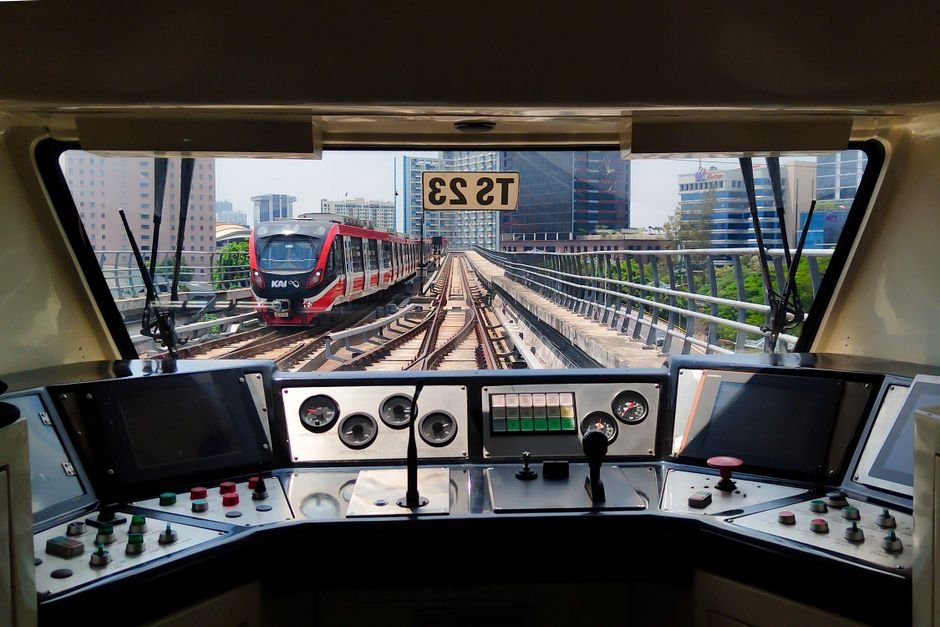
The bigger takeaway is simple: Imagine the bustling control room of a major city’s transit system – a scene reminiscent of NASA mission control, but with a critical difference: fragmented data. Public transportation agencies worldwide grapple with a deluge of unintegrated information, making real-time decision-making a monumental challenge. This complex environment often means that while employees monitor dozens of feeds, the lack of a centralized system hinders swift, informed responses.
Table of Contents
- Empowering Public Transit with AI Innovation
- The Public Transit Intelligence Hub (PTIQ)
- A Collaborative Effort Backed by Google.org
- AI as an Enabler: Beyond Technology
- Transforming the Transit Experience for All
- Expert Perspective
- Frequently Asked Questions
- Why is Public Transit AI Platform important?
- What impact could Public Transit AI Platform have?
- What should readers watch next with Public Transit AI Platform?
- How does this relate to transit?
Meanwhile, Enter the MIT Transit Lab, which recently secured a substantial $2.1 million grant from Google.org. This significant funding, awarded as part of the Google.org Impact Challenge: AI for Government Innovation, will support the development of a groundbreaking AI platform designed to transform this very landscape.
The Public Transit Intelligence Hub (PTIQ)
The MIT Transit Lab’s winning project, the Public Transit Intelligence Hub (PTIQ), aims to be the solution to fragmented data. PTIQ is envisioned as a centralized, AI-orchestrated platform that will unify real-time monitoring, operations control, and passenger communication systems. This integration is crucial for empowering transit control center staff to make better-informed, on-the-spot decisions and provide riders with more immediate and accurate information.
In practical terms, “Our goal isn’t to automate those decisions, but to make sure the people making them have the best information possible. By unifying and streamlining data and information flow from fragmented and siloed internal systems, PTIQ will improve the experience of both riders and the transit workforce.”
— Awad Abdelhalim, Associate Director of the Transit Lab and PTIQ Co-Principal Investigator
This approach emphasizes AI as a powerful tool to augment human intelligence, rather than replace it.
A Collaborative Effort Backed by Google.org
For example, This ambitious three-year project is one of only 15 selected globally for Google.org’s prestigious challenge. Beyond the financial support, Google.org will also lend invaluable pro bono assistance from its own AI engineers and product experts. This collaboration underscores the project’s potential to bridge the gap between AI’s promise and its practical application in critical public services.
The PTIQ project is spearheaded by a team of distinguished experts from MIT and Northeastern University:
- Awad Abdelhalim, Associate Director of the Transit Lab, serves as co-principal investigator, project director, and technical lead.
- Jinhua Zhao, the MIT Class of 1941 Professor of City and Transportation, head of the MIT Department of Urban Studies and Planning, and founder of the MIT Mobility Initiative (MMI), is the other co-principal investigator.
- Jim Aloisi, MIT Lecturer and former Massachusetts Secretary of Transportation, manages the program.
- The Transit Research Consortium, including researchers from the Transit Lab, MMI, and Northeastern University (led by Professor Haris Koutsopoulos), will also contribute their expertise.
AI as an Enabler: Beyond Technology
That said, PTIQ’s decision support interface will integrate advanced predictive models, optimization engines, and large language model-based contextual reasoning. However, a core philosophy of the project is that the final decisions will always remain with human transit staff. This recognizes that complex, real-world situations often require human judgment to balance trade-offs that AI alone cannot fully comprehend.
“The hard part of integrating AI in transit is not the technology; it’s the institution… Not whether AI can do this, but whether it can work in the organization and whether the staff trust it.”
— Jinhua Zhao, MIT Professor and Co-Principal Investigator
Interestingly, The project’s success hinges on building trust and ensuring AI works seamlessly within the existing organizational reality and behavioral nuances of a transit agency.
Transforming the Transit Experience for All
The ultimate vision for PTIQ is a multifaceted transformation. It aims to improve the experience for both the transit workforce and the millions of riders who rely on public transportation daily. By streamlining information and providing clearer insights, agencies can:
- Respond more efficiently to disruptions and unexpected events.
- Reduce platform and bus stop crowding.
- Provide passengers with higher quality and more timely information.
- Support agency staff – from dispatchers to vehicle operators and communications personnel – with high-quality, reliable, real-time information and solution sets.
However, The MIT Transit Lab’s PTIQ project represents a significant leap forward in leveraging artificial intelligence to enhance public transportation. By focusing on empowering human decision-makers with unified, intelligent data, this initiative promises to make our transit systems more responsive, efficient, and user-friendly for everyone.
Expert Perspective
A practical read on Public Transit AI Platform starts with transit. That is where the earliest effects are likely to show up if this development keeps building.
What happens next will come down to adoption speed, policy response, and execution quality. That combination could make Public Transit AI Platform a meaningful reference point across ptiq.
For decision-makers, the useful lens is not the headline alone but how project changes priorities once organizations have to respond.
Frequently Asked Questions
Why is Public Transit AI Platform important?
Empowering Public Transit with AI InnovationThe bigger takeaway is simple: Imagine the bustling control room of a major city’s transit system – a scene reminiscent of NASA mission control, but with a critical difference: fragmented data.
What impact could Public Transit AI Platform have?
Public transportation agencies worldwide grapple with a deluge of unintegrated information, making real-time decision-making a monumental challenge.
What should readers watch next with Public Transit AI Platform?
This complex environment often means that while employees monitor dozens of feeds, the lack of a centralized system hinders swift, informed responses.Meanwhile, Enter the MIT Transit Lab, which recently secured a substantial $2.1 million grant from Google.org.
How does this relate to transit?
It connects because the article frames transit as one of the clearest areas where the topic may be felt in practice.
Source: https://news.mit.edu/2026/mit-transit-lab-to-develop-ai-platform-public-transit-agencies-0930



























