MIT‘s Gleanmer Chip: Pioneering Ultra-Efficient 3D Mapping for Tiny Robots and AR
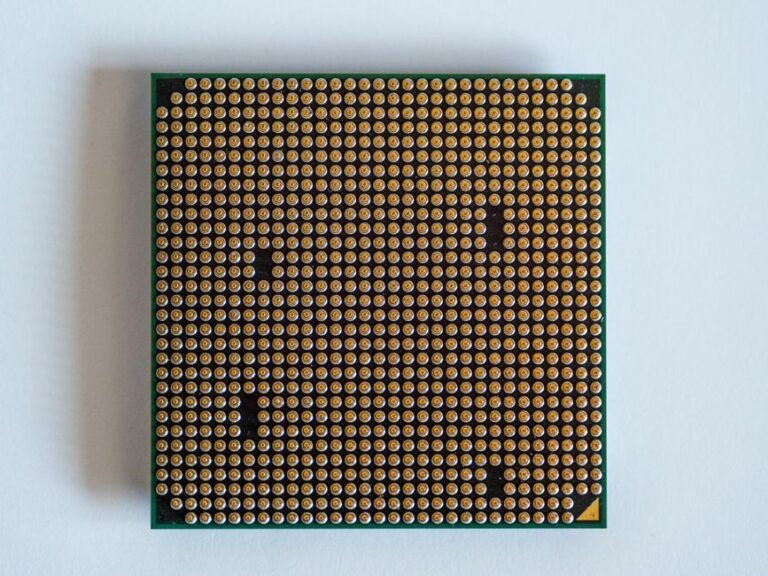
The central development is this: Imagine miniature robots navigating complex industrial systems or augmented reality headsets providing detailed overlays for hours without needing a charge. This vision is closer to reality thanks to a groundbreaking new chip developed by researchers at MIT. This innovative system-on-a-chip, dubbed Gleanmer, promises to revolutionize how small, battery-limited devices understand and interact with their environments by generating detailed 3D maps in real-time with astonishing energy efficiency.
Table of Contents
- MIT’s Gleanmer Chip: Pioneering Ultra-Efficient 3D Mapping for Tiny Robots and AR
- The Challenge of Real-Time 3D Mapping
- Introducing Gleanmer: A Paradigm Shift in Efficiency
- Unprecedented Power Savings and Performance
- Diverse Applications on the Horizon
- Paving the Way for a Smarter Future
- Expert Perspective
- Frequently Asked Questions
- Beyond Voxels: The Power of Gaussians
- Streamlined Processing: One Pass, No Waste
- Intelligent Fusion for Compact Maps
- The Magic of Hardware-Algorithm Co-Design
- Why does Gleanmer 3D mapping chip matter right now?
- What broader change could Gleanmer 3D mapping chip signal?
- What should the market watch next around Gleanmer 3D mapping chip?
The Challenge of Real-Time 3D Mapping
Meanwhile, Traditionally, creating comprehensive 3D maps of an environment is a computationally intensive task. It demands significant processing power and vast amounts of memory to store and process the myriad of 3D pixels (voxels) that represent obstacles. This high power consumption has been a major bottleneck for small, autonomous devices like drones, making it difficult for them to perform complex navigation or extended operations in constrained spaces.
Introducing Gleanmer: A Paradigm Shift in Efficiency
The MIT team, led by Professor Vivienne Sze along with graduate students Zih-Sing Fu and Peter Zhi Xuan Li, and Professor Sertac Karaman, tackled this challenge with a novel approach: a tightly integrated co-design of algorithms and specialized hardware. Their Gleanmer chip dramatically reduces power consumption while still producing highly accurate 3D maps, consuming only about 6 milliwatts – a mere fraction of what existing systems require.
Beyond Voxels: The Power of Gaussians
In practical terms, Instead of relying on rigid, cube-shaped voxels to represent space, Gleanmer employs a more flexible technique using ellipsoid blobs called Gaussians. These Gaussians can smoothly adapt their size, shape, and thickness to match curved objects far more efficiently. This innovative representation, part of their GMMap algorithm, allows the chip to capture both obstacles and free space with significantly less memory, leading to much more compact maps. A single elongated Gaussian can represent a region that would otherwise require numerous voxels.
Streamlined Processing: One Pass, No Waste
Traditional methods often require devices to load and process camera images multiple times to refine map details. Gleanmer, however, leverages a sophisticated technique that generates highly accurate Gaussians from depth images in just a single pass.
Crucially, the chip can then discard the images immediately, meaning it never needs to store an entire image at once. This “single-pass” approach drastically reduces the memory footprint by only comparing each pixel to its immediate neighbors, not every other pixel in the image.
Intelligent Fusion for Compact Maps
For example, As a robot moves, it often views the same object from different angles, potentially creating redundant Gaussians. To maintain a compact map, these overlapping representations must be fused.
While typical fusion processes demand revisiting raw pixel data, the MIT researchers developed a novel method that operates directly on the more compact Gaussians themselves. This intelligent fusion process further minimizes memory and power requirements.
The Magic of Hardware-Algorithm Co-Design
The exceptional efficiency of Gleanmer is a direct result of the synergistic co-design between its mapping algorithm and the underlying hardware. The chip is engineered to keep the Gaussians it’s actively processing within small, fast on-chip memory units, right next to the computational engines.
Because the Gaussian map is so compact, this strategy is feasible. This design eliminates the need to constantly fetch data from slower, more power-hungry off-chip storage, ensuring rapid and energy-efficient access to critical mapping data.
Unprecedented Power Savings and Performance
That said, Tests have shown Gleanmer generating detailed 3D maps in real-time while consuming approximately 6 milliwatts of power. This represents an astounding efficiency, requiring only about 2.5 percent of the power needed by the best existing chips for similar map construction tasks. Furthermore, by reusing compact Gaussians for path planning, the chip enables robots to chart safe trajectories using just 20 percent of the energy typically required.
Diverse Applications on the Horizon
- Autonomous UAVs: Enabling drones to inspect industrial HVAC systems for leaks or navigate complex environments with extended battery life.
- Augmented Reality Headsets: Providing lightweight AR experiences for prolonged periods, ideal for applications like educational medical simulations or intricate repair and assembly work.
- Smart Devices: Empowering a new generation of edge devices with a robust understanding of their surroundings.
Paving the Way for a Smarter Future
As Professor Sertac Karaman aptly puts it, “Real-time 3D mapping has been the missing piece for small autonomous systems.” Gleanmer fills this void, making continuous, instant, and nearly cost-free environmental understanding a reality for devices ranging from drones to AR glasses. The MIT team plans to further enhance energy efficiency by integrating processing units even closer to sensors and exploring new applications, such as using Gaussians to represent complex schematics for AI systems. This innovation marks a significant leap forward in autonomous technology, promising a future where our devices can perceive and navigate the world with unprecedented clarity and endurance.
Expert Perspective
From an industry angle, the clearest signal around Gleanmer 3D mapping chip is how it may influence chip. The story reads less like a one-day spike and more like a marker of broader movement.
The next phase will depend on how quickly teams, regulators, or customers react. In practice, that gives Gleanmer 3D mapping chip room to reshape expectations across gleanmer over the near term.
For readers focused on practical impact, the best next step is to watch what changes around power once attention turns into execution.
Frequently Asked Questions
Why does Gleanmer 3D mapping chip matter right now?
MIT’s Gleanmer Chip: Pioneering Ultra-Efficient 3D Mapping for Tiny Robots and ARThe central development is this: Imagine miniature robots navigating complex industrial systems or augmented reality headsets providing detailed overlays for hours without needing a charge.
What broader change could Gleanmer 3D mapping chip signal?
This vision is closer to reality thanks to a groundbreaking new chip developed by researchers at MIT.
What should the market watch next around Gleanmer 3D mapping chip?
This innovative system-on-a-chip, dubbed Gleanmer, promises to revolutionize how small, battery-limited devices understand and interact with their environments by generating detailed 3D maps in real-time with astonishing energy efficiency.The Challenge of Real-Time 3D MappingMeanwhile, Traditionally, creating comprehensive 3D maps of an environment is a computationally intensive task.
Source: https://news.mit.edu/2026/new-chip-could-help-tiny-robots-traverse-complex-environments-0623