Redefining AI: Extending Human Will and Judgment
The bigger takeaway is simple: In an era increasingly shaped by artificial intelligence, the debate around its design and control is more critical than ever. While many AI models are developed, trained, and then ‘frozen’ in a centralized manner, a new vision is emerging.
Table of Contents
- Redefining AI: Extending Human Will and Judgment
- The Core Proposal: Four Technical Directions
- Why Distributed AI for Distributed Knowledge?
- Addressing Technical Bottlenecks
- Ownership and Decentralized Alignment
- A Fundamental Shift: Centralized vs. Distributed AI
- Real-World Impact: Practical Applications
- Key Principles for the Future of AI
- Expert Perspective
- Frequently Asked Questions
- The Communication Channel
- Evaluation Metrics
- Sources
- Why is Human-Centered AI important?
- What impact could Human-Centered AI have?
- What should readers watch next with Human-Centered AI?
- How does this relate to human?
Mira Murati’s Thinking Machines Lab has released a compelling report making a technical case for a radically different approach: human-centered AI built on customizable model weights. This innovative perspective challenges the status quo, advocating for AI that truly extends human will and judgment, rather than operating as an opaque, unchangeable entity.
Meanwhile, The lab’s report argues that the prevalent ‘centralized and frozen’ AI design inherently excludes the very people it’s meant to serve. Instead, Thinking Machines Lab researchers envision AI that is distributed, highly customizable, and actively shaped by its users.
The Core Proposal: Four Technical Directions
To achieve this human-centered future, Thinking Machines Lab outlines four crucial technical directions:
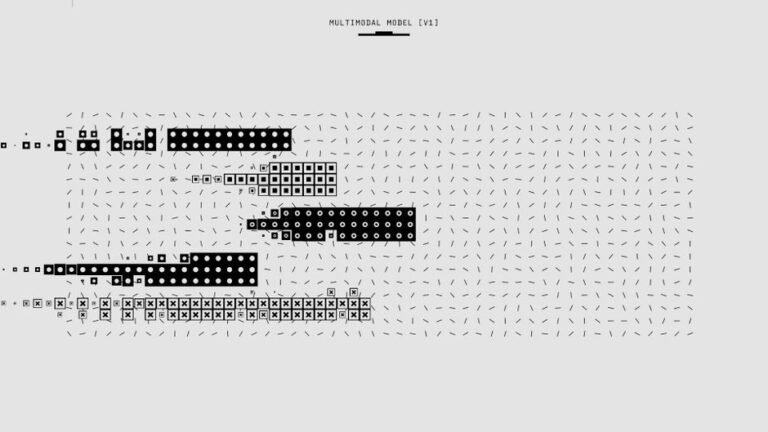
- Building Strong, Multimodal, and Customizable Models: Developing robust AI capable of interacting through various modalities (audio, video, text) and designed for user-specific adaptation.
- Empowering User Fine-Tuning: Creating intuitive tools that allow individuals and organizations to fine-tune and directly train model weights, giving them control over AI behavior.
- Wider Human-to-Machine Communication Channels: Developing advanced interfaces that facilitate richer, more continuous dialogue between humans and AI, moving beyond simple text prompts.
- Open Research and Knowledge Sharing: Publishing research to deepen engineers’ understanding of model construction, fostering a more transparent and collaborative AI development ecosystem.
In practical terms, These directions collectively aim to bring both AI knowledge and alignment closer to the end-users.
Why Distributed AI for Distributed Knowledge?
At the heart of Thinking Machines Lab’s philosophy is a profound understanding of knowledge itself. Much of human expertise is ‘tacit’ – local, constantly updated through feedback, and difficult to codify into a central database.
Think of a chef refining a recipe or a craftsperson perfecting their skill; this know-how is personal and fluid, not easily captured or centralized. Citing thinkers like Michael Polanyi and Friedrich Hayek, the report emphasizes that centralized planning often fails precisely because it overlooks this distributed, private, and fleeting nature of knowledge.
For example, Therefore, the lab posits, AI must be distributed to effectively leverage this distributed human knowledge. Its goal is to create AI that helps organizations cultivate and enhance their unique knowledge, rather than extracting it or attempting to replace it.
Exceptions like chess or mathematics, with their static, expressible goals and absence of hidden knowledge, are noted as domains where self-play and autonomous solving excel. Outside these closed systems, however, mere intelligence is insufficient; human integration is key.
Addressing Technical Bottlenecks
The report reframes two common limitations of current AI as solvable engineering challenges:
The Communication Channel
That said, Today’s typical AI interaction is often limited to a small text box and involves considerable waiting time. Thinking Machines Lab’s interaction models directly address this by taking in continuous audio, video, and text input, operating on rapid ‘micro-turns’ of approximately 200 milliseconds. This allows for a more fluid, natural, and responsive human-AI collaboration.
Evaluation Metrics
Current benchmarks, such as METR’s task-completion time horizons, often measure how well a model performs in isolation. The report argues this approach misses a critical aspect: the collaborative accomplishments of people and machines working together. New evaluation methods are needed to assess this joint performance.
Ownership and Decentralized Alignment
Interestingly, Beyond interfaces, the report looks at the crucial issue of where AI values reside. It warns that a single, centralized alignment authority can become a single point of failure or capture.
While prompts can alter surface behavior, the deeper, ingrained habits of a model remain fixed. Therefore, the lab advocates for encoding values directly into model weights, rather than relying solely on prompts.
This is where the lab’s Tinker API becomes a practical solution for engineers. Tinker enables the fine-tuning of open-weights models, such as Llama and Qwen, using LoRA (Low-Rank Adaptation).
It provides low-level primitives and allows users to export portable adapter weights. This empowers teams to cultivate their own AI models, embedding their specific protocols, styles, and values directly into the AI’s core behavior.
A Fundamental Shift: Centralized vs. Distributed AI
However, The Thinking Machines Lab’s perspective fundamentally contrasts with the prevailing centralized approach:
- Where AI is Trained: Instead of being trained in a few labs and then ‘frozen,’ distributed AI is adapted where the actual work happens.
- Who Shapes Values: Rather than being dictated by the model’s owner, values are shaped by the organization and its users.
- Adaptation Method: Moving beyond prompts and scaffolding, adaptation occurs through fine-tuned weights via tools like Tinker.
- User Interface: Evolving from a text box with turn-based waiting to live, multimodal interaction models.
- Alignment Locus: Shifting from one central specification to many diverse, owned models.
Real-World Impact: Practical Applications
These concepts translate into tangible engineering work with significant real-world benefits:
- A hospital could fine-tune an AI model on its unique patient protocols and clinical guidelines, keeping both sensitive data and adapter weights securely in-house.
- A law firm could adapt a model to its specific house style, legal precedents, and internal guidance, retraining it as internal policies evolve.
- A customer support team could leverage live, multimodal interaction to correct a model’s behavior mid-task, ensuring immediate and relevant assistance.
Meanwhile, In each scenario, the organization retains true ownership and control over its AI, moving beyond simply ‘renting’ a fixed, generic model.
Key Principles for the Future of AI
The report from Thinking Machines Lab offers transformative insights for the future of AI:
- Human participation is framed as a technical challenge to be solved, not a limitation on AI’s capabilities.
- The recognition of tacit, local knowledge is the fundamental reason AI itself must be distributed.
- Advanced interaction models aim to significantly widen the human-AI communication channel through continuous, micro-turn multimodal input.
- Tools like Tinker empower teams to encode their specific values into portable LoRA weights, which they own.
- AI alignment is reimagined as a landscape of many diverse, owned models, moving away from the concept of a single central authority.
In practical terms, By championing distributed, customizable, and human-centered AI, Mira Murati’s Thinking Machines Lab is laying the groundwork for a future where artificial intelligence truly serves and extends humanity’s collective will and judgment.
Sources
- Thinking Machines Lab, “The Future Worth Building Is Human” (Jul 10, 2026)
- Thinking Machines Lab, “Interaction Models: A Scalable Approach to Human-AI Collaboration” (May 2026)
- Tinker documentation (quickstart and TrainingClient API)
- Kwa, West et al., “Task-Completion Time Horizons of Frontier AI Models,” METR (2025)
Expert Perspective
A practical read on Human-Centered AI starts with human. That is where the earliest effects are likely to show up if this development keeps building.
What happens next will come down to adoption speed, policy response, and execution quality. That combination could make Human-Centered AI a meaningful reference point across knowledge.
For decision-makers, the useful lens is not the headline alone but how centralized changes priorities once organizations have to respond.
Frequently Asked Questions
Why is Human-Centered AI important?
Redefining AI: Extending Human Will and JudgmentThe bigger takeaway is simple: In an era increasingly shaped by artificial intelligence, the debate around its design and control is more critical than ever.
What impact could Human-Centered AI have?
While many AI models are developed, trained, and then ‘frozen’ in a centralized manner, a new vision is emerging.Mira Murati’s Thinking Machines Lab has released a compelling report making a technical case for a radically different approach: human-centered AI built on customizable model weights.
What should readers watch next with Human-Centered AI?
This innovative perspective challenges the status quo, advocating for AI that truly extends human will and judgment, rather than operating as an opaque, unchangeable entity.Meanwhile, The lab’s report argues that the prevalent ‘centralized and frozen’ AI design inherently excludes the very people it’s meant to serve.
How does this relate to human?
It connects because the article frames human as one of the clearest areas where the topic may be felt in practice.