Revolutionizing Weather Prediction with AI
The bigger takeaway is simple: For years, artificial intelligence has been steadily closing the gap with traditional physics-based weather forecasting models. However, two significant hurdles persisted: the inability to provide high-resolution forecasts for specific local terrains and the time lag associated with initializing models based on numerical weather prediction (NWP) analysis, often arriving six hours late. Google DeepMind and Google Research have now unveiled WeatherNext 3, an innovative AI model designed to tackle both these challenges head-on, promising a new era of global weather accuracy.
Table of Contents
- Revolutionizing Weather Prediction with AI
- Key Advantages of WeatherNext 3
- Expert Perspective
- Frequently Asked Questions
- Breaking Down the Barriers: Resolution and Cadence
- Training on Real-World Observations, Not Just Models
- Multi-Resolution Output for Comprehensive Insights
- Revolutionizing Precipitation and Clean Energy Forecasts
- Accessibility and Deployment
- Why is WeatherNext 3 important?
- What impact could WeatherNext 3 have?
- What should readers watch next with WeatherNext 3?
- How does this relate to weathernext?
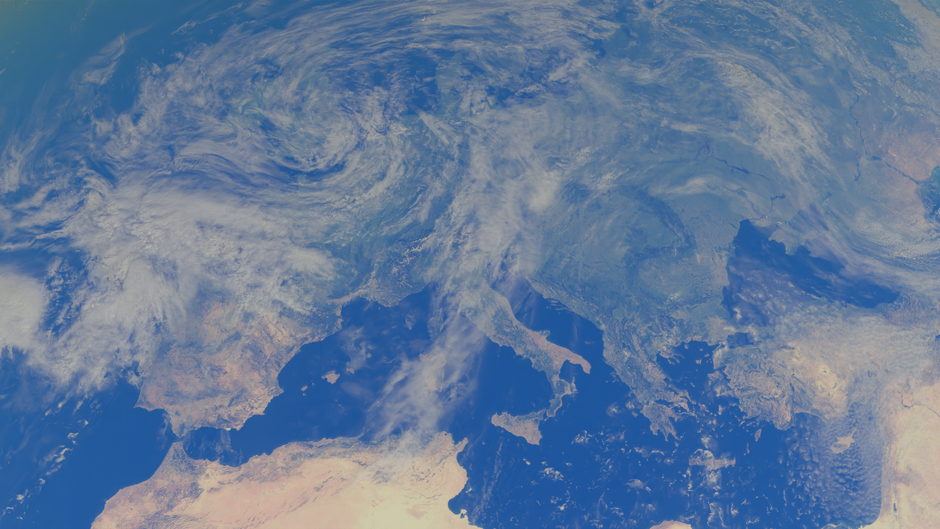
Meanwhile, WeatherNext 3 introduces a paradigm shift by directly incorporating live global geostationary satellite mosaics as input, allowing it to re-initialize every hour. This enables the model to generate highly detailed forecasts down to an impressive 0.05° (approximately 5 km resolution), a significant leap forward. Crucially, it trains against raw weather station measurements, rather than relying solely on smoothed reanalysis grids, which often miss critical local variations.
Breaking Down the Barriers: Resolution and Cadence
The core innovations of WeatherNext 3 lie in its enhanced resolution and rapid refresh rate:
- Hyper-Local Precision: The model delivers forecasts with a resolution of 0.05° (around 5 km), a substantial improvement over previous AI models. This level of detail is vital for understanding weather patterns influenced by local geography like coastlines, valleys, and mountains.
- Hourly Updates: Unlike models tied to six-hourly NWP analysis, WeatherNext 3 initializes 24 times a day, providing fresh forecasts every hour. This rapid cadence is particularly impactful for tracking fast-developing weather phenomena like convective storms.
Training on Real-World Observations, Not Just Models
In practical terms, One of WeatherNext 3’s most significant differentiators is its training methodology. Most AI forecasters learn from NWP reanalysis, which, while valuable, tends to smooth out local variations.
WeatherNext 3, however, trains dedicated ‘observational heads’ directly on raw station measurements. This means its 0.05° temperature and dew point outputs are calibrated to what instruments actually record, offering a more accurate representation of atmospheric conditions at a granular level.
The model’s inputs include a live geostationary satellite mosaic and ECMWF HRES analysis, while its training draws from a diverse dataset including ERA5/HRES-fc0, NASA’s IMERG, weather station observations, and satellite mosaics.
Multi-Resolution Output for Comprehensive Insights
A single forward pass of WeatherNext 3 produces a rich, multi-tiered output:
- 0.05° (~5 km) Resolution: Provides station-calibrated 2m temperature and dew point.
- 0.1° (~10 km) Resolution: Offers gridded surface data including 10m and 100m wind, pressure, sea surface temperature, cloud layers, solar radiation, and 1-hour precipitation. This represents a roughly 5x sharper output compared to WeatherNext 2’s 0.25° fields.
- 0.25° (~25 km) Resolution: Delivers atmospheric fields across 13 pressure levels.
For the model’s cadence, the main synoptic cycles (00, 06, 12, and 18 UTC) run out to 15 days (360 hours) with 64 ensemble members. Interim hourly runs cover a 48-hour period, ensuring that even short-term, rapidly evolving conditions are captured with up-to-date information.
Revolutionizing Precipitation and Clean Energy Forecasts
That said, Precipitation forecasting has historically been a challenge for global models, often resulting in blurred fields that fail to pinpoint storm boundaries. WeatherNext 3 addresses this by training against three distinct precipitation sources: ECMWF reanalysis, NASA’s IMERG satellite retrievals, and Google’s proprietary satellite-radar precipitation reanalysis. Google AI reports significant improvements, with CRPS (Continuous Ranked Probability Score) enhancements of up to 60% against IMERG and 30% against MRMS at early lead times.
Beyond general weather, WeatherNext 3 offers critical variables for the renewable energy sector, including:
- 100m wind speed, approximating turbine hub height.
- Detailed low, medium, and high cloud distributions.
- Both solar irradiance components (SSRD and FDIR).
Interestingly, This comprehensive data set is precisely what grid operators require to accurately forecast wind and solar output against energy demand, signaling that this model is designed with operational buyers in mind.
Accessibility and Deployment
According to Google AI, independent live evaluations from Brightband rank WeatherNext 3 as the most accurate global weather model to date. While the model’s weights are not open source, forecast data is currently available through Google’s BigQuery, Earth Engine, and Cloud Storage, accessible via an allowlist request. This makes the groundbreaking forecasts available to a broad range of users and industries.
Key Advantages of WeatherNext 3
- Hourly Initialization: Eliminates the six-hour lag common in traditional NWP models by utilizing live geostationary satellite data.
- Multi-Resolution Output: Delivers highly detailed forecasts from 0.05° for station variables up to 0.25° for atmospheric fields in a single pass.
- Robust Ensemble: Features a 64-member ensemble for enhanced forecast reliability and uncertainty quantification.
- Superior Precipitation Accuracy: Achieves significant improvements in precipitation forecasting, crucial for flood warnings and water resource management.
- Optimized for Renewables: Provides specialized variables essential for forecasting wind and solar energy generation.
Expert Perspective
A practical read on WeatherNext 3 starts with weathernext. That is where the earliest effects are likely to show up if this development keeps building.
What happens next will come down to adoption speed, policy response, and execution quality. That combination could make WeatherNext 3 a meaningful reference point across weather.
For decision-makers, the useful lens is not the headline alone but how resolution changes priorities once organizations have to respond.
Frequently Asked Questions
Why is WeatherNext 3 important?
Revolutionizing Weather Prediction with AIThe bigger takeaway is simple: For years, artificial intelligence has been steadily closing the gap with traditional physics-based weather forecasting models.
What impact could WeatherNext 3 have?
However, two significant hurdles persisted: the inability to provide high-resolution forecasts for specific local terrains and the time lag associated with initializing models based on numerical weather prediction (NWP) analysis, often arriving six hours late.
What should readers watch next with WeatherNext 3?
Google DeepMind and Google Research have now unveiled WeatherNext 3, an innovative AI model designed to tackle both these challenges head-on, promising a new era of global weather accuracy.Meanwhile, WeatherNext 3 introduces a paradigm shift by directly incorporating live global geostationary satellite mosaics as input, allowing it to re-initialize every hour.
How does this relate to weathernext?
It connects because the article frames weathernext as one of the clearest areas where the topic may be felt in practice.