Revolutionizing Glucose Monitoring with AI
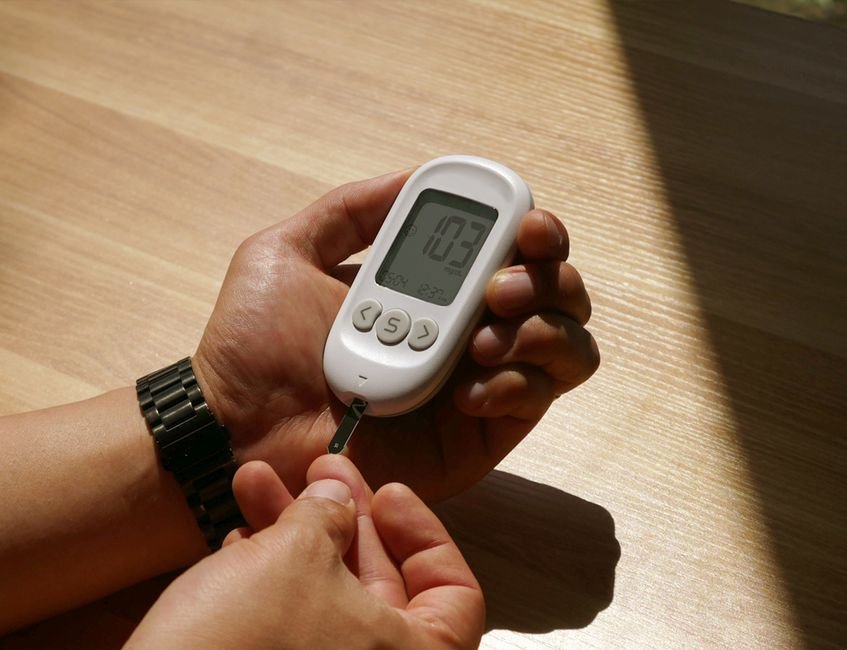
The central development is this: Continuous Glucose Monitoring (CGM) has transformed diabetes management, offering real-time insights into blood sugar levels. However, accurately interpreting these complex, fluctuating signals remains a significant challenge for existing AI models. Google Research, in collaboration with UNSW Sydney, has introduced GlucoFM, a groundbreaking self-supervised foundation model that promises to elevate the precision and utility of CGM data.
Table of Contents
- Revolutionizing Glucose Monitoring with AI
- The Challenge with Traditional CGM Models
- GlucoFM’s Dual-Stream Innovation
- Remarkable Performance and Efficiency
- Current Status and Future Potential
- Expert Perspective
- Frequently Asked Questions
- Conclusion
- Under the Hood: A Glimpse at GlucoFM’s Architecture
- Why does Continuous Glucose Monitoring AI matter right now?
- What broader change could Continuous Glucose Monitoring AI signal?
- What should the market watch next around Continuous Glucose Monitoring AI?
Meanwhile, Unlike previous approaches that treat glucose traces as a single, entangled sequence, GlucoFM employs an innovative dual-stream methodology. This allows it to disentangle the slow, physiological changes from rapid, transient events, leading to a more nuanced and accurate understanding of an individual’s glucose dynamics.
The Challenge with Traditional CGM Models
Current foundation models for CGM, such as CGMformer, GluFormer, and CGM-JEPA, typically encode a glucose trace as one continuous, complex signal. While effective to a degree, this unified approach struggles to differentiate between two critical aspects of glucose monitoring:
- Slow Regulatory Baseline: The underlying, gradual changes in glucose levels influenced by long-term physiological processes.
- Transient Deviations: Rapid, short-lived fluctuations caused by immediate factors like meals, physical activity, stress, or even sensor artifacts.
In practical terms, Treating these distinct signals as one can limit a model’s ability to precisely identify and predict specific health events. Furthermore, the high cost and cohort-specific nature of clinical labels have historically capped the effectiveness of supervised training methods for these models.
GlucoFM’s Dual-Stream Innovation
GlucoFM’s core breakthrough lies in its ability to decompose the glucose trace into two separate, yet interconnected, streams:
- The “State” Stream: Captures the slow, physiological trends and regulatory baseline of glucose.
- The “Event” Stream: Focuses on the transient, rapid deviations and acute changes.
For example, This intelligent split allows the model to analyze each component independently while understanding their interplay. The model maintains an observation mask throughout, ensuring that missing data points are handled gracefully and not misinterpreted as actual measurements. Pretraining utilizes two JEPA-style latent objectives, a self-supervised technique that enables the model to learn powerful representations from vast amounts of unlabeled data.
Under the Hood: A Glimpse at GlucoFM’s Architecture
The model aligns each CGM recording to a fixed 24-hour grid, with measurements taken every 5 minutes (L = 288 positions). A causal, mask-aware learnable Gaussian filter is then applied to split the signal into the state and event streams. The filtered trend forms the state stream, while the masked residual becomes the event stream.
That said, Both streams are subsequently tokenized into one-hour patches, fused, and augmented with circular time-of-day features. The encoder itself is a compact 3-layer Transformer, boasting an impressive efficiency with only 0.72 million trainable parameters. This lean architecture was pretrained on a massive dataset of 109,066 hours of unlabeled CGM data from 477 subjects, utilizing just a single NVIDIA H100 GPU.
Remarkable Performance and Efficiency
GlucoFM’s innovative design translates into superior performance across various critical evaluations:
- Overall Accuracy: It achieved a 58.8 task-averaged PR-AUC across 14 cohort–task evaluations, significantly outperforming the strongest CGM-specific baseline (54.7 PR-AUC) retrained on the same dataset. This represents a 7.5% relative improvement.
- Targeted Gains: The model showed its most substantial improvements in clinically central tasks related to diabetes risk, beta-cell dysfunction, and insulin resistance.
- Postprandial Forecasting: For two-hour postprandial glycemic response forecasting, GlucoFM achieved a Mean Absolute Error (MAE) of 21.88 mg/dL, beating the best baseline’s 22.90 mg/dL.
- Data Efficiency: Remarkably, when trained on just 20% of its corpus, GlucoFM already matched the performance of other CGM baselines trained on their entire datasets.
Interestingly, This combination of high accuracy and low parameter count makes GlucoFM an exceptionally efficient and powerful model for CGM analysis.
Current Status and Future Potential
Notably GlucoFM is currently a research prototype. The Google Research team explicitly states it has not been cleared or approved by any regulatory authority and is not intended for clinical diagnosis, treatment, or prevention of disease. All evaluations are retrospective, and no public checkpoint has been released yet, though the paper commits to releasing code and reproducibility scripts.
However, the “recipe” for GlucoFM is highly deployable. Its modest parameter count and training requirements mean that any research team with access to a CGM corpus can reproduce its findings. Furthermore, 24-hour-window inference can run efficiently on a CPU container or even on-device, hinting at future possibilities for real-time, personalized glucose monitoring solutions.
Expert Perspective
From an industry angle, the clearest signal around Continuous Glucose Monitoring AI is how it may influence glucofm. The story reads less like a one-day spike and more like a marker of broader movement.
The next phase will depend on how quickly teams, regulators, or customers react. In practice, that gives Continuous Glucose Monitoring AI room to reshape expectations across glucose over the near term.
For readers focused on practical impact, the best next step is to watch what changes around model once attention turns into execution.
Frequently Asked Questions
Why does Continuous Glucose Monitoring AI matter right now?
Revolutionizing Glucose Monitoring with AI The central development is this: Continuous Glucose Monitoring (CGM) has transformed diabetes management, offering real-time insights into blood sugar levels.
What broader change could Continuous Glucose Monitoring AI signal?
However, accurately interpreting these complex, fluctuating signals remains a significant challenge for existing AI models.
What should the market watch next around Continuous Glucose Monitoring AI?
Google Research, in collaboration with UNSW Sydney, has introduced GlucoFM, a groundbreaking self-supervised foundation model that promises to elevate the precision and utility of CGM data.
Conclusion
Viewed in context, the next round of reactions will matter as much as the initial announcement. GlucoFM represents a significant leap forward in the application of AI to continuous glucose monitoring. By intelligently separating glucose signals into distinct physiological ‘state’ and transient ‘event’ streams, it offers a more accurate and nuanced understanding of glucose dynamics. While still in its research phase, its impressive performance, efficiency, and reproducible methodology lay a strong foundation for future advancements in diabetes management and personalized healthcare.