
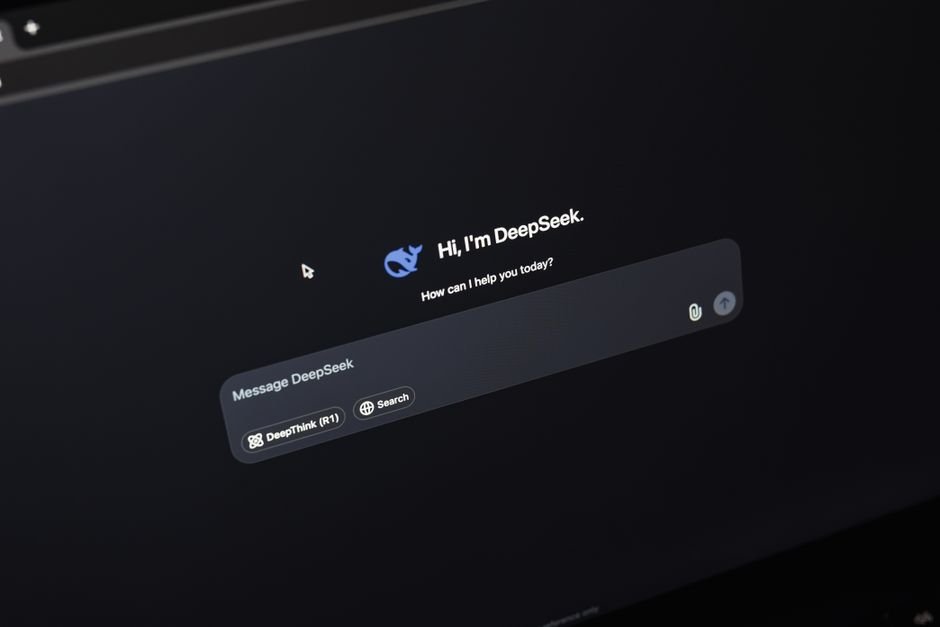
DeepSeek Harness v0.2: Desktop Apps Unleash Open-Source AI Agents
The bigger takeaway is simple: DeepSeek, a prominent name in AI research, has just rolled out a significant update to its open-source agent harness, DeepSeek Harness (dsh). Version 0.2 introduces official desktop applications for macOS (Apple silicon) and Windows (64-bit), making its powerful AI agent framework more accessible than ever. This move signals a push towards broader adoption for a tool designed to transform how we interact with AI for both coding and general productivity tasks.
Table of Contents
- DeepSeek Harness v0.2: Desktop Apps Unleash Open-Source AI Agents
- Official Desktop Apps Arrive for DeepSeek Harness
- Understanding DeepSeek Harness: Your AI Agent Runtime
- The “Everything is a Plugin” Philosophy
- Beyond DeepSeek Models: Universal Compatibility
- Four Distinct Session Modes for Diverse Needs
- A Glimpse into the Latest Alpha Build (v0.2.1-alpha.1)
- Key Takeaways for Developers and Users
- Expert Perspective
- Frequently Asked Questions
- Key Features and Enhancements in v0.2
- Why does DeepSeek Harness matter right now?
- What broader change could DeepSeek Harness signal?
- What should the market watch next around DeepSeek Harness?
Official Desktop Apps Arrive for DeepSeek Harness
Meanwhile, The most anticipated feature of the v0.2 preview is undoubtedly the availability of official desktop applications. Users can now download dedicated installers, eliminating the need for complex command-line setups. While currently a preview, DeepSeek emphasizes that the harness is ready for deployment today.
You can download the desktop apps directly from the DeepSeek Harness website or initiate the web interface via npx @deepseek-ai/dsh web. Notably as a developer preview, users should anticipate potential compatibility-breaking changes in future updates.
Understanding DeepSeek Harness: Your AI Agent Runtime
In practical terms, At its core, DeepSeek Harness acts as a runtime environment that transforms a raw AI model into a fully functional agent. This agent can perform tasks by reading files, executing commands, and maintaining a coherent plan. The v0.2 preview specifically targets a wide range of applications, from everyday office work to intricate coding challenges.
Key Features and Enhancements in v0.2
- Built-in Capabilities: The harness comes preloaded with commonly used tools essential for both office productivity and software development.
- Robust Plugin Management: A brand-new dedicated page allows users to easily install, configure, enable, and disable plugins, greatly enhancing customization.
- Streamlined File and Diff Review: A convenient right-hand sidebar now provides instant previews of generated files and code changes, aiding in development workflows.
- Empowering Document Work: Users can send various document types, including spreadsheets and PDFs, and instruct the agent to generate insights like charts or slides.
- Advanced Automation Tasks: A new plugin introduces the ability to schedule recurring prompts, complete with a run history and editable frequency, perfect for automating routine operations.
The desktop build also conveniently bundles the dsh command, removing the prior requirement for separate Node.js or pnpm installations. Users can sign in with a DeepSeek account or use an API key, with account models gaining web search capabilities without an additional key.
The “Everything is a Plugin” Philosophy
For example, DeepSeek first open-sourced dsh in August 2026 under the permissive MIT license. Its architecture, as described in the research paper ‘A Programming Paradigm for Spatiotemporal Composability,’ is built on the Cordis framework.
A cornerstone of DeepSeek Harness is its highly modular design: every layer, including the model adapter, tool registry, and even the agent loop itself, is implemented as a plugin. This allows for unparalleled flexibility, enabling users to replace or customize virtually any component.
Beyond DeepSeek Models: Universal Compatibility
Despite its origins, DeepSeek Harness is not locked exclusively to DeepSeek’s own models. The platform’s provider guide details how to integrate third-party AI providers and custom OpenAI-compatible endpoints. This open approach has contributed to its popularity, evident in its impressive GitHub statistics, boasting over 240,000 stars and 29,000 forks.
That said, Notably, dsh also serves as DeepSeek’s internal evaluation rig. Benchmark runs for Code Agent, such as DeepSeek-V4-Flash-0731’s score of 82.7 on Terminal Bench 2.1, were conducted using ‘DeepSeek Harness minimal mode,’ showcasing its robustness.
Four Distinct Session Modes for Diverse Needs
DeepSeek Harness offers four specialized session modes to cater to different user requirements:
- Standard: The default mode, designed for general work and everyday tasks.
- Creator: An innovative mode where users can describe a plugin in chat, and the agent will intelligently build and install it.
- PTC (Programmatic Tool Calling): This mode facilitates programmatic interaction, running Node.js code in a separate process for advanced automation.
- Minimal: A lean operational loop primarily used by DeepSeek for running internal benchmarks and evaluations.
A Glimpse into the Latest Alpha Build (v0.2.1-alpha.1)
Interestingly, The most recent alpha build introduces further experimental features. This includes an experimental Claude Code Mods compatibility layer, serving as a test to determine if the Mods API is broadly a subset of dsh plugins.
Other additions include a “Let Agent create a plugin” entry, an optional Developer Tools bundle, and a –public-url flag for reverse proxies. Users should be aware that the removal of runtime invariant plugins constitutes a breaking change for some existing extensions.
Key Takeaways for Developers and Users
- DeepSeek Harness v0.2 now provides official desktop applications for macOS (Apple silicon) and Windows x64.
- The entire harness, including the agent loop, operates on an open-source (MIT license) and plugin-based architecture.
- Its innovative Creator mode empowers the agent to write and install its own plugins.
- The platform offers broad compatibility, working seamlessly with non-DeepSeek models via OpenAI-compatible endpoints.
- As a developer preview, continuous evolution and potential breaking changes between builds are to be expected.
Expert Perspective
From an industry angle, the clearest signal around DeepSeek Harness is how it may influence deepseek. The story reads less like a one-day spike and more like a marker of broader movement.
The next phase will depend on how quickly teams, regulators, or customers react. In practice, that gives DeepSeek Harness room to reshape expectations across harness over the near term.
For readers focused on practical impact, the best next step is to watch what changes around agent once attention turns into execution.
Frequently Asked Questions
Why does DeepSeek Harness matter right now?
DeepSeek Harness v0.2: Desktop Apps Unleash Open-Source AI AgentsThe bigger takeaway is simple: DeepSeek, a prominent name in AI research, has just rolled out a significant update to its open-source agent harness, DeepSeek Harness (dsh).
What broader change could DeepSeek Harness signal?
Version 0.2 introduces official desktop applications for macOS (Apple silicon) and Windows (64-bit), making its powerful AI agent framework more accessible than ever.
What should the market watch next around DeepSeek Harness?
This move signals a push towards broader adoption for a tool designed to transform how we interact with AI for both coding and general productivity tasks.Official Desktop Apps Arrive for DeepSeek HarnessMeanwhile, The most anticipated feature of the v0.2 preview is undoubtedly the availability of official desktop applications.



























