Introduction: The Evolution of Cloud Development
At a glance, The landscape of cloud computing and application development is in constant flux, driven by an insatiable demand for greater agility and flexibility. A recent, significant development from Amazon Web Services (AWS) perfectly encapsulates this trend: AWS now facilitates the embedding of Superblocks, an innovative “vibe-coding” tool, directly into the private cloud environments of its customers. This isn’t merely a minor feature enhancement; it signifies a substantial architectural shift in how businesses can construct and deploy applications, particularly in the crucial domain of decoupling applications from their foundational data models.
Table of Contents
- Introduction: The Evolution of Cloud Development
- Understanding Superblocks and “Vibe-Coding”
- The Strategic Advantage of Private Cloud Embedding
- The Broader Implication: Decoupling Applications from Models
- A Future of Flexible and Secure Development
- Expert Perspective
- Frequently Asked Questions
- What Decoupling Means
- Why Decoupling Matters for Modern Enterprises
- Why is Superblocks AWS Private Cloud important?
- What impact could Superblocks AWS Private Cloud have?
- What should readers watch next with Superblocks AWS Private Cloud?
- How does this relate to data?
Understanding Superblocks and “Vibe-Coding”
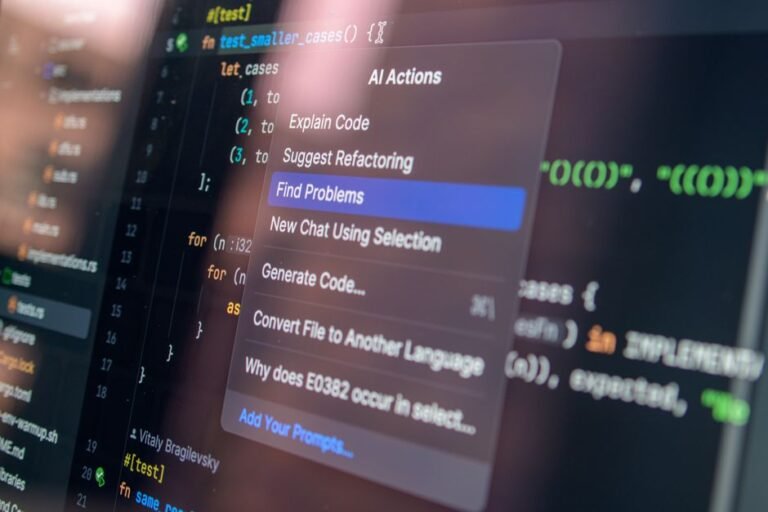
Meanwhile, Superblocks has garnered attention for its unique “vibe-coding” methodology, which enables developers to craft sophisticated internal tools and applications with remarkable speed and efficiency. While the term “vibe-coding” might sound avant-garde, it generally refers to a highly intuitive, often visual, development experience that significantly reduces the need for extensive boilerplate code.
- Rapid Application Development: Engineers can quickly connect to diverse data sources, integrate various APIs, and design user-friendly interfaces.
- Focus on Business Logic: It allows teams to concentrate more on solving business problems rather than getting bogged down in infrastructure details.
- Low-Code/No-Code Paradigm: This approach aligns with the growing low-code/no-code movement, empowering a wider range of users to contribute to application development.
This paradigm is gaining immense traction as organizations worldwide strive to accelerate innovation and digital transformation.
The Strategic Advantage of Private Cloud Embedding
In practical terms, The capability to embed Superblocks directly within an AWS customer’s private cloud infrastructure offers a wealth of benefits that address critical enterprise needs:
- Enhanced Security and Compliance: For enterprises handling sensitive data or operating under stringent regulatory frameworks, maintaining development tools and data within their private cloud environment is paramount. This embedding ensures data residency, reduces potential exposure, and simplifies compliance audits.
- Improved Performance and Latency: Proximity to existing data sources and backend services within the private cloud can lead to lower latency and faster application performance, which is vital for real-time internal tools and operational dashboards.
- Greater Control and Customization: Customers gain more granular control over their Superblocks deployments, allowing for seamless alignment with their existing security policies, networking configurations, and operational workflows.
- Streamlined Integration: Direct embedding can significantly simplify the integration process with other internal services and data stores already residing within the AWS private cloud, fostering a more cohesive and efficient development ecosystem.
The Broader Implication: Decoupling Applications from Models
Perhaps the most profound implication of this AWS-Superblocks integration lies in its contribution to the architectural trend of decoupling applications from their underlying data models.
What Decoupling Means
For example, Traditionally, applications were often tightly intertwined with specific databases or data structures. Changes to the underlying data model could necessitate extensive modifications to the application’s logic. Decoupling, in contrast, means applications are designed to interact with data through well-defined interfaces and APIs, making them less dependent on the specific implementation details of the data model.
Why Decoupling Matters for Modern Enterprises
- Increased Agility: Developers can update or even swap out data models without breaking existing applications, fostering faster iteration and continuous innovation.
- Greater Flexibility: Applications can connect to a wider array of data sources (e.g., SQL, NoSQL, external APIs) more easily, adapting swiftly to evolving business needs and new technologies.
- Improved Scalability: Decoupled architectures are inherently more scalable, as different components of the system can be scaled independently based on demand.
- Easier Maintenance and Resilience: Changes in one part of the system have a localized impact, simplifying maintenance, reducing the risk of introducing widespread bugs, and enhancing overall system resilience.
A Future of Flexible and Secure Development
This strategic move by AWS to support Superblocks within private cloud environments clearly signals a significant direction for enterprise software development. It empowers organizations to harness cutting-edge “vibe-coding” tools with the unparalleled security, performance, and control offered by their private cloud infrastructure.
By championing the decoupling of applications from models, AWS and Superblocks are jointly paving the way for a more agile, resilient, and innovative future for businesses building critical internal tools and applications. This development is poised to have far-reaching positive implications for developers and IT leaders alike, accelerating digital transformation initiatives across virtually all industries.
Expert Perspective
A practical read on Superblocks AWS Private Cloud starts with data. That is where the earliest effects are likely to show up if this development keeps building.
What happens next will come down to adoption speed, policy response, and execution quality. That combination could make Superblocks AWS Private Cloud a meaningful reference point across cloud.
For decision-makers, the useful lens is not the headline alone but how applications changes priorities once organizations have to respond.
Frequently Asked Questions
Why is Superblocks AWS Private Cloud important?
Introduction: The Evolution of Cloud DevelopmentAt a glance, The landscape of cloud computing and application development is in constant flux, driven by an insatiable demand for greater agility and flexibility.
What impact could Superblocks AWS Private Cloud have?
A recent, significant development from Amazon Web Services (AWS) perfectly encapsulates this trend: AWS now facilitates the embedding of Superblocks, an innovative “vibe-coding” tool, directly into the private cloud environments of its customers.
What should readers watch next with Superblocks AWS Private Cloud?
This isn’t merely a minor feature enhancement; it signifies a substantial architectural shift in how businesses can construct and deploy applications, particularly in the crucial domain of decoupling applications from their foundational data models.Understanding Superblocks and “Vibe-Coding”Meanwhile, Superblocks has garnered attention for its unique “vibe-coding” methodology, which enables developers to craft sophisticated internal tools and applications with remarkable speed and efficiency.
How does this relate to data?
It connects because the article frames data as one of the clearest areas where the topic may be felt in practice.