Unlocking AI’s Potential: Anthropic‘s Model Hardware Standard (MHS) for Device Control
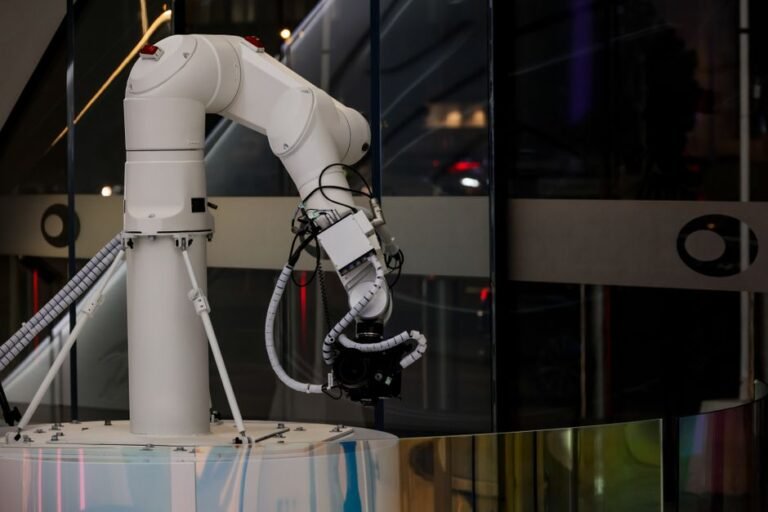
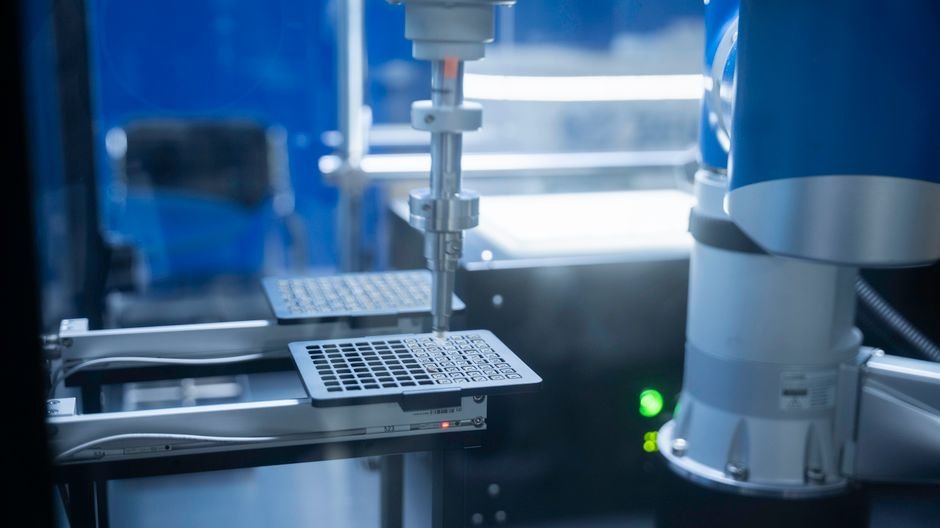
For readers tracking the shift, In today’s advanced scientific labs and industrial settings, the promise of AI agents automating complex tasks is immense. Yet, a significant hurdle persists: getting AI to reliably and safely operate diverse physical devices. Imagine a world where every instrument, from a robotic arm to a lab sensor, speaks its own unique language. This “Tower of Babel” scenario is precisely the challenge Anthropic aims to solve with its new Model Hardware Standard (MHS), now available in a research preview.
Table of Contents
- Unlocking AI’s Potential: Anthropic’s Model Hardware Standard (MHS) for Device Control
- Expert Perspective
- Frequently Asked Questions
- The Cost of Disconnected Systems: The “Integration Tax”
- Introducing MHS: A Universal Language for Devices
- How MHS Works: A Deeper Dive
- Transformative Impact: Real-World Success Stories
- Key Takeaways and Future Outlook
- Why does Anthropic MHS matter right now?
- What broader change could Anthropic MHS signal?
- What should the market watch next around Anthropic MHS?
The Cost of Disconnected Systems: The “Integration Tax”
Meanwhile, Traditionally, setting up automated systems in labs or factories is a painstaking process. Equipment from different vendors rarely “talks” to each other seamlessly. Each device comes with its own proprietary programming interface, demanding specialists to hand-write custom “translators” for every single interaction.
This isn’t just an inconvenience; it’s a massive drain on time and resources, often taking weeks or even months to get systems operational. Anthropic refers to this as the “integration tax,” a hidden cost that stifles innovation and efficiency.
Beyond mere connection, there’s also the challenge of safe operation. How does an AI agent understand the physical limits of a robotic arm or the correct parameters for a chemical reaction? Without a standardized way to communicate state and enforce safety, the risk of errors or damage is high.
Introducing MHS: A Universal Language for Devices
In practical terms, MHS is designed to be a shared specification that allows AI agents to discover, understand, and safely operate a wide array of physical devices. Its core innovation lies in standardizing the driver – the critical software layer that sits between an operating system and a device.
How MHS Works: A Deeper Dive
Rather than complex, bespoke interfaces, MHS exposes a small, intuitive set of primitives:
- Read: Allows an agent to query a device for information (e.g., “get temperature”).
- Write: Enables an agent to send commands to a device (e.g., “set temperature”).
- Discovery: Facilitates devices and agents finding each other across a network without the need for manual translation.
For example, Crucially, MHS goes beyond basic commands. It incorporates “knowledge code” that traditional programming interfaces often miss. This includes vital contextual information like the weight capacity of a robot arm or the safe operating range of a sensor.
Users can input this knowledge using natural language via “driver tags,” or an agent can even interview them about the setup. These tags are then compiled into a reference file that outlines what a device measures, what can be adjusted, and, most importantly, which safety limits are enforced.
Control within the MHS framework is managed through three mechanisms: the Model Context Protocol, a Command Line Interface (CLI), and standard code files. A key advantage is its model-agnostic nature, meaning any AI agent harness can interact with it using standard protocols.
Transformative Impact: Real-World Success Stories
The research preview of MHS has already yielded impressive results with early partners:
- Genentech: Successfully automated a BCA protein assay, orchestrating a liquid handler, robotic arm, and plate reader. Claude, the AI agent, achieved high accuracy in liquid transfers, confirming parameters that human experts deemed reasonable.
- QuEra Computing: Faced with a complex laser-relock script that previously took a four-person team months to develop and only worked 58% of the time (at ~150 seconds per attempt), MHS dramatically improved performance. An MHS-powered agent loop ran overnight, producing a deterministic Python script that recovered the laser lock 99.3% of the time across 700 trials, with the hardest cases resolved in 10-14 seconds (compared to 5-10 minutes for a human specialist). The AI also significantly cut servo residual error from 15.7 mV to 1.55 mV.
- Carnegie Mellon University (CMU): Accelerated dose-response experiments by approximately three times. CMU orchestrated multiple instruments with incompatible interfaces, including one without any programmatic interface. The entire process, from driver-writing to a completed, validated curve (with an autonomous rerun after an initial poor fit), took about eight hours, a stark contrast to the several weeks a vendor setup typically requires. Critically, six induced fault conditions were all blocked by MHS before any device movement.
- University of Washington: A PhD student successfully connected six different instruments in less than a week, including the time spent writing drivers.
- Tetsuwan Scientific: Integrated MHS with their ResearchOS platform for qPCR pollution profiling, demonstrating broader applicability.
- Janelia Research Campus: Streamlined a complex microscopy rig, reducing seven separate program launches to a single dashboard click.
Key Takeaways and Future Outlook
Anthropic’s Model Hardware Standard represents a significant leap forward in enabling AI agents to interact with the physical world. Its ability to drastically cut integration times from weeks to hours, while simultaneously enhancing safety and precision, is groundbreaking.
However, it’s important to remember that MHS is currently a research preview. While powerful, it still requires supervision, and AI’s physical reasoning capabilities are continually evolving. A crucial safety feature is that safety limits are embedded directly in the driver, not in the AI’s prompt, adding an extra layer of protection.
As AI continues to advance, standards like MHS will be vital in unlocking its full potential across industries, making automation more accessible, efficient, and safer than ever before. Interested parties are encouraged to explore Anthropic’s full announcement and apply for the preview to contribute to this exciting development.
Expert Perspective
From an industry angle, the clearest signal around Anthropic MHS is how it may influence quot. The story reads less like a one-day spike and more like a marker of broader movement.
The next phase will depend on how quickly teams, regulators, or customers react. In practice, that gives Anthropic MHS room to reshape expectations across device over the near term.
For readers focused on practical impact, the best next step is to watch what changes around agent once attention turns into execution.
Frequently Asked Questions
Why does Anthropic MHS matter right now?
Unlocking AI’s Potential: Anthropic’s Model Hardware Standard (MHS) for Device Control For readers tracking the shift, In today’s advanced scientific labs and industrial settings, the promise of AI agents automating complex tasks is immense.
What broader change could Anthropic MHS signal?
Yet, a significant hurdle persists: getting AI to reliably and safely operate diverse physical devices.
What should the market watch next around Anthropic MHS?
Imagine a world where every instrument, from a robotic arm to a lab sensor, speaks its own unique language.