AI-GUIDE: MIT Lincoln Lab’s Lifesaving Tech Wins Prestigious Award, Revolutionizing Pre-Hospital Care
The bigger takeaway is simple: In a significant stride for medical innovation, a groundbreaking device known as AI-GUIDE has been honored with the 2026 Excellence in Technology Transfer Award by the Federal Laboratory Consortium (FLC). Developed through a powerful collaboration between MIT Lincoln Laboratory and Massachusetts General Hospital (MGH), with vital funding from the U.S. Army’s Combat Casualty Care Research Program (CCC), AI-GUIDE is poised to dramatically improve health outcomes for both military personnel and civilians in critical pre-hospital situations.
Table of Contents
- AI-GUIDE: MIT Lincoln Lab’s Lifesaving Tech Wins Prestigious Award, Revolutionizing Pre-Hospital Care
- Expert Perspective
- Frequently Asked Questions
- A Testament to Collaborative Innovation
- AI-GUIDE: Bringing Hospital-Level Care to the Field
- From Idea to Industry: A Rapid Transition
- Broader Impact and Future Potential
- The Minds Behind the Breakthrough
- Why is AI-GUIDE medical device important?
- What impact could AI-GUIDE medical device have?
- What should readers watch next with AI-GUIDE medical device?
- How does this relate to technology?
A Testament to Collaborative Innovation
Meanwhile, The FLC’s prestigious award celebrates federal laboratories and their partners who excel in transitioning cutting-edge technology from research and development into practical, real-world applications. AI-GUIDE’s recognition underscores a highly effective model of technology transfer, demonstrating how diverse expertise can converge to create impactful solutions.
“This recognition reflects what effective technology transfer looks like — aligning the Army’s operational need with Mass General’s clinical expertise and Lincoln Laboratory’s engineering capabilities to deliver a solution with a clear path to impact. The transition to AutonomUS underscores how strong partnerships can carry a technology from development into real-world adoption,” says Asha Rajagopal, Lincoln Laboratory’s chief technology transfer officer.
AI-GUIDE: Bringing Hospital-Level Care to the Field
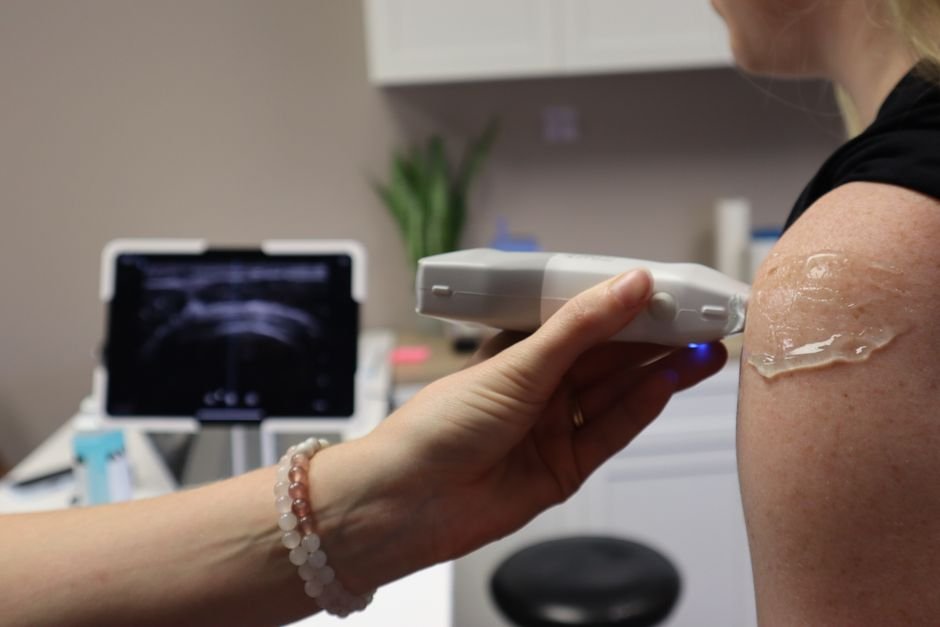
What makes AI-GUIDE so revolutionary? Unlike the large, stationary ultrasound machines typically found in hospitals, AI-GUIDE is a small, portable device specifically designed for use in challenging pre-hospital environments. It pairs custom-developed Artificial Intelligence (AI) software with commercial handheld ultrasound technology to assist users in accurately inserting a guidewire and catheter into a patient’s blood vessel.
In practical terms, This capability is particularly vital for U.S. military medics who often face the daunting task of keeping injured soldiers alive in the field for extended periods before evacuation. AI-GUIDE empowers medics, even those with minimal specialized training, to perform crucial medical interventions that would otherwise be impossible outside a fully equipped hospital, thereby significantly increasing patients’ chances of survival.
From Idea to Industry: A Rapid Transition
The journey of AI-GUIDE exemplifies an expedited and successful technology development and transfer process. In just three years, the project evolved from an initial concept proposed by the CCC into a fully functional proof-of-concept technology, culminating in the formation of its own startup company, AutonomUS Medical Technologies, Inc.
For example, Following the development of the prototype, rigorous clinical testing at MGH confirmed its viability. Subsequently, Lincoln Laboratory and MGH staff co-founded AutonomUS Medical Technologies to spearhead the commercialization effort. With robust support from the MIT Technology Licensing Office, the Lincoln Laboratory Technology Transfer Office, and the CCC, the company achieved several key milestones:
- U.S. Food and Drug Administration (FDA) Breakthrough Device Designation: A fast-track regulatory pathway reserved for highly innovative technologies with the potential to save lives.
- Small Business Innovation Research (SBIR) grant: From the U.S. Department of the Air Force.
- Significant Funding: From private investors, the Department of War, and the National Institutes of Health.
Broader Impact and Future Potential
These strong collaborations are meticulously designed to streamline the technology transfer process, ensuring that lifesaving capabilities reach military personnel and civilians with utmost speed. While much of the initial work on vascular access has successfully transitioned, the AI-GUIDE team is not stopping there. They continue to develop and transition additional critical capabilities, including peripheral nerve block technology for advanced trauma care and pain management.
That said, AI-GUIDE’s innovative nature has also been recognized with previous accolades, including a Lincoln Laboratory Best Invention Award and an R&D 100 Award.
“Lincoln Laboratory has a long record of transferring technology to industry. We are honored and proud to be recognized for the transfer of AI‑GUIDE and look forward to seeing the technology commercialized and saving lives in the field. This achievement reflects the strength of the partnership among the Defense Health Agency, Lincoln Laboratory, Massachusetts General Hospital, and AutonomUS Medical Technologies,” states Samuel Kesner, a technical staff member in the Systems Engineering Group and current overseer of the AI-GUIDE program at Lincoln Laboratory.
The Minds Behind the Breakthrough
The success of AI-GUIDE is a testament to the dedication of many individuals. Key winning team members from Lincoln Laboratory include Brian Telfer, Samuel Kesner, Lars Gjesteby, Joshua Werblin, Benjamin Roop, Alec Carruthers, Nancy DeLosa, and former staff members Matt Johnson (now VP of Engineering at AutonomUS) and Laura Brattain (now Associate Professor at the University of Central Florida). Technology transfer efforts were expertly supported by Asha Rajagopal, Jordan Mizerak, Melly Coronado, and Jonathan Dan.
Expert Perspective
A practical read on AI-GUIDE medical device starts with technology. That is where the earliest effects are likely to show up if this development keeps building.
What happens next will come down to adoption speed, policy response, and execution quality. That combination could make AI-GUIDE medical device a meaningful reference point across guide.
For decision-makers, the useful lens is not the headline alone but how lincoln changes priorities once organizations have to respond.
Frequently Asked Questions
Why is AI-GUIDE medical device important?
AI-GUIDE: MIT Lincoln Lab’s Lifesaving Tech Wins Prestigious Award, Revolutionizing Pre-Hospital CareThe bigger takeaway is simple: In a significant stride for medical innovation, a groundbreaking device known as AI-GUIDE has been honored with the 2026 Excellence in Technology Transfer Award by the Federal Laboratory Consortium (FLC).
What impact could AI-GUIDE medical device have?
Developed through a powerful collaboration between MIT Lincoln Laboratory and Massachusetts General Hospital (MGH), with vital funding from the U.S.
What should readers watch next with AI-GUIDE medical device?
Army’s Combat Casualty Care Research Program (CCC), AI-GUIDE is poised to dramatically improve health outcomes for both military personnel and civilians in critical pre-hospital situations.A Testament to Collaborative InnovationMeanwhile, The FLC’s prestigious award celebrates federal laboratories and their partners who excel in transitioning cutting-edge technology from research and development into practical, real-world applications.
How does this relate to technology?
It connects because the article frames technology as one of the clearest areas where the topic may be felt in practice.
Source: https://news.mit.edu/2026/lifesaving-lincoln-laboratory-technology-wins-tech-transfer-award-0911