
Revolutionizing AI Decision-Making with GLiNER2.5-Decide
The central development is this: In the rapidly evolving landscape of artificial intelligence, the ability for agents to make precise, context-aware decisions is paramount. Fastino Labs has stepped forward with a significant advancement: GLiNER2.5-Decide. This 340-million-parameter, open-weight decision model is engineered to streamline complex judgment calls within AI pipelines, offering a robust solution that even runs efficiently on standard CPUs.
Table of Contents
- Revolutionizing AI Decision-Making with GLiNER2.5-Decide
- What Makes GLiNER2.5-Decide Stand Out?
- Impressive Performance and Practical Latency
- Deployment and Accessibility
- A Glimpse into the GLiNER Family
- Key Takeaways for Developers and AI Enthusiasts
- Expert Perspective
- Frequently Asked Questions
- Designed for Intelligent Agent Pipelines
- The Power of Schemas and Joint Decoding
- Benchmarking Success
- CPU-Friendly Latency
- Why does GLiNER2.5-Decide matter right now?
- What broader change could GLiNER2.5-Decide signal?
- What should the market watch next around GLiNER2.5-Decide?
Meanwhile, GLiNER2.5-Decide isn’t just another language model; it’s a specialized classifier designed to interpret text inputs against a predefined schema of questions. The result?
Structured, actionable answers complete with crucial metadata like probability distributions, confidence scores, and constraint-feasibility information. This level of detail empowers AI systems to operate with greater accuracy and reliability.
What Makes GLiNER2.5-Decide Stand Out?
At its core, GLiNER2.5-Decide is a non-generative classifier. Unlike large language models that produce free-form text, this model focuses on precise classification.
It leverages a DeBERTa-v3-large encoder, fine-tuned from gliner2-large-v1, to process information without generating any tokens or requiring complex prompt templates. This design choice contributes to its efficiency and focused utility.
Designed for Intelligent Agent Pipelines
In practical terms, The model’s primary application lies in enhancing the operational decisions of AI agents. Imagine scenarios where an agent needs to quickly determine:
- Routing: Which department should handle a customer query?
- Triage: What is the urgency level of an incoming request?
- Tool Selection: Which tool is most appropriate for a given task?
- Guardrails: Is a user’s input safe or does it pose a security risk like prompt injection?
GLiNER2.5-Decide excels in these areas, providing the structured insights necessary for agents to act decisively and accurately.
The Power of Schemas and Joint Decoding
For example, A key innovation of GLiNER2.5-Decide is its reliance on flexible schemas and a sophisticated two-stage decoding process. At call time, users define a schema containing typed questions, their permitted answers (single, multiple, or ordered values), and rich instructions. These schemas can also include examples, label descriptions, and critical rules that link answers across different questions.
The pipeline works as follows:
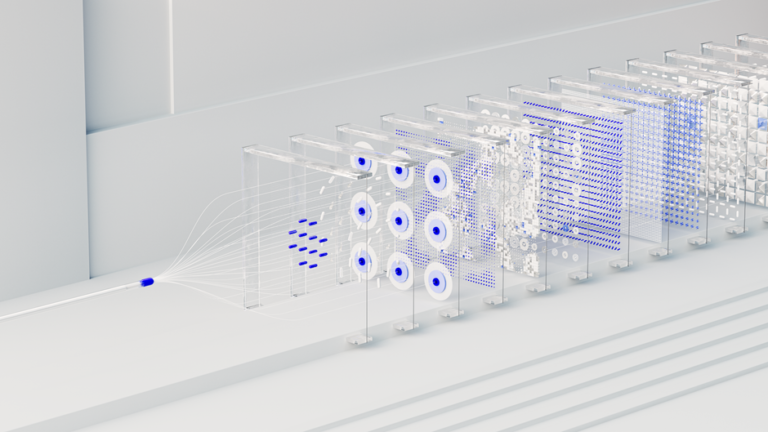
- An encoder processes the input text and the schema simultaneously, scoring every possible answer.
- A constrained decoder then searches for the highest-scoring joint assignment that adheres to all the declared rules within the schema.
That said, This joint decoding mechanism is crucial. Fastino illustrates its value with a guardrail example: independently, a model might flag prompt injection at 0.82 while also labeling the same prompt as safe at 0.52 – a conflict. With joint decoding, a rule like “any detected harm requires an unsafe verdict” ensures a coherent output, such as safety=unsafe and harm_type=prompt_injection. This prevents contradictory outputs and provides reliable signals for downstream actions.
Impressive Performance and Practical Latency
Fastino Labs rigorously evaluated GLiNER2.5-Decide on its internal “Fast Decisions” suite, comprising 5,100 test examples across 17 datasets covering diverse tasks like customer operations and domain routing.
Benchmarking Success
Interestingly, The 340M encoder model achieved an average exact-match accuracy of 60.1%, outperforming several other models, including 54B-class and 4B decoders. Notably, GLiNER2.5-Decide led in 9 of the 17 datasets, demonstrating exceptional strength in intent routing, where it scored 75.3% for support intent and 64.3% for banking intent.
CPU-Friendly Latency
Perhaps one of the most compelling aspects is its practical performance on CPU. For short inputs (64 tokens) with a typical schema, the p50 latency on a 48-vCPU Intel Xeon Platinum was 167.3 ms. While GPUs offer faster responses (e.g., 38.3 ms on an NVIDIA V100), the CPU performance makes it a viable and accessible option for many deployment scenarios, including air-gapped environments.
Deployment and Accessibility
However, GLiNER2.5-Decide is released under the Apache 2.0 license, making it openly available for developers. Installation is straightforward via pip install gliner2. For those preferring managed services, Fastino also offers hosted inference and fine-tuning capabilities through its GLiNER API, ensuring flexibility for various operational needs.
A Glimpse into the GLiNER Family
Fastino’s commitment to diverse AI solutions is evident in its model family. Beyond the 340M GLiNER2.5-Decide, they’ve also released:
- GLiNER2.5-Decide-1B: Built on the Ettin 1B encoder, offering comparable performance.
- GLiNER2.5-multi-Decide: A 287M model designed for multilingual inputs.
Meanwhile, These variations ensure that developers can choose the right tool for their specific scale and language requirements.
Key Takeaways for Developers and AI Enthusiasts
- Open-Weight & Accessible: A 340M-parameter encoder, available under Apache 2.0, deployable on CPU, GPU, or air-gapped systems.
- Structured & Confident Outputs: Provides answers with probabilities, confidence scores, and feasibility metadata.
- Intelligent Joint Decoding: Enforces rules across related answers to prevent conflicts and ensure coherent decisions.
- Strong Performance: Achieved 60.1% average exact-match accuracy on Fastino’s internal suite, excelling in intent routing.
- Practical Latency: Demonstrates viable performance on CPUs, broadening deployment options.
GLiNER2.5-Decide represents a significant step towards more reliable and efficient operational decision-making in AI agents. Its open-weight nature, combined with robust performance and CPU compatibility, makes it an exciting tool for developers looking to build smarter, more capable AI systems. For technical details and to explore the code, refer to the official model card and documentation.
Expert Perspective
From an industry angle, the clearest signal around GLiNER2.5-Decide is how it may influence gliner2. The story reads less like a one-day spike and more like a marker of broader movement.
The next phase will depend on how quickly teams, regulators, or customers react. In practice, that gives GLiNER2.5-Decide room to reshape expectations across decide over the near term.
For readers focused on practical impact, the best next step is to watch what changes around model once attention turns into execution.
Frequently Asked Questions
Why does GLiNER2.5-Decide matter right now?
Revolutionizing AI Decision-Making with GLiNER2.5-DecideThe central development is this: In the rapidly evolving landscape of artificial intelligence, the ability for agents to make precise, context-aware decisions is paramount.
What broader change could GLiNER2.5-Decide signal?
Fastino Labs has stepped forward with a significant advancement: GLiNER2.5-Decide.
What should the market watch next around GLiNER2.5-Decide?
This 340-million-parameter, open-weight decision model is engineered to streamline complex judgment calls within AI pipelines, offering a robust solution that even runs efficiently on standard CPUs.Meanwhile, GLiNER2.5-Decide isn’t just another language model; it’s a specialized classifier designed to interpret text inputs against a predefined schema of questions.