Bridging Biology and AI: The Fly Language Model Experiment
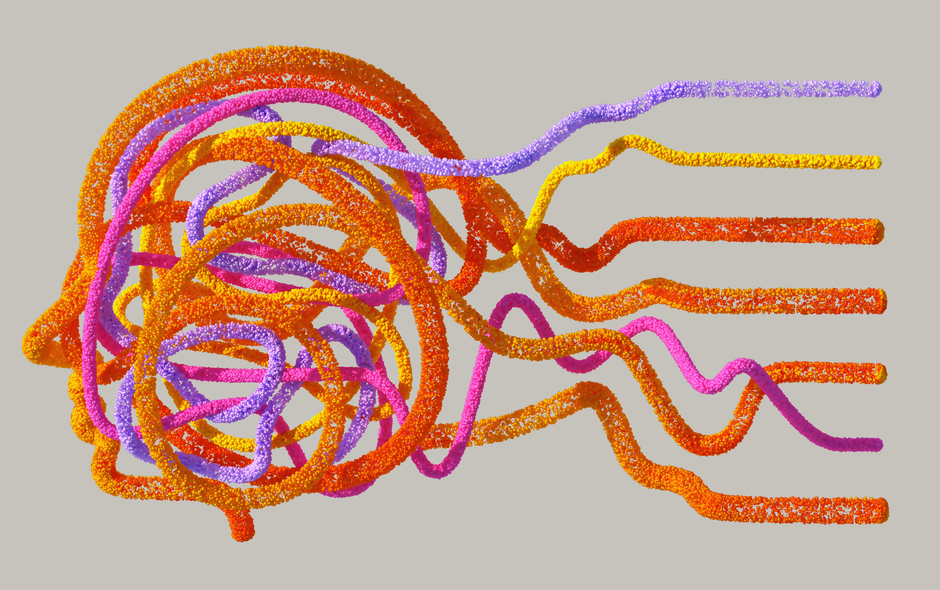
The bigger takeaway is simple: The quest to build more intelligent artificial intelligence often draws inspiration from the most sophisticated biological systems we know: brains. What if we could imbue large language models (LLMs) with the intricate wiring diagrams of actual brains? This ambitious question lies at the heart of the Fly Language Model (FLM) project. However, the initial findings from FLM present a fascinating paradox: integrating the complete fruit fly connectome into an LLM didn’t actually improve its performance.
Table of Contents
- Bridging Biology and AI: The Fly Language Model Experiment
- Expert Perspective
- Frequently Asked Questions
- What is the Fly Language Model (FLM)?
- The Unconventional Architecture
- The Surprising Results: Biology Doesn’t Always Win
- Why the Connectome Didn’t Provide an Edge
- Accessibility and Future Directions
- Key Takeaways from the FLM Experiment
- Why is Fly Language Model important?
- What impact could Fly Language Model have?
- What should readers watch next with Fly Language Model?
- How does this relate to backbone?
What is the Fly Language Model (FLM)?
Meanwhile, The FLM is a public chatbot designed to couple the entire MaleCNS v1.0 fruit fly connectome with a frozen LiquidAI LFM2.5-1.2B-Instruct backbone. Conceived by its developer as the world’s first “Fly Language Model” built on a Generative Pre-trained Fly (GPF) architecture, the project openly clarifies that it doesn’t claim to be the absolute first connectome-based language model. More importantly, its own rigorous control experiments indicate that the detailed biological wiring, surprisingly, does not offer a performance advantage.
The Unconventional Architecture
At its core, FLM can be described as a reservoir computer grafted onto a pre-existing language model. The system meticulously incorporates all 166,700 nodes and 25,582,938 directed edges of the MaleCNS graph. The key architectural decision was to keep the vast majority of the system—the fruit fly graph, the LLM backbone, and the input/output projections—fixed, or “frozen.” Only a tiny readout component, comprising just 278,528 parameters (approximately 0.0238% of the backbone’s 1.17 billion parameters), was trained.
Here’s a simplified breakdown of its operational flow:
- At each token, a fixed Gaussian projection compresses a 2,048-dimensional token embedding into 128 channels.
- Each node in the reservoir receives one channel with a random sign.
- The entire graph then updates its state based on a specific formula, where anatomical contact counts (W) play a role.
- These states are pooled into 128 bins, processed through two trained bias-free matrices, and finally projected through the frozen vocabulary head.
- A bounded residual is added to the backbone logits, capped at an RMS of 0.25.
The Surprising Results: Biology Doesn’t Always Win
The FLM was evaluated on a freshly frozen set of 32 SmolTalk everyday-conversation dialogues, totaling 1,236 target tokens. The results, measured by Negative Log Likelihood (NLL), offered intriguing insights:
- Frozen backbone alone: 1.381995 nats/token
- Fly readout (with connectome): 1.359816 ± 0.000110 nats/token
- Direct-input readout (control, no graph): 1.359328 ± 0.000108 nats/token
For example, While the fly readout did show a slight improvement over the bare frozen backbone (reducing NLL by 0.0222 nats/token, or perplexity from 3.98 to 3.90), a crucial finding emerged: a direct-input control, which fed the same 128-channel token projection directly into an identical readout without any graph, performed marginally better in all three test seeds. The statistical analysis from the paired bootstrap interval (+0.00000502 to +0.00104) did not support any unique, fly-specific gain.
Why the Connectome Didn’t Provide an Edge
Further control experiments shed light on these findings:
- Graph Participation Verified: Setting the anatomical contact counts (W) to zero effectively removed the residual, reproducing the backbone’s per-token losses exactly. This confirmed that the graph was indeed participating in the process.
- Topology vs. Learned Alignment: Relabeling node identities without retraining returned NLL values close to the baseline. This suggests that the readout’s performance depended on its learned interface alignment, not on the inherent superiority of the fly’s biological topology over random wiring.
- No Long-Term Memory Boost: The research also proved that the recurrence in the model contracts initial-state differences rapidly, by at most 0.6 per token. After just 10 tokens, this bound drops to 0.00605, and after 20, it’s a mere 0.0000366. This strongly indicates that despite integrating 166,700 cells, the connectome does not contribute to long-range memory; the context still primarily originates from the LLM backbone itself.
Accessibility and Future Directions
That said, The FLM project emphasizes accessibility. The nftechie/flm repo is MIT-licensed and can be deployed locally on Python 3.12 (macOS or Linux, supporting MPS, CUDA, or CPU) without requiring any API keys. While study artifacts remain private for now, preventing independent reproducibility, the open-source code allows for exploration.
Notably the FLM builds upon prior work, such as ngxson/fly-hf, which used a smaller subset of the MaleCNS connectome trained on TinyStories without a pretrained backbone. FLM’s distinction lies in its scale—utilizing the full retained graph—and its frozen-backbone design, which helps clearly identify the source of language competence.
Key Takeaways from the FLM Experiment
- The FLM project successfully integrated the full 166,700-node fruit fly connectome into a frozen LFM2.5-1.2B LLM, with only a small readout trained.
- While the fly readout improved NLL slightly compared to the frozen backbone, a simpler control (direct-input without the graph) performed even better across all test seeds.
- Control experiments confirmed the graph’s participation but showed that its biological topology did not offer a performance advantage over a simpler direct input.
- The connectome did not contribute to long-range memory, with state forgetting rapidly over a few tokens.
- The project’s code is MIT-licensed and deployable locally, fostering further research and exploration in neuro-inspired AI.
Expert Perspective
A practical read on Fly Language Model starts with backbone. That is where the earliest effects are likely to show up if this development keeps building.
What happens next will come down to adoption speed, policy response, and execution quality. That combination could make Fly Language Model a meaningful reference point across language.
For decision-makers, the useful lens is not the headline alone but how graph changes priorities once organizations have to respond.
Frequently Asked Questions
Why is Fly Language Model important?
Bridging Biology and AI: The Fly Language Model ExperimentThe bigger takeaway is simple: The quest to build more intelligent artificial intelligence often draws inspiration from the most sophisticated biological systems we know: brains.
What impact could Fly Language Model have?
What if we could imbue large language models (LLMs) with the intricate wiring diagrams of actual brains?
What should readers watch next with Fly Language Model?
This ambitious question lies at the heart of the Fly Language Model (FLM) project.
How does this relate to backbone?
It connects because the article frames backbone as one of the clearest areas where the topic may be felt in practice.