The Dawn of Unified Video Generation
The bigger takeaway is simple: The landscape of AI-powered content creation is constantly evolving, and MiniMax has just dropped a significant game-changer: MiniMax H3. This isn’t just another text-to-video tool. Instead, it’s an ambitious omni-modal video generation model designed to understand and process a unified context of text, images, video, and audio, then produce stunning 2K video clips complete with native stereo sound.
Table of Contents
- The Dawn of Unified Video Generation
- What Makes MiniMax H3 Stand Out?
- Real-World Applications and Industries
- Accessing MiniMax H3: Deployment & API
- The Technical Innovations Powering H3
- Competitive Edge: Pricing and Market Position
- Conclusion: A New Era for Video Creation
- Expert Perspective
- Frequently Asked Questions
- Beyond Traditional Video Stacks
- Target Industries:
- Practical Applications:
- Input Considerations for Developers:
- Why is MiniMax H3 important?
- What impact could MiniMax H3 have?
- What should readers watch next with MiniMax H3?
- How does this relate to video?
Meanwhile, For content creators, marketers, and developers, MiniMax H3 promises to streamline complex video production workflows, offering a single, powerful solution where previously multiple specialized models were required.
What Makes MiniMax H3 Stand Out?
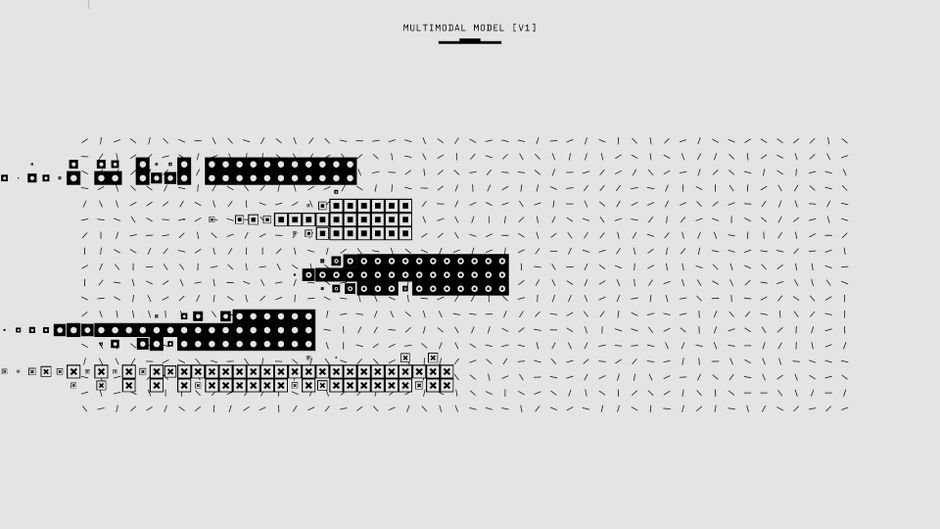
At its core, MiniMax H3 redefines how AI interacts with multimedia inputs. Unlike previous systems that might stack various functionalities, H3 reads and interprets diverse inputs – text descriptions, reference images, existing video clips, and audio snippets – as one cohesive narrative. The output is equally impressive:
- High Resolution: Generates video in crisp 2K quality.
- Dynamic Length: Produces clips ranging from 4 to 15 seconds, with precise integer durations.
- Immersive Audio: Features native stereo sound, adding a crucial layer of realism and engagement.
Beyond Traditional Video Stacks
In practical terms, Historically, creating complex videos with AI involved a fragmented approach. You might use one model for text-to-video, another for image-to-video, separate tools for first-and-last-frame generation, subject referencing, motion referencing, and video editing.
MiniMax H3 dramatically simplifies this by integrating these diverse capabilities into a single, unified pretraining paradigm. This means you can express complex creative briefs in natural language, such as: “Reference the camera movement from Video 1, have the character in Image 2 sing, and match the vocals to Audio 3.”
Real-World Applications and Industries
MiniMax H3 is not just a technological marvel; it’s a practical tool poised to impact a wide array of industries and applications. Its versatility makes it suitable for:
Target Industries:
- Advertising & Branding: Rapid generation of ad variants and brand-consistent content.
- E-commerce & Product Design: Creating compelling product and listing videos, animated posters.
- UI/UX: Developing engaging website hero loops and interactive elements.
- Gaming: Producing character-consistent game cinematics and promotional material.
- Film & Media: Assisting with pre-visualization for film projects and generating retail catalog media.
Practical Applications:
- Ad variant generation
- Product and listing videos
- Animated posters
- Film title sequences
- Website hero loops
- Character-consistent game cinematics
- Video-to-video motion transfer
Accessing MiniMax H3: Deployment & API
For example, As of its launch on July 31, 2026, MiniMax H3 is deployable today through its API. While direct deployment on personal hardware is not yet available, the model is live in the platform API under the ID MiniMax-H3 and integrated into MiniMax’s consumer Hailuo AI app.
The API offers three primary entry modes for video generation: text-to-video, first/last-frame image-to-video, and sophisticated reference generation. The workflow is streamlined through a single endpoint and an asynchronous three-step process: create a task, poll its ID, and download the generated content.
Input Considerations for Developers:
That said, When designing solutions around the MiniMax H3 API, developers should note specific input limits:
- Reference Images: Up to 9 images.
- Reference Videos: Up to 3 clips, each 2–15 seconds, with a maximum total of 15 seconds.
- Reference Audio: Up to 3 clips; audio must be accompanied by an image or video.
- Mixed Input Cap: A total of 12 files across all input types.
- Prompt Length: Up to 7,000 characters.
- Request Body: Maximum 64 MB, with URL input recommended for larger assets.
File size and format specifications are also critical:
- Video: ≤50 MB, H.264/H.265.
- Image: ≤30 MB, JPG/PNG/WEBP/HEIC/HEIF.
- Audio: ≤15 MB, WAV/MP3.
The Technical Innovations Powering H3
MiniMax H3’s capabilities are built upon four significant technical advancements:
- Contextual Omni Representation: This re-engineered captioning system focuses on describing the relationships between context and the target video, not just the target itself. This approach, which distills roughly 100K tokens of inference to about 4K, uses language as a bridge to transform fixed tasks into open, descriptive ones.
- H3-VAE: A complete tokenizer overhaul that achieves a stated 4x gain in effective sequence length. This breakthrough not only cuts training and inference costs but is also the enabling technology behind native 2K output.
- H3-Omni Transformer: Moving beyond the Hailuo-02 architecture, this new multimodal context transformer handles tripled sequence-length variance. It separates understanding and generation workloads, optimizing hardware utilization and resulting in nearly a 30% increase in end-to-end training throughput.
- In-Context Regeneration: Rather than relying on a separate super-resolution module, the base model regenerates its low-resolution output directly within the context, re-reading the original multimodal input. This method excels at recovering small text and fine details that conventional upscalers often miss, which is crucial for brand and product rendering.
Competitive Edge: Pricing and Market Position
MiniMax claims that H3 offers highly competitive pricing. At 2K resolution, its per-second cost is reportedly less than a third of mainstream models, and at 768p, it’s less than half the price of mainstream 720p offerings. While specific pay-as-you-go rates for H3 were still being updated on their site at the time of reporting, third-party trackers suggest a 2K pay-as-you-go rate of approximately $0.13 per second, or about $1.95 for a 15-second clip.
However, In terms of market standing, industry analysis by Artificial Analysis, as reported by SCMP, places H3 at the forefront of video editing capabilities. However, it currently trails Google’s Gemini Omni Flash in text-to-video generation and both Seedance 2.0 and Gemini Omni Flash in image-to-video performance.
Conclusion: A New Era for Video Creation
MiniMax H3 marks a significant leap forward in AI-driven video generation. By unifying diverse input modalities and leveraging innovative technical architectures, it offers a powerful, efficient, and cost-effective solution for creating high-quality, native stereo 2K video clips. While it excels particularly in video editing, its omni-modal approach sets a new standard, promising to democratize advanced video production and unlock unprecedented creative possibilities across various industries.
Expert Perspective
A practical read on MiniMax H3 starts with video. That is where the earliest effects are likely to show up if this development keeps building.
What happens next will come down to adoption speed, policy response, and execution quality. That combination could make MiniMax H3 a meaningful reference point across minimax.
For decision-makers, the useful lens is not the headline alone but how audio changes priorities once organizations have to respond.
Frequently Asked Questions
Why is MiniMax H3 important?
The Dawn of Unified Video GenerationThe bigger takeaway is simple: The landscape of AI-powered content creation is constantly evolving, and MiniMax has just dropped a significant game-changer: MiniMax H3.
What impact could MiniMax H3 have?
Instead, it’s an ambitious omni-modal video generation model designed to understand and process a unified context of text, images, video, and audio, then produce stunning 2K video clips complete with native stereo sound.Meanwhile, For content creators, marketers, and developers, MiniMax H3 promises to streamline complex video production workflows, offering a single, powerful solution where previously multiple specialized models were required.What Makes MiniMax H3 Stand Out?At its core, MiniMax H3 redefines how AI interacts with multimedia inputs.
What should readers watch next with MiniMax H3?
Unlike previous systems that might stack various functionalities, H3 reads and interprets diverse inputs – text descriptions, reference images, existing video clips, and audio snippets – as one cohesive narrative.
How does this relate to video?
It connects because the article frames video as one of the clearest areas where the topic may be felt in practice.