Revolutionizing Speech-to-Text with Diffusion Models
For readers tracking the shift, The landscape of Automatic Speech Recognition (ASR) is constantly evolving, with new innovations pushing the boundaries of accuracy and efficiency. Interfaze, a dynamic YC-backed startup, has made a significant stride forward by open-sourcing its novel ASR model: diffusion-gemma-asr-small. This model stands out as the first multilingual audio diffusion ASR model, capable of transcribing six different languages using a unique parallel denoising approach.
Table of Contents
- Revolutionizing Speech-to-Text with Diffusion Models
- Introducing `diffusion-gemma-asr-small`: Key Features
- Performance Benchmarks: Setting a New Standard for Diffusion ASR
- Key Advantages and Practical Use Cases
- Getting Started with `diffusion-gemma-asr-small`
- Expert Perspective
- Frequently Asked Questions
- Understanding Diffusion ASR: A Parallel Approach
- How the Model Works: An Architectural Overview
- Overcoming Training Challenges
- Why is diffusion ASR important?
- What impact could diffusion ASR have?
- What should readers watch next with diffusion ASR?
- How does this relate to diffusion?
Meanwhile, Unlike traditional ASR systems that process audio sequentially, `diffusion-gemma-asr-small` leverages a diffusion decoder. This paradigm shift promises faster, more efficient transcription, especially for batch processing, by refining all tokens in parallel rather than generating them one by one. This article looks at the architecture, performance, and practical applications of this groundbreaking open-source contribution.
Understanding Diffusion ASR: A Parallel Approach
To appreciate the innovation of `diffusion-gemma-asr-small`, it’s crucial to understand the distinction between autoregressive and diffusion models in the context of ASR:
- Autoregressive Models: These are the conventional approach, generating text one token at a time. Each new token depends on the previously generated ones, making the process inherently sequential. Think of it like typing out a sentence character by character.
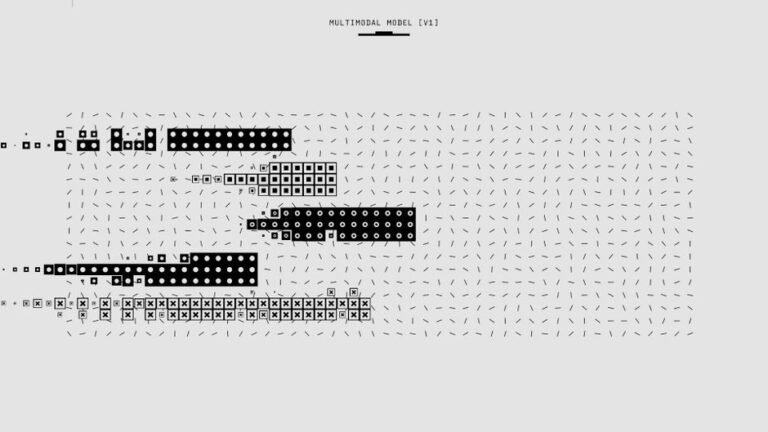
- Diffusion Models: In contrast, diffusion models start with noisy data and progressively refine it into a clear output. For ASR, this means starting with a canvas of random tokens and iteratively denoising it in parallel until a coherent transcript emerges. This parallel refinement is the core advantage offered by `diffusion-gemma-asr-small`.
In practical terms, Interfaze’s model employs a specific type of discrete diffusion, utilizing DiffusionGemma’s decoder. Instead of an absorbing mask scheme, it uses uniform, random-token diffusion, where predictions are kept and the rest re-randomized at each step until the noise dissipates into text.
Introducing `diffusion-gemma-asr-small`: Key Features
The `diffusion-gemma-asr-small` model is a testament to efficient design and powerful capabilities:
- First Multilingual Diffusion ASR: It’s touted as the pioneering open-source model in this category, handling multiple languages through a diffusion mechanism.
- Six Languages, One Adapter: A single, compact adapter is designed to transcribe audio in English, German, French, Spanish, Hindi, and Mandarin, eliminating the need for separate models per language.
- Efficient Parameter Usage: The research team achieved this by training only about 42 million parameters on top of a frozen 26 billion parameter DiffusionGemma backbone. This represents a remarkably small fraction (~0.16%) of the total model weights.
- Cost-Effective Transcription: A key benefit of its diffusion approach is that transcription cost scales with the number of denoising steps, not the length of the transcript. This is particularly advantageous for processing long audio clips in batches.
How the Model Works: An Architectural Overview
For example, The `diffusion-gemma-asr-small` pipeline is ingeniously structured to integrate audio processing with a text-focused diffusion model:
- Frozen Whisper-Small Encoder: The process begins by feeding raw audio into a frozen whisper-small encoder. This component acts purely as a feature extractor, converting 30 seconds of audio into 1500 frames of 768-dimensional acoustic features.
- Trained Projector: These acoustic features are then passed through a small, trainable projector. This projector uses convolutional layers to subsample the frames and a linear map, resulting in 188 ‘audio tokens’ with 2816 dimensions.
- DiffusionGemma Decoder Integration: These audio tokens are then scattered into reserved <|audio|> slots within DiffusionGemma’s encoder. LoRA adapters enable the DiffusionGemma backbone, which typically handles text, images, and video, to attend to this new audio modality.
- Parallel Denoising: Finally, the DiffusionGemma decoder takes a 192-token transcript canvas (initially filled with random tokens) and denoises it bidirectionally over approximately 16 steps, producing the final text transcript.
Overcoming Training Challenges
The development wasn’t without its hurdles. Early training attempts faced a “flatlined loss” problem, where the randomly initialized projector produced noise that the attention mechanism learned to ignore, preventing any meaningful learning. The breakthrough came with a novel solution:
That said, The fix supervised the projector directly. The research team ran the 188 audio tokens through DiffusionGemma’s frozen lm_head. They applied a CTC loss against the transcript.
CTC means Connectionist Temporal Classification. It aligns audio features to text without needing attention.
This direct supervision of the projector, using Connectionist Temporal Classification (CTC) loss, effectively sidestepped the initial standoff. It ensured that the audio embeddings became linearly predictive of the correct words, dramatically improving training efficiency and performance.
Performance Benchmarks: Setting a New Standard for Diffusion ASR
Interestingly, Interfaze’s `diffusion-gemma-asr-small` demonstrates compelling performance, particularly when compared to other diffusion-based ASR models:
- Leading Diffusion Peers: On the LibriSpeech test-clean benchmark, it achieved a Word Error Rate (WER) of 6.6%, outperforming other diffusion models like Whisfusion (8.3%).
- Trailing Autoregressive Models: While impressive for a diffusion model, its WER still trails state-of-the-art autoregressive models like Whisper-small (~3.4%) and Whisper-large-v3 (~2.0%) on English benchmarks. The Interfaze team attributes this gap primarily to differences in training data rather than architectural limitations.
- Multilingual Performance: The model also showed strong results on FLEURS and VoxPopuli datasets across its supported languages, including English, Hindi, and Mandarin.
- Denoising Steps vs. Latency: The model exhibits a nearly flat accuracy curve across different denoising steps. Going from 8 to 48 steps only yields about a 0.1 WER point improvement but triples the latency. This suggests that around 8 parallel passes offer an optimal balance of speed and accuracy, converging quickly for a 10-second clip.
Key Advantages and Practical Use Cases
The unique characteristics of `diffusion-gemma-asr-small` make it particularly well-suited for several applications:
- Efficient Batch Transcription: Due to its parallel decoding mechanism, the transcription cost is determined by the number of denoising steps, not the length of the audio clip. This makes it highly efficient for batch processing pipelines where numerous audio files need to be transcribed rapidly.
- Streamlined Multilingual Applications: With its single adapter supporting six languages, development teams can avoid the overhead of loading and managing separate models for each language, simplifying deployment and reducing resource consumption.
- Advancing ASR Research: The model provides a robust, reproducible baseline for non-autoregressive ASR research. Its innovative recipe—grounding a frozen LLM with a small adapter for audio—opens new avenues for researchers to experiment with larger encoders or expanded audio datasets.
Getting Started with `diffusion-gemma-asr-small`
However, The `diffusion-gemma-asr-small` model is readily available on the Hugging Face Hub. It includes the adapter, necessary Python scripts (model.py, audio.py, inference.py), and runnable inference examples. Users will need to install specific dependencies, including torch, peft, soundfile, librosa, and huggingface_hub, along with the transformers library from its main branch.
The base models, DiffusionGemma and whisper-small, are loaded separately under their respective licenses (Gemma terms and MIT, Apache-2.0 for the adapter). For those interested in seeing the parallel denoising process in action, Interfaze also provides an interactive explainer and live demo.
Meanwhile, Interfaze’s `diffusion-gemma-asr-small` represents a compelling step forward for open-source ASR, offering a powerful, multilingual, and efficient solution built on the innovative principles of diffusion models. Its release promises to accelerate research and provide practical benefits for a wide range of speech-to-text applications.
Expert Perspective
A practical read on diffusion ASR starts with diffusion. That is where the earliest effects are likely to show up if this development keeps building.
What happens next will come down to adoption speed, policy response, and execution quality. That combination could make diffusion ASR a meaningful reference point across audio.
For decision-makers, the useful lens is not the headline alone but how small changes priorities once organizations have to respond.
Frequently Asked Questions
Why is diffusion ASR important?
Revolutionizing Speech-to-Text with Diffusion ModelsFor readers tracking the shift, The landscape of Automatic Speech Recognition (ASR) is constantly evolving, with new innovations pushing the boundaries of accuracy and efficiency.
What impact could diffusion ASR have?
Interfaze, a dynamic YC-backed startup, has made a significant stride forward by open-sourcing its novel ASR model: diffusion-gemma-asr-small.
What should readers watch next with diffusion ASR?
This model stands out as the first multilingual audio diffusion ASR model, capable of transcribing six different languages using a unique parallel denoising approach.Meanwhile, Unlike traditional ASR systems that process audio sequentially, `diffusion-gemma-asr-small` leverages a diffusion decoder.
How does this relate to diffusion?
It connects because the article frames diffusion as one of the clearest areas where the topic may be felt in practice.