Imagine typing sentences using only your thoughts, without any surgical implants. Meta AI is bringing this futuristic vision closer to reality with the release of Brain2Qwerty v2, a groundbreaking non-invasive brain-to-text pipeline. This innovative system decodes natural sentences from brain recordings, achieving impressive accuracy and opening new avenues for communication and neuroscience research.
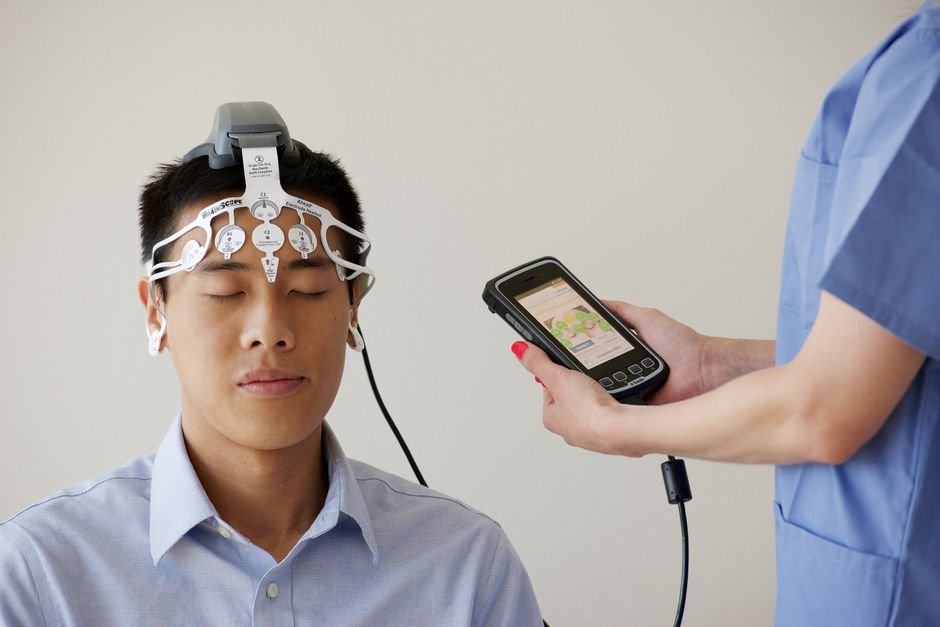
At a glance, Building on its predecessor, Brain2Qwerty v2 represents a significant advancement in interpreting brain activity. It leverages magnetoencephalography (MEG) signals to reconstruct typed sentences in real-time, all without the need for invasive surgery or implants. This development marks a substantial step forward for individuals who may have lost the ability to speak or move, offering a potential pathway to restore vital communication.
Table of Contents
- Imagine typing sentences using only your thoughts, without any surgical implants. Meta AI is bringing this futuristic vision closer to reality with the release of Brain2Qwerty v2, a groundbreaking non-invasive brain-to-text pipeline. This innovative system decodes natural sentences from brain recordings, achieving impressive accuracy and opening new avenues for communication and neuroscience research.
- What is Brain2Qwerty v2 and How Does it Work?
- Impressive Accuracy Rates and Their Significance
- Non-Invasive vs. Invasive: A Crucial Distinction
- Potential Applications and Future Outlook
- Challenges and Limitations
- Expert Perspective
- Frequently Asked Questions
- Key Performance Metrics:
- Why does Brain2Qwerty v2 matter right now?
- What broader change could Brain2Qwerty v2 signal?
- What should the market watch next around Brain2Qwerty v2?
What is Brain2Qwerty v2 and How Does it Work?
Meanwhile, At its core, Brain2Qwerty v2 is a sophisticated brain-to-text decoder that translates raw brain activity into characters, then into words and complete sentences. Unlike earlier non-invasive systems that relied on manually crafted methods to detect neural events, v2 employs an end-to-end deep learning approach.
The pipeline integrates three key components:
- A convolutional encoder: This component processes raw MEG signals, learning features directly from the brain data.
- A transformer: It models the longer-range temporal structure across the neural signal, understanding how different parts of the signal relate over time.
- A character-level language model: This model refines the output, ensuring that the decoded sequences form plausible words and sentences, effectively correcting local errors with broader linguistic context.
In practical terms, Meta AI trained this system on approximately 22,000 sentences from nine volunteer participants, each undergoing 10 hours of MEG recording while actively typing. This extensive dataset was crucial for the model to learn the intricate patterns of brain activity associated with typing.
Impressive Accuracy Rates and Their Significance
Brain2Qwerty v2 achieves an average word accuracy rate of 61%, which translates to a 39% word error rate (WER). This is a dramatic improvement over prior non-invasive methods, which typically reached only about 8% word accuracy. For the top-performing participant, the system achieved an even higher 78% word accuracy, with more than half of their sentences having one word error or less.
For example, A particularly promising finding is that accuracy scales log-linearly with the amount of data. This suggests that with more recording hours and larger datasets, the system’s performance could continue to improve significantly, potentially narrowing the gap with more invasive brain-computer interfaces.
Key Performance Metrics:
- Average Word Accuracy: 61% (up from 8% for prior non-invasive methods)
- Best Participant Word Accuracy: 78%
- Word Error Rate (WER): 39%
- Method: Non-invasive MEG recordings
Non-Invasive vs. Invasive: A Crucial Distinction
While invasive brain-computer interfaces (BCIs) involving surgical implants have shown remarkable results in restoring communication for patients, they come with inherent risks and complexities. The non-invasive nature of Brain2Qwerty v2 is its most compelling advantage. By eliminating the need for neurosurgery, it significantly widens the potential accessibility of brain-to-text technology, making it a more practical and scalable solution for many.
That said, Notably this is a research project, not a consumer product. The current system was tested on healthy volunteers in a controlled research environment, not on patients with neurological conditions. However, the foundational work lays a strong groundwork for future clinical applications.
Potential Applications and Future Outlook
The primary motivation behind Brain2Qwerty v2 is to restore communication for millions globally who suffer from conditions that prevent them from speaking or moving. A non-invasive decoder could allow these individuals to ‘type’ sentences by simply thinking, offering a profound impact on their quality of life.
Interestingly, Beyond direct patient applications, the released training code for both v1 and v2 (under CC BY-NC 4.0) provides valuable resources for researchers and AI engineers. It serves as a blueprint for biosignal decoding, potentially inspiring similar breakthroughs in other areas of human-computer interaction and neuroscience.
Challenges and Limitations
Despite its impressive capabilities, Brain2Qwerty v2 faces several practical limitations:
- MEG Requirements: Magnetoencephalography (MEG) devices require a specialized, magnetically shielded room and a still subject, which can limit practical, widespread use.
- Research Context: The results are from healthy volunteers, not patients with brain injuries, meaning further research is needed to understand its efficacy in clinical populations.
- Licensing: The CC BY-NC 4.0 license restricts commercial product deployment.
- Data Availability: The v2 dataset is currently under embargo, limiting immediate external validation.
- Accuracy Gap: While significantly improved, a 39% word error rate still trails the performance of surgical implant systems.
However, Nevertheless, Meta AI’s Brain2Qwerty v2 represents a monumental stride in non-invasive brain-to-text decoding. By combining deep learning with sophisticated brain signal analysis, it offers a glimpse into a future where thought-to-text communication is not just possible, but increasingly accessible.
Expert Perspective
From an industry angle, the clearest signal around Brain2Qwerty v2 is how it may influence invasive. The story reads less like a one-day spike and more like a marker of broader movement.
The next phase will depend on how quickly teams, regulators, or customers react. In practice, that gives Brain2Qwerty v2 room to reshape expectations across brain over the near term.
For readers focused on practical impact, the best next step is to watch what changes around sentences once attention turns into execution.
Frequently Asked Questions
Why does Brain2Qwerty v2 matter right now?
Imagine typing sentences using only your thoughts, without any surgical implants.
What broader change could Brain2Qwerty v2 signal?
Meta AI is bringing this futuristic vision closer to reality with the release of Brain2Qwerty v2, a groundbreaking non-invasive brain-to-text pipeline.
What should the market watch next around Brain2Qwerty v2?
This innovative system decodes natural sentences from brain recordings, achieving impressive accuracy and opening new avenues for communication and neuroscience research.